Fullerton T

RELIGION LITURGY AND LIFE

Archive for the category “LITURGY”

THE BAPTISM OF THE LORD
images (2)

This Sunday we celebrate the baptism of the Lord, when Jesus was baptised in the river Jordan by John. None of us remember when we were baptised when we were infants but that said we may know an Adult who was baptised at the Easter Vigil or at another time through the RICA process.

Sometimes beginnings are not remembered because they didn’t seem important at the time. However, some events in our lives become important because later on we see that it was then that something started, it was when we met that particular person or did a particular thing that changed our lives. Of course there are beginnings that are important like baptisms, marriages and ordinations. We like to mark these beginnings so we surround them with ceremony to give a sense of occasion. So the relatives are called in, photographers are hired, priests officiate, solemn words are spoken, cameras click, music is played, and there is an atmosphere of rejoicing. Clearly, something happened to Jesus while he was with John. He underwent a change that gave his life a new direction while he is with John, Jesus makes his big beginning. As Peter says in the second reading, “Jesus of Nazareth… began in Galilee, after John had been preaching baptism.” John was a very important turning point in the life of Jesus – so important that Jesus says of him later: “of all the children born of women, there is no one greater than John” (Luke 7:28).

It is a measure of John’s importance that Jesus makes a three-day journey south to the place in the Jordan valley where people immerse themselves in the river in response to John’s call. It is unlikely that Jesus’ relationship with John was confined to the moment of baptism; but it is the baptism that is the most important moment. Jesus is baptised in the company of many other people; for him, as for them, a new time begins. For us when we celebrate baptism there is a new beginning for the person who is baptised infant young person or adult. The baptism of Jesus by John in the Jordan marked the beginning of a journey which ultimately led Jesus to the Cross on Good Friday and our own baptism was also the beginning of our faith journey which won’t lead to the cross but will lead to eternal life.  Through our baptism we died with Christ and thus have been reborn into a whole new life (Romans 6). We, the baptized, are made a part of the body of Christ. We are called to imitate Jesus. We have the companionship of the Spirit of Jesus who is our wisdom, impulse and help to do good.

That same Spirit will enable us to do what is right in every situation we may find ourselves in. So today as we are reminded of our baptism by renewing our baptismal promises and being sprinkled with holy water. Take a moment and reflect on where your baptismal journey has brought you. What has been joyful for you on this journey? Then look around at everyone else and give thanks that together we can celebrate our life in Christ and look forward to further adventures in the life of faith  as we journey along the road.



Second Sunday after Christmas

download (1)

Yes you did read the heading correctly it is the second Sunday after Christmas and we are now almost  at the arrival of the Three Wise Men on Epiphany which takes place on Wednesday 6th January in Ireland. By long standing tradition Christians celebrate Christmas as a season, with the twelve days between Christmas and the Epiphany as one long “Christmas feast.” The season ends with the Baptism of the Lord which is also the first Sunday of ordinary time and that takes place next Sunday. The Christmas and New Year festivities are now a distant memory, and I am certain many people  out there are asking themselves the time honored question for this time of the year,  why did I make such a fuss!!!  So many make a fuss about the secular part of Christmas and as a result they have missed the essential message of the season.  The essential message is that Jesus Emmanuel was born in the stable in Bethlehem at Christmas and  that he is the reason for the season.

Our readings this weekend are all about Wisdom and the blessings of God and the Gospel tells us about the word who was in fact the Son of God. Jesus Christ, therefore, the Word made flesh, was sent as “a man to men.”  He “speaks the words of God” to us and completes the work of salvation which His Father gave Him to do. To see Jesus is to see His Father. To see Jesus is to see the face of the Fathers Mercy. Through the “least,” and the poor, Christ comes to us. That’s a lesson that we the members of the Church need to continually remember and proclaim in our lives and our dealings with other people. We will find Christ among the “least” and this is the message, the humble message that lies at the heart of our faith It is the message that Pope Francis is proclaiming in our own time and place. May we not be afraid in the year that has just begun to seek the wisdom that God wants for us, that is the wisdom and the light of faith so that we will be able to show the mercy of God to those around us during the year of mercy and throughout our lives.     

4th SUNDAY OF ADVENT

images (1)

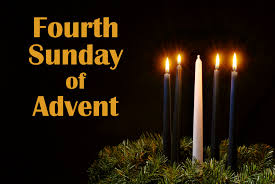
This weekend the Holy year of Mercy is underway throughout the world and we light the third purple candle on the Advent wreath.  Last Sunday we opened the doors of mercy in our diocesan centers of mercy and opening the door means much more than just simply opening a door. We usually open a door to let someone in of course we also close the door to keep people out as well. In the sense of this Holy Year opening the door means that we open ourselves up to let the grace and mercy of the Father into our hearts and minds. I think that one of the ways we might show mercy to others these days is in our treatment of the refugees from other countries as they come to live in our communities in the days ahead.

The final Sunday of Advent draws us closer to the celebration of the Christmas mysteries. Christmas is almost upon us: yet are we ready in the true sense of the word remembering that Jesus is the reason for the season? Christmas we are told is a time for so many things  yet for many of us it is a time of stress and pressure with all the extra work to sort out every­thing that needs to be done.  For many it is a time when we are fearful that the children won’t be disappointed or that there won’t be tension in relationships or there won’t be a breakdown in the ceasefire with the in-laws.  And on top of all this there is a feeling of guilt for feeling like this when we should be happier that we are. Now in the midst of the preparations we meet Mary and her cousin Elisabeth in our Gospel reading for this weekend. Mary, who herself had been prepared for the coming of the Messiah. She has received the angel’s greeting, and his strange news, and has accepted her role in God’s plan.

Now she hurries to her kinswoman, Elizabeth, who herself bears John the Baptist in her womb. John, alerts us to the presence of the Lord, as he leaps for joy in his mother’s womb. His joy is that God has kept his promise, and is with his people.  That two women were chosen to play such a role in the story of salvation is remarkable, as women were often marginalized in the society of their time. In all of these events we see the great mission that Mary undertook as a privileged instrument in the hands of God. Mary is not only the mother of the source of grace; she is the very model of what a Christian heart should look like. We look to Mary to see our fullest Christian dig­nity. In Lumen Gentium 68, Vatican II describes our contem­plation of Mary as an act of entering our own deepest mystery, catching a glimpse of what we shall he at the end of our faith journey.

Over the next few days the journey to Christmas will have many pressures for everyone especially those who are worried or afraid about so many things family and otherwise.  Mary in her calm gentle way encourages us to trust in God’s word and to believe in God’s promises as she did. If we believe and have trust in God as Mary did then all the problems that might arise will assume their proper perspective and we will get through them and come out the other side wondering why we got so worried in the first place.

FIRST SUNDAY OF ADVENT

11141157_1606343736288278_5910075055057336030_n

Here we are at the beginning of another Church year, today  we have a change of colour and a change mood we go from the green of Ordinary time to the Purple which symbolizes the penitential season of Advent last week, at the end of the Church’s year, we had the  highpoint of the Feast of Christ the King. This weekend we begin all over again as we light the first purple candle on the advent wreath. Advent is the season that brings us back to the ancient longing of the human race for the coming of one who would bring to this world liberation from sadness and the fulfillment of perfect peace.


The word Advent derives from the Latin word meaning coming. The Lord is coming may the heavens rejoice and earth be glad. We may reflect that every year at this time and celebrate his coming, so that in a sense we can lose the feeling of expectancy and joyful anticipation, because at the end of the season everything seems to return to pretty much the same routine. If that is the case, then our preparation may have been lacking and we have therefore been robbed of much of the true meaning of this season.

During Advent we recall the history of God’s people and reflect on how the prophecies and promises of the Old Testament were fulfilled.  At the beginning of each church year we are reminded that Jesus the Christ is present as a person to us.  When we think that his presence is something so exalted as to be beyond our own experience, we are reminded that he was born in the lowliest of places, a common stable.  The first visitors were rough shepherds.  The preparation of Advent is for us to prune, weed and convert our way of thinking. 

The prophet Jeremiah foretold the day when God would send his Messiah King  to “execute justice and righteousness in the land” (Jeremiah 33:15). Jesus is the fulfillment of this promise and every promise which God has made. In these short verses in the Gospel, Jesus described the beginning of God’s final initiative. He would give signs of warning across the sky, cause anxiety on earth with violent sea storms, and shake up the heavens. What we would explain scientifically today as eclipses, meteor showers, and the result of storm systems on earth, the ancients attributed to God’s intervention in the order of the cosmos. God would shake things up and so he does just look at Pope Francis for example and the way he challenges us as individuals and as members of the Church.

People of Jesus time would grow anxious because their faith systems and rituals failed.  But, Christians were to rejoice. Their Savior was at hand! Now, their world view and lifestyle would be vindicated. For, Christians saw the world and lived in the world differently. Finally, Luke presents a time of hope. Through great power and glory, the Son of Man would come and free his followers. Unlike the anxious people of the world, the Christians were to anticipate the end in hope. During Advent, we are invited to prepare our hearts for the coming of the Lord – to wait in joyful hope for his return in glory at the end of time  and to prepare for the annual celebration of his birth. So now let us go forth in peace and hope to prepare meet the Lord at Christmas.

33rd SUNDAY IN ORDINARY TIME

download (1)

We pray today for all those who perished in Paris on Friday night this atrocity serves no one. This Sunday in our Gospel story we hear about the End times and I am sure that the people who died didn’t  think that they were approaching their end times may all of them through the mercy of God rest in peace.

For the past two millennia, Christians have looked to the future and asked, “When, Lord, when is all this going to kick off?” Jesus saw the end of time event as the visit of the divine King. God would prepare the visit with cosmic signs and events as a means of announcement. The King would arrive in a way that reflected his power and reputation (on the clouds); his messengers (“angels”) would go throughout the known world to gather all the faithful. Remember that the Jewish people had been displaced throughout the known world because of economic opportunity or oppression. Jesus implied that the injustice of Jews living on foreign soil would be corrected during his lifetime  How did his disciples know Jesus spoke the truth? Jesus gave a farming analogy of the fig tree to support his belief in God’s immanent judgement.

Every spring we observe the twigs on a bare tree start to grow and go green then Leaves appear and we know that summer is on the horizon. As Spring is a prelude to Summer, and Autumn warns of Winter so we must not be complacent, imagining that life can be held in suspension because life keeps marching on.

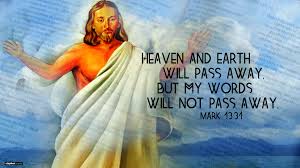
After the cosmic fireworks, Jesus imagines a peace beyond suffering. This vision of peace is important for Mark’s persecuted community: they need more than a firework display to see them through their own historical apocalypse. If their hope is not to be exhausted by force of circumstances, they need help to imagine a far side to pain and suffering. Mark gives their hope help in sharing Jesus’ vision. For that is the purpose of all apocalyptic writing: to fund the hope of those who suffer in the present. We live in an age of uncertainty: the future never looks wholly secure. But Jesus holds out a vision that takes us beyond our worst imaginings. There is a place beyond the mountains of arms and weapons, beyond environmental damage and terrorism. This vision doesn’t free us from the duty to strive for peace and right living, but it does free us from the blasphemy of believing that a nuclear holocaust will be the last word in the human story. In the meantime, we have to depend on the promise of Jesus: “Heaven and earth will pass away, but my words will not pass away.” No one, not even the Son, knows when all this will take place. The only sure thing we can hold on to is the word of Jesus and all we are asked to do is hold fast to what we know to be good and in these times when we look at all that is happening around us this is good advice.

32nd SUNDAY IN ORDINARY TIME

Widows-Mites-Display

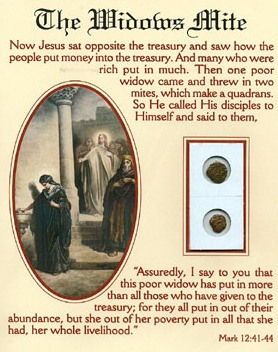
This Sunday in our Gospel story we hear about the widows mite. Mark sharpens the lesson Jesus gives, by linking this incident with what he has to say about ‘scribes’ who ‘swallow the property of widows while making a show of lengthy prayers’. The situation of widows was insecure. The ‘scribes’, so often mentioned in the gospels, were interpreters of the Law of old Israel they were the lawyers of the day But beneath their exterior religious garb, they were rapacious and in many respects just didn’t give a damn as long as they had what they wanted. The widow, on the other hand, reveals the true religious practice of those who have little, but express great trust in God to provide for them.

Jesus makes a series of charges against the scribes. He criticises their habit of wearing distinctive dress, which marks them as different from others and is calculated to win people’s deference. He criticises their habit of taking the places of honour at religious and civil functions. He criticises their habit of long-winded prayers, made not to God but to their immediate audience. Finally, he denounces their practice of exploiting helpless widows by living off their savings.

In contrast to the counterfeit piety of the scribes, Jesus honours true piety in the generosity of the poor widow. The pious frauds who abused their religious status could take a lesson from a woman who had no status in their religion or society, a poor widow. The two small coins make up the total of her resources. She could have kept one. She doesn’t. Her generosity cannot be bettered. For Jesus, true generosity is measured not by what people give but by what they have left after they give. The poor widow leaves herself with nothing. She cannot give more, for she has nothing more to give. In Jesus’ estimation she is a mighty widow.

We, need to listen to Jesus’s words. We are tempted to preserve our systems and benefit from what they give us: standing in the community, predictability, stability and a blessing of the status quo. The church’s history also reveals how we have blessed armies that invaded and enslaved indigenous peoples, preached slavery and oppression. Our religious apparatus has tended to side more with Caesar and with the economic and political world that belongs to Caesar. Jesus condemns those individuals and institutions that benefit from the burdens put on the poor. He said previously in Mark (11:17) that the Temple had become a den of thieves and not a house of prayer.

He predicted it would all come tumbling down.  Today’s passage illustrates why this destruction was inevitable, because those in the temple were corrupt. Every day demands are made on us. We are called on to be generous with our love, our forgiveness, our patience, our resources. The good news is that when we do that out of love, Jesus will be our constant support through the good and bad and happy and sad times which we often find ourselves in.

28TH SUNDAY IN ORDINARY TIME

download (3)

Here we are at the 28th Sunday in ordinary time with September a distant memory and now we are well into October the month of the Rosary. At this stage we should be settled into the routines of school and work, routines that are often abandoned during the summer months for a more relaxed way of life.

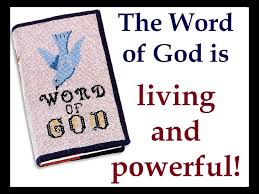
In our second reading this Sunday we hear about the word of God being alive and active God’s Word can be likened to a two-edged sword. It is living and effective. Even now the word of God gets to the heart of things and it divides the real from the unreal so that we are forced to face up to the uncomfortable truths it may be pointing out to us whatever they may be. In this Sundays Gospel Mark paints a vivid scene of a rich man meeting Jesus on the road to Jerusalem. The rich man is eager, impetuous and effusive. The prophet from Nazareth is calm and practical as he meets the seeker’s enthusiasm with the challenge of the kingdom. When the rich man throws himself at the feet of Jesus and addresses him as “Good master”, Jesus tells him that God alone is the good. When the man asks Jesus what he must do to inherit eternal life, Jesus gives him the standard rabbinical answer – keep the commandments.

Jesus looks on the rich man with love; he wants this blameless enthusiast to become one of his disciples. So the challenge is made: “There is one thing you lack. Go and sell everything you own and give the money to the poor, and you will have treasure in heaven; then come, follow me.” The cost of Christian discipleship is heavy for this prospective disciple: he must renounce his security and the prestige his wealth brings him; when he sells everything he owns, he must not give the money to his family or friends, but to the poor. If he does this he will have treasure in heaven. That treasure will be his new security.

Then Jesus tells the apostles to detach themselves from possessions. The rich man is a good person, but he cannot let go of the physical goods he has in order to receive the riches of following Jesus and his sought-after eternal life. Ordinary religious practice and observances are not enough. Jesus asks the extraordinary from his followers, not only giving up possessions, but their very lives, to follow him .Over the years since these words were first spoken right down to us in our own times  many many people have got up and followed Jesus and by doing this they have inspired countless others to take up the road less travelled. This will be the same as we go into the future as many more will come to accept the challenge of Jesus to follow him. We remember that the true Christian, whose principal purpose in life is to serve God, will not overburden him or herself with unnecessary pieces of luggage; instead the true Christian will travel light and be ever ready to help others also to carry their burdens.

27TH SUNDAY IN ORDINARY TIME

download (2)

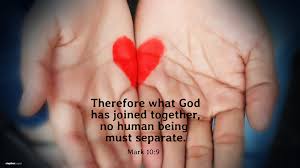
This Sunday in the Gospel we tackle the thorny  issue of marriage and divorce; Jesus is asked an awkward question about the legality of divorce. He lays down very clearly what God intends for marriage is what is found in Genesis (where the “two become one” for all time) rather than the dispensation granted through Moses (permitting a writ of divorce) which was an exception, not the rule How then did the Christian community come to recognize that easy divorce was not in accordance with the original plan of God? Mark tells us that Jesus cited Genesis to provide the basis of a new understanding of human community. This is an important point as it is an example of one of the many times Jesus showed both his disciples and his critics that it was dangerous to build a case based on one passage from Scripture. By referring to Genesis he pointed them gently in a new direction. If marriage is the formation of “one body”, then the body created by God, cannot be destroyed by humans. As Jesus preached the coming of the kingdom as a new way of being before God therefore disciples would strive to carry out the dream of God in its fullest expression.

Christianity is a religion of reason and conforms in all its aspects to the rational nature of man its basis is the revelation of God who became man and is the author and foundation of all things yet it is the heart of mankind rather than his intellect which Christ means to capture.

The assent of the intellect to the doctrine revealed by Christ is not sufficient in itself for a Christian to earn the eternal kingdom; faith is the acceptance and commitment of the believer to God through Jesus Christ. The person who has faith commits himself or herself to God with childlike trust, assured that if he does all that he can God will do the rest. This is the kind of faith that will move mountains that loom so large in the vision of too many Christian’s mountains that challenge the Christian and his or her way of living life we all know what they are. If we are to be his followers Christ asks us to take up our cross each day and follow him and that means we take the way of the cross after him. Our daily cross is made of the troubles and trials of life from which no one can escape. They can be borne with reluctance and grumbling or they can be accepted as the loving God’s means of training us for the future life.  We don’t know in advance what God may do with us and our own oftentimes selfish plans.

To those who have faith, all things are possible the old saying that faith moves mountains is certainly true. We don’t  know when personal illness, bereavement or some other trying experience will put us to the test. But we do know that our life will be a success if we set our hearts and minds on values that go beyond all the transitory goods of this world. Our faith, is leading us onwards and forwards, it is always pointing to something still to come, and at the end of our pilgrimage on this earth we will find where our true treasure is but in the meantime we have to keep on going though it is sometimes hard. Remember the saying that faith moves mountains but keep on climbing!!!

l

PENTECOST SUNDAY

HOLY SPIRIT

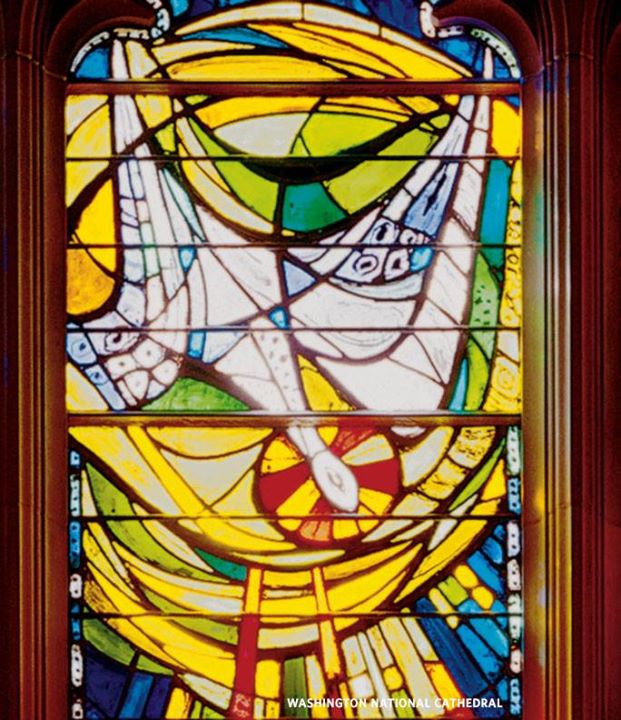
This Sunday is Pentecost Sunday, the day when we celebrate the decent of the Holy Spirit upon the Apostles and the beginning of the apostolic mission to bring the Church to the world. It is the birthday of the church so maybe we should sing happy birthday instead of Veni Creator Spiritus and blow out the candles on the birthday cake instead of blowing out the paschal candle because it’s the end of Easter!! With the feast of Pentecost the seven weeks of Easter have come to an end, Christ’s Passover is fulfilled in the outpouring of the Holy Spirit, manifested, given, and communicated as a divine person: of his fullness, Christ, the Lord, pours out the Spirit in abundance. (Cf. Acts 2:33-36) (CCC 731)

In the Gospel reading, Jesus, knowing that human nature is still weak, gives the apostles the power to forgive and reconcile those who sin. It is God’s mercy working through His bishops and priests down through the ages to ourselves in our own time and place! The scene in the gospel opened with fear and apprehension on the part of Jesus’ followers.  By the time John wrote his gospel, Jewish Christians had been excommunicated for their belief in the Messiah. Ostracized and socially persecuted, some Christians reacted in fear, while others boldly proclaimed the gospel Early Christians needed a sense of stability, a sense of divine peace. Through the words of Jesus, “Peace” was John’s prayer for his readers as it is for us as we listen to this gospel reading.

With the sight of Jesus, fear turned into great joy. Anxiety turned into relief. Desperation turned into vindication. Most important, a lack of spiritual direction turned into a sense of deep spiritual grounding. The divine presence stood close to them and with the divine presence came divine peace. We too have the divine presence in the Blessed Sacrament and it brings Joy and spiritual grounding to all those who come and Jesus says to each and everyone you are welcome.

 We can’t ignore the problems that are there both our own and other peoples. Most of the time, the problems in our lives and the lives of other people just don’t go away by themselves very often we need to stop and think things through.  If we pray through the problems as well as thinking them through and this seems to be the most reasonable solution for us as Christians, we will find that they are much easier to get through.  Simply put Prayer Moves Mountains.

 Gathered at the Eucharist week in week out we bring our prayers to God. We each have our own needs. Family and friends may be sick.  Kids need work. The person who has been in our lives for so long has died. We bring these and all our concerns in prayer to church because they remind us of our need and they raise our hopes in the power of God made real to every generation through the Holy Spirit.

Through the Holy Spirit our relationship with God has produced fruitfulness, satisfied our longings, and brings us peace. Because of God’s faithfulness, we give thanks, offer sacrifice, and once again present our needs this Pentecost Sunday as we remember the presence of God with us in all our lives.

FEAST OF THE ASCENSION

ASCENSION OF THE LORD

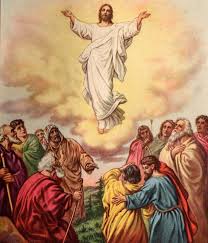
This Sunday in Ireland we celebrate the feast of the Ascension. In those places where the ascension was celebrated last Thursday the 7th Sunday of Easter is being celebrated instead.

The words of the Gospel for this Ascension day strike me in a particular way as we have our parish mission going on at the moment. Jesus tells us ‘go therefore make disciples of all the nations and know that I am with you yes to the end of time. This Gospel reading is all about the past and the future but it is also about ourselves in the here and now of today, and what are we doing to make disciples of all the nations in 2015 or at the least make disciples of those around us perhaps our families and friends. In today’s gospel, Jesus has little to say, but he is definite about what he has to say when he speaks.

This is in sharp contrast to the fact that, even at this last minute, some of his disciples still doubted. The disciples did what he told them to do. He asked them to meet him on the mountain, and they did that. Like any gathering of people, their feelings were varied. Some of them worshipped him, while some of them still doubted. Jesus didn’t seem to have any great problem with that, because he knew that, when the Spirit came, all of those doubts would be ended. It would seem, indeed, that he was in a hurry to take his leave of them, so that the second part of his plan of salvation could get underway. The mission of the apostles was simple to understand; difficult to carry out. It was to teach others all that Jesus had taught them. Just as he asked his disciples to follow him, they were to ask that others should obey his directions and instructions which was so hard then and especially hard in the world of today.

The programme of redemption and salvation was to begin at Pentecost and continue from generation to generation, until the end of time.

So many things have changed in the Church and society. However the two things that have not changed are Jesus himself and every word of his message as they are ever old and always new for each generation. The message of Jesus is ignored by many people inside and outside the Church for their own reasons. The essential message of God and his messenger Jesus his Son have never changed up to now and I don’t think that they will ever change. Again and again we need to ask ourselves what we are doing to make disciples of all the nations realizing that Jesus and his message are always new for each generation. May we be heralds of the Ascension as we place the message of Jesus before others by the way we live our lives in the Joy of the Gospel.

While Christ now reigns with his Father, he still dwells in his Body, the Church. Through the Church, Christ acts in the world. Through the Church he announces the Kingdom of God. Let us remember that you and I each and every one of us are members of the Body of Christ the Church and as such are called to be heralds of Gospel Joy. The Church, imperfect as it is as the assembly of sinners, still dares to declare the Kingdom to the world at large. For the Church is made whole through the work of Christ’s Spirit as the Body of Christ  which enables us  to Go out to the whole world to proclaim the Good News.

Post Navigation