Fullerton T

RELIGION LITURGY AND LIFE

Archive for the category “Uncategorized”

18TH SUNDAY IN ORDINARY TIME

images

Here we are at the beginning of August and it seems a very short time since the summer holidays began and yet it will be no time until the schools go back at the start of September.

Our Gospel reading this weekend has as its focus Food that is food for the body that is bread and food for the soul that is the Bread of life. Jesus tells the people that they are only following him because they have enjoyed the food that physically satisfies them; they should work, he says, for the food that endures to eternal life. The one thing which earns this food is believing in the one God has sent. The Galileans promptly ask Jesus for a sign to aid their belief in him – a sign like the manna their fathers ate in the desert.

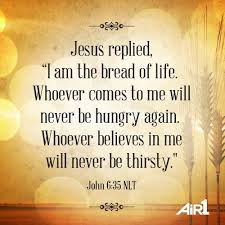
Jesus points out that it was God, not Moses, who supplied the manna, he compares himself to the God who now gives bread from heaven. Jesus declares that he himself is the bread of life, the bread come down from heaven. Whoever believes in him will never be hungry. Yet there are so many people in our world who suffer from hunger, physical hunger for so many do not even have a wee bit of bread to eat or water to drink. Also there is a great spiritual hunger, there are many people out there who have lost their faith and there are also many people searching for faith who have yet to find it. I think that in our day and age we need to be the bread of life for all those who are out there who have lost the faith or those who are searching. What does it mean for you and me to be the Bread of Life to others? It really means feeding the hungry through our donations to organisations that bring physical bread to the people who need it in the world. It also means being a light showing that God the Father has sent Jesus from heaven to be our food, our strength, our hope, and our joy in living. Nothing else in life can surpass this Bread of Life given freely and freely accepted by those who choose to accept this great gift of God. 

17TH SUNDAY OF ORDINARY TIME

download

Well here we are nearly at the end of July and for us here in Ireland the summer break is almost at the half way mark. I’m sure the kids have been enjoying their time off from school and by the same token I am sure their parents are pulling their hair out wondering what are we going to do next, these days family life is not easy!!!

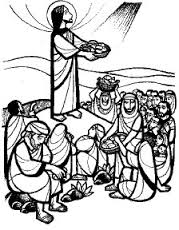
In the Gospel reading for this Sunday we hear the story of the feeding of the five thousand. The crowd is huge can you imagine five thousand people and all of them are hungry: for physical food in a deserted place and hungry for still more. They are hungry to be acknowledged, to feel counted and recognized. Like those of us gathered for Eucharist each Sunday, they are also hungry for what Jesus had to say about God. They hunger to know that God is on their side, when the rest of the world considers them insignificant. How can their physical hungers be fed, there is no food around? How can their spiritual and human hungers be noticed, their need to feel important, and their hunger to know God be filled? In their Roman- occupied world they are slaves. In their religious world, a long way from the seat of their faith in Jerusalem and the religious elite, these Galileans were considered next to pagans;

ignorant and a long way from God when in truth they were nearer to God than many of the righteous people of the day. There is some food there, but almost nothing in the light of the numbers who are hungry. In this story the food of the poor barley bread counts and it is not an insignificant gift. It’s given by a boy, it’s all he has, and he makes it available.We tend to measure the size of any problem that may arise and then back away, shrugging our shoulders, “What can I do about such a big problem?” Well we in simple terms have to face the problems head on and the boy in this Gospel is a good example for us: better to do something about the situation we are in than nothing at all. The life implication of this gospel is simple: Jesus wants to work the miracle of feeding a huge number of people who are hungry; but the miracle will not happen without someone to provide five barley loaves and two fish. The end of this passage is important: “and all ate and were satisfied. And they took up what was left over, twelve baskets of broken pieces”. Jesus asked the disciples to ensure that nothing was wasted: nothing thrown out!

The people in this story realize that Jesus had something to offer them in the deserted and lonely places in their lives. Jesus wasn’t just filling their stomachs he was also nourishing their souls. They weren’t rich, famous, educated or powerful; they were the afflicted and marginalized people that Jesus went out of his way to seek out.  Life may have passed them by, but Jesus didn’t.  He took note of them, and they in turn saw in him a place to be nourished, a place where deep hungers and longings of life would be fulfilled. The Gospel account of the multiplication of the loaves proclaims who Jesus is and provides food for thought and prayer. This Gospel also proclaims who we are as people who are hungry for what Jesus the bread of life has to say to us about God.  Are we prepared to open our ears and listen to the message of Jesus in the Gospel so that we can pass that message on in what we say and do in our lives ?

16TH SUNDAY IN ORDINARY TIME

images

As we listen to the scripture readings this weekend we hear about shepherds. The first reading is a call to those who were not good shepherds who allowed the flock to be both destroyed and scattered to come to their senses. And the gospel story seems to suggest that we should separate ourselves from our work at times in order to find some peace and quiet. That is surely part of it as we are often encouraged to go on retreat, but something much more profound is the issue here. We must in fact find the quiet place in our hearts to which we can withdraw at any time, whether at work or at play. It is in this quiet place that we ponder the word of God, our loving Father. These words are spoken to all of us, just as they were to Jesus in his time. The biblical reader knows the significance of a “deserted place.” We recall that, after God delivered the Israelites from their Egyptian slavery, God led them out to the desert and tended them with food and drink. And more! In the desert God revealed himself to the people and made a lasting covenant with them.

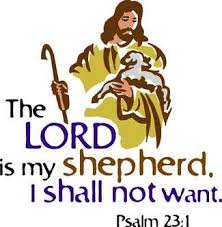
Jesus is doing what God did for the people in the desert. He teaches them “many things.” They are spoken softly but very insistently. When we take time to hear them in that quiet place in our hearts, there is nowhere else that we would rather be, for they affirm us and liberate us to be all that we are meant to be.  When this happens, we are no longer like sheep without a shepherd, no longer confused about the meaning of life or about our ability to live in peace and joy. One may object that, if this happens, we will soon be “out of touch or distracted or living in fantasy. But that does not happen when we are really in touch with God, we become far more attuned to what is real in life than the so-called “practical people” do. Those who really encountered Christ, especially the Apostles had an anchor in their lives. That anchor was the care of Jesus the Good Shepherd for each of those around him in his day. This is the Christ we to believe in today, he is the good shepherd who cares for us in the here and now of our daily existence. We remember the words from the psalm The Lord is my Shepherd there is nothing I shall want Or just to change it a wee bit Jesus is Our  Shepherd there is nothing we shall want.

14TH SUNDAY IN ORDINARY TIME

images

This Sundays  Gospel sees Jesus going back to his roots in Nazareth. This is not a social visit: like other towns in Galilee, Nazareth and its people have to hear the Good News of the kingdom. When Jesus teaches in the local synagogue, many of the townspeople are astonished at the performance. They wonder at the origin of Jesus’ teaching and the nature of his wisdom, as well as the miracles that are done through him. From the unanswered questions about Jesus’ wisdom, the neighbours move to more familiar territory and focus on what they do know about Jesus. Whatever their wonder, they are not going to allow the wisdom of Jesus  to interfere with their memories of him. Prior to this section in Mark’s gospel, Jesus has been doing some extraordinary things. His baptism by John in the river Jordan was accompanied by an affirming voice of the Father from the heavens, “You are my beloved Son. On you my favor rests.”

After his desert testing Jesus called his first disciples, cured the man in the synagogue with the unclean spirit and the paralytic in Capernaum; expelled the legion of devils from the Gerasene man, you may remember last week in our Gospel Reading Jesus raised the daughter of Jairus, cured the woman with haemorrhage, Jesus is doing wonderful things as he proclaims, in word and deed, the coming of the reign of God. Though he did all the wonderful things the people still had little faith which also seems to be the case these days. The people wanted the powerful signs of God’s final coming with a strong right arm to rescue them. But when Jesus spoke about the signs of the kingdom’s presence, he spoke of scattered seeds and, to emphasize the kingdoms small beginnings, he compared it to a mustard seed, “the smallest of all of the seeds of the earth” Where was God’s show of power and mighty arm in a tiny mustard seed? Mark sums up their reaction, “And they took offense at him.”

And so it is today as many take offence at the values of Christianity and the good it makes for all of us in our world. A world which in many respects is so faithless with many  people taking offense at Jesus and his teaching. Jesus revealed God’s presence to the people of Nazareth as a different kind of power: the power used only to help others, not ourselves; a gentle power that does not force or coerce people to do our will; the power of compassion and gentleness, when others are expecting force. All of us know from our own experience that when we admit our failures and limitations, that exercise in honesty can mark the beginning of a new understanding. If our Lord and God can take failure in his stride, we might even end up boasting about God’s fantastic message! What is the message of the wisdom of Jesus? Jesus message is really about using whatever power that we might have in a positive way to help others and the greater our weakness the more powerful we will be that is powerful with the power of compassion and gentleness.

gentleness.

13TH SUNDAY OF ORDINARY TIME

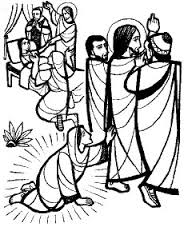
In the Gospel reading for this Sunday we hear about the woman who had the hemorrhage and we also hear about the official’s daughter. Whilst the stories are about the faith of the people involved they are also about the mercy of Jesus towards them both. Jairus, the synagogue official and loving father of a ‘desperately sick’ twelve-year old daughter, is convinced that if only Jesus would place his hands on her ‘to make her better and save her life’ she will surely recover. The unnamed woman, suffering for twelve years from a condition for which she has spent her life-savings on one doctor after another, has one last hope. She is convinced that ‘if she can touch even his clothes’, surely she will ‘be well again’ and then she was able to get near to Jesus and touched his garments.  The poor woman and Jesus know that healing power has gone forth. Jesus turns around, inquiring who is the one who had touched him. Fearfully, the woman admits that she is the one. Jesus immediately calms her fear, telling her to go home in peace, for she is healed. Then, He proceeds to the house of Jairus, where He learns that the little girl has died. Quieting all the commotion, He goes in with the child’s parents and Peter, James, and John. Taking the hand of the girl, He brings her from death to life, ordering that some food be brought to her. How thoughtful of Him!

This gospel reading speaks of two things faith and mercy. Firstly we have the faith of the woman and Jairus the official, faith that Jesus would help them. Then we have the mercy of Jesus healing the woman telling her to go home in peace and then going on to the house of Jairus brings his daughter from death to life.May we have the courage to be people of faith and mercy. That is people who are not afraid to show our faith in Jesus to those around us as well as showing his mercy to those in our lives.

12TH SUNDAY OF ORDINARY TIME

JESUS CALMS THE STORM

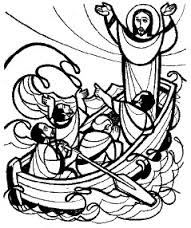
In our gospel reading for this Sunday we hear Jesus asking the disciples in the midst of the storm, Why are you so frightened and why do you have so little faith. He could be saying the same thing to us today. The context of this passage is the calming of the storm when Jesus rebuked the wind and said to the sea, ‘Quiet now! Be calm!’ And he says the same to us now in all our trials ‘Quiet now! Be calm! For many of us these days we are frightening with the various events that are ongoing throughout the world with so many people having little or no faith in god or anything else of lasting value.

Amongst all the hurt and devastation in the storms of life Jesus gives us peace in the storm of sadness and sorrow. When that storm comes he reminds us of the glory of the life to come. He tells us that there are many rooms in our Father’s house (Jn 14:2), and that he has gone ahead to prepare a place for us (Jn 14:2-3). He changes the darkness into the sunshine of everlasting life, and replaces our distress with comfort and peace.

Jesus gives us peace in the middle of our personal and family problems, when we don’t know either the best way forward or the best way out. At such a crossroads of life, we can ask him, ‘Lord, what road should I take?’ The best way may then become so much clearer, and bring us calmness and peace of mind as well in the knowledge of a decision well made.

Jesus gives us peace in the storm of anxiety. The chief enemy of peace is worry – worry about ourselves, worry about those we love, worry about our world, worry about our church community, and worry about the future.

 We have so many things to occupy our minds these days but if we remember that Jesus is with us in the good and bad times as a  gentle calming presence  we will get through the storms of life that affect all of us from time to time.

A REFLECTION ON RENEWAL IN THE IRISH CHURCH 3

images 2

In To Live Is to Love, Ernesto Cardenal says, “If in everything you fulfil God’s will rather than your own, every encounter in the street, every telephone call, every letter you  receive, will be full of meaning, and you will find that everything has its good reason and obeys a providential design. Our God-given tasks are best done with joy. “Jesus in no way wants us to leave our many-faceted world. He wants us to live in it, but firmly rooted in the centre of all things who is Jesus himself.  Jesus does not speak of a change of activities or even a change of pace.  He speaks of a change of heart. This change of heart makes everything different, even while everything appears to be the same.  All our previous concerns will then become as “gifts or chal­lenges that strengthen and deepen the new life which we have discovered.” This doesn’t mean that things will become easier. “Sometimes; it is even more intense Poverty, pain, struggle, anguish, agony, and even inner darkness may continue to be part of our experience.

But life is no longer boring, resentful, depressing, or lonely because we have come to know that everything that happens is part of our journey along the road  to the house of the Father.” Emulating the sacred, tender heart of Jesus means that we make room in our own hearts for everyone, not just those who are natu­rally close to us or with whom we are most comfortable.This doesn’t mean that we don’t have a justified predilection for our family and friends.  It does mean that we are willing to break out of our usual family, work, and social groups to be present to those who seem alone or lost.  We need to die to our own selfish wants and needs. Dying to self means  caring enough to have room in our own hearts for all who come.

Faith is the assurance of things we hope for born from the conviction of things not seen”.(Hebrews: 11,1). We must be prepared to witness to things unseen, the unseen things of faith as an important part of life but of course it is difficult to be such a witness, precisely because they are things unseen, and  how can they believe in him if they have never heard of him?  And how will they hear of him unless there is a preacher for them? and how will there be a preacher for them if one is not sent?  So faith comes from hearing and what is  heard comes from the preaching of Christ. (Romans:10,14-17.17)

The spiritual life of faith cannot be lived only in a pew, in church because the hard bench will sooner or later become a soft bed.  It takes imagination to get out and do something and to come in to that pew for solace and spiritual rejuvenation every Sunday and on   many other occasions that arise for us to come together in prayer. The life of St. Therese of Lisieux on the surface seems serene and tranquil, but it took hard work  for her to live the life that became the little way. It took imagination to see a boring daily chore as a new challenge, a new way of transforming an ordinary event into an act of love in God.  Our lives in this world take on the character of a journey in very many ways, but none more so than the way of salvation.  In our pilgrimage of faith to our heavenly destination we sometimes fall or turn away. 

I believe that many people who have strayed away from faith and the Church are starting to return to faith. At times the steps necessary for our walk back to the Father may seem too many and too arduous for us and we hesitate even to make the first move. This is what the apostle Paul says: “Awake, O sleeper, and rise from the dead” (Eph 5,14).  Up you get, then, and hurry along: there is the Father, there the Son, there the Holy Spirit. He who hears you speaking in the intimate depths of your soul is coming to meet you, and when you are still far off he sees you and starts running. He sees your heart; he runs up lest anyone delay you and embraces you.He flings his arms around your neck to raise you up, you who were prostrate, burdened with sins, face to the ground.  He turns you over to face heaven so that you can seek your Creator there. Christ flings his arms around you so as to free your neck from slavery’s yoke and set his gentle yoke upon you.

Perhaps it is only when we  open our eyes and see, like the Prodigal Son, that we are then willing to rouse ourselves to take the path of conversion that leads to the merciful embrace of our heavenly Father, so rich in mercy.  Proper celebration of the faith and life of the Church should lead to unfailingly serenity and hope despite , all that life will throw at us.

We as Church will renew the faith community by creating new perspectives, new perceptions, new understandings, and new enthusiasms  and all of these will lead to renewed life.  Let us not be afraid to take up the challenge the challenge that will lead us to new perspectives, new perceptions, new understandings, and new enthusiasms that bring about renewal of ourselves and those around us. I do not believe that the church should be looking to get people back to sitting in Church the days of overflowing churches won’t be back any day soon I think that what we need to do is to help people realize that God is there in their lives as a the person who will be with them thought their lives in good and bad times journeying with them. It really is about giving our people food for their faith journey.

Then we will see people coming into Church on Sunday coming in for solace and spiritual rejuvenation every Sunday and on   many other occasions that arise. It was Pope Saint John Paul who called on all of us to open our hearts to the redeemer upon his election as pope in 1978. So now what are we waiting for the time for action is here  and it has been here for some time what that action will be for each person, each parish each diocese and each country will be different.

As I am writing this we are at the feast of Corpus Christi that is the feast of the Body and Blood of Christ. If we are to have any success in our efforts we must commit ourselves and our ideas for renewal to prayer and the greatest prayer there is the Mass. As we move forward we pray that God will guide us through the inspiration of the Holy Spirit and so we pray:

Glory to you, O Lord our God. Your love calls us to be your people.

By sharing our many and diverse gifts we share in your mission. We ask you, Lord, to shape us into a community of faith.

Nourish us by your word and sacraments that we may grow into the image of Jesus.

Through the power of your Holy Spirit, heal us that we, in turn, may heal the wounded.

Form us to be instruments of love, justice, and peace in our land , and send us to proclaim your saving work. renew us, Lord, that we may renew the face of the earth. Amen

11TH SUNDAY OF ORDINARY TIME

images (7)

This weekend we celebrate the 11th Sunday of ordinary time and we hear once again the story of the mustard seed. Jesus seemed especially fond of using parables. In its form, the ancient Middle Eastern parable is an explicit comparison of one item or one person to another. Jesus’ parables tell his listeners what God is like by comparing God’s being or behavior to something familiar and known in the culture of the time. In olden days farmers would sow seeds in their lands and then simply wait. When a crop was ready they would reap it, using a scythe (“blade”).There followed a whole process, and the neighbors would gather with each farmer to help in each step. They would collect each other’s crops into stacks or “stooks” as they were called, so that by counting stooks each farmer could know how much grain to expect from his harvest. Threshing came next—separating the husks and straw from the grain—followed in these older cultures by winnowing, which detached the heavier grain from the lighter chaff.

The faith that we have handed down to us through the generations is represented in this Sundays Gospel by the mustard seed and it is something that all of us need to nourish. When the seed that is the Word of God takes root within us the Kingdom grows. We are called upon hearing the Word to meditate upon it in prayer so that it may take root in us and bear fruit in joy and virtue.

We are usually helped by books, and Christians do not want for them: the Sacred Scriptures, particularly the Gospels, holy icons, liturgical texts of the day or season, writings of the spiritual fathers, works of spirituality, the great book of creation, and that of history the page on which the ‘today’ of God is written. (CCC 2705)

The Kingdom of God is like a tiny seed within each of us. It’s a strong seed, like those that push their way through cement in order to grow toward the light. Sometimes we nurture it and have expectations. Sometimes our expectations are fulfilled, sometimes not. Other times, we don’t know how, but we find ourselves bearing the fruits of joy, compassion, peace, generosity, faith-fullness, gentleness, and thanksgiving for the wonder of it all. Then we know our growth is a partnership and, while we can care for the seed, we can’t make it grow or flower or reproduce. I’m reminded of St Therese of Lisieux, the “Little Flower” who considered freedom to be in forgetting self, and walked her “way” on a path of dedication and awareness of the Holy One in the rather ordinary, boring, and annoying little things that make up our daily lives. The parable of the seed growing of itself which we hear this Sunday in the gospel reading shows us that there is an almighty power working for us. Our part is to do a good job preparing the soil and sowing the seed. Then we must let God take over, as God usually does. God and God’s work in us and among us will ultimately triumph let us not be afraid.

A REFLECTION ON RENEWAL IN THE IRISH CHURCH 1

1174646_1425298644362247_1259662426_n

As we all know the marriage referendum in southern Ireland was passed by a vote of 60% at this stage I am not going to dwell on this as many other people have done this since the referendum.  Instead I would like to offer my thoughts on the renewal of Faith that needs to take place in the Irish Church. Many people have said that this result is a wakeup call for the Church and this is what it should be As the apostle Paul says: “Awake, O sleeper, and” (Eph 5,14). I think we need to wake up as a Church or even as Irish Churches. For me as a Catholic in Ireland at the present time the Church needs to stand up for itself and start preaching the authentic teaching of Jesus Christ. Many people are now asking how do we as church people or people of faith reconnect with all the people within the church young and old and everyone else and this question needs to be addressed as there is a big disconnection between the Church as it is now and its people for many reasons not least the scandals which are well known and they are been addressed on an ongoing basis.

The referendum result is a wakeup call indeed it is one of many wake up calls in recent years and as such it should not be ignored. All of us who are the church the body of Christ need to stop  in order to take a reality check and look at where we are now and realize the ways of the past are gone and then take positive action for the future.

I thank God that many of the ways of past are gone as we now know in many cases they were proven to be shamefully wrong and a sham what has happened over the years certainly was not what we expect of the members of the church clergy or otherwise. Now is not the time for us to stick our heads in the sand ignoring what has gone on and what  is now going on around us. Instead it is time for us to rise up and start afresh looking for new ways to proclaim the old truths. The truths that were there at the beginning of the Church we cannot forget the Last supper in the upper room, the Cross of Good Friday and the Resurrection on Easter Sunday. We cannot forget all those who by their lives and witness over the centuries have brought many people to faith in God and also one another. We cannot forget that Jesus Christ was the beginning and will be there at the end the alpha and the omega. 

At times it would be so very easy for me and so many others to throw in the towel and that would be the easy solution and if the truth be told it would be no solution at all. Running away is easy but staying the course no matter how desperate the situation may seem to be at the time is what is required of all of us.

My faith in God is strong and my faith in other people is also strong but I sometimes find myself  asking God where are you in this that or the other situation and very often through the people around me I get an answer which is always I am here in the turmoil you are in  keep on going. With that in mind I believe that god is here at the present time in Ireland and all of us should keep on going with renewed heart and spirit remembering that the life lived in faith will never be easy and the renewal that will be required will be hard to undertake

I have had the privilege of journeying with a number of great people in my life who have taught me to pray that that the will of god will be done in our lives.  The message of God’s will entails more than the human awareness that we need to speak frankly and openly with each other.  Seeking God’s will in the concrete situation of our strengths and weaknesses means being open to the folly of the cross (1 Cor 1,18) and in the folly of the Cross we acknowledge that Jesus is Lord (1 Cor 12,4), being ready to change and be changed.

The cross reminds us that God is in charge and has a plan for our ultimate well-being. We trust God who has made a promise to be faithful to us, and through the cross, he guarantees to see that promise come to completion.We sign ourselves with the cross as we enter and leave church and as we begin and end our prayers. Each time we do that we remember the God of the Promise the god who was who is and will be the one who will always be part of our journey. Signing ourselves with the cross also “reminds us of God’s promise to be faithful to us.

Over the next few days I will complete this reflection which comes in 3 parts

as always your comments are receieved  with thanks


Corpus Christi 2015

corpuschristi

This Sunday we celebrate the feast of the Body and Blood of Christ also known as Corpus Christi. In many places throughout the world the Feast of Corpus Christi would have been celebrated last Thursday in many other places in the world  celebrate this feast on the weekend after Trinity Sunday.  When we see the Eucharistic Bread, we believe that it is Jesus who is there before us what is known as the real presence such is our faith in the Eucharist.  We are thus in the presence of the Resurrected One, He who has conquered death and who is now in Heaven, in the Glory of the Father!  The Church teaches that the Eucharist is “the source and summit of the Christian life.” (CCC 1324) This means that, because Christ is really, truly and substantially present in the Eucharist, we recognize that all the graces we enjoy as Catholic Christians come from this great Sacrament, and all we aspire to, the fullness of the life of God, is contained in this Sacrament.

Corpus Christi is a Eucharistic solemnity that is, the solemn commemoration of the institution of that sacrament. It is, moreover, the Church’s official act of homage and gratitude to Christ, who by instituting the Holy Eucharist gave to the Church and to us as members of the Church our greatest treasure.

By following in our Lord’s footsteps. Christians over the centuries have sacrificed greatly, in a labor of love, for their faith, their Christian way of life and their families. Then as now, it begins with each individual humbly asking God to show the way and to provide the strength needed to follow in His footsteps. This strength comes from the Eucharist the Bread of Life which is the body of Christ.

Post Navigation