Fullerton T

RELIGION LITURGY AND LIFE

ASCENSION

unnamed (2)

This Sunday we celebrate the Feast of the Ascension. The Ascension marks the final part of Jesus ministry here on earth. During our lives whether we are young or old we will see the departure of many people. Perhaps it is a son or daughter leaving for university or maybe it was someone leaving to go to another country or the hardest departure of all someone close to us such as a family member father mother or whoever passing on to eternal life. Our lives are made up of so many different times and places of departure or leave-taking and this really is what Ascension is about the departure of Jesus to return to the Father.  The Apostles must have felt awful they knew that the time was fast approaching when they would have to say their final goodbyes as Jesus returned to the Father.

It marked the beginning of a new time when the apostles have to live in the absence of the Jesus they knew. They had to come to terms with the fact that Jesus will never again walk with them healing the sick and the wounded, preaching about the kingdom of God. He would soon be gone. But Jesus promised to be with them and by association with us through the working of the Holy Spirit the Advocate. Remember when Jesus began his public ministry he was first invested with the power of the Holy Spirit. In his baptism Jesus received power and authority from the Father through the experience of the Spirit. It was in that power, “Filled with the Holy Spirit” (Luke 4:1), that he began his public ministry. The Spirit marked the time of Jesus’ new beginning, his time of ministry, his time for reaching out to others and ministering to them. Luke closes his Gospel with the instruction of Jesus to his disciples that they are to wait in Jerusalem for the Spirit.

After this last instruction he blesses them and is carried up to heaven. The Spirit makes a new beginning for us as it made a new beginning for the Apostles at the very start of the church. The approaching feast of Pentecost is important because it is a memory of the beginning of the Church as well as a celebration of the Church of today.


6TH SUNDAY OF EASTER

download (4)


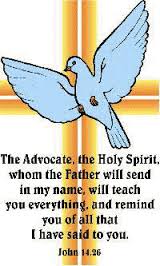
This weekend we celebrate the 6th Sunday of Easter. It seems no time since we began Holy Week on Palm Sunday and now we are heading into Ascension and then Pentecost Sunday which is often called the birthday of the Church. In this Sunday Gospel Jesus promises to send the Holy Spirit to the apostles as the advocate. Although Jesus had spoken to the Apostles and told them many different things, he knew them well and realized that they wouldn’t remember everything he said Jesus also knew that they would have to endure many struggles, that they would have to face ambiguity and confusion, difference and disagreement. They would not see eye to eye on everything; they would have different memories of Jesus; they would emphasise different things. In the conflicts that would arise they would have to put their faith to work. That is why he told them and he tells us that the Advocate, the Holy Spirit, whom the Father will send in his name, will teach you everything and remind you of all I have said to you. These words are a direct pointer towards Pentecost and the gifts that the Holy Spirit would bring to them as well as us.

We don’t have the physical presence of Jesus with us the way his first disciples did when he talked with them around the table at the Last Supper, washed their feet, and gave them his reassuring promises. His farewell to them was a real farewell he was going, he would no longer be with them as he had been. But he assured them and us that he is present in a different way, in his gift of the Holy Spirit. In the Gospel Reading Jesus also promised the Apostles Peace  ‘A peace that the world cannot give.’ Sometimes we mistake this peace for our idea of quietness or tranquillity, but the peace the Jesus gives is a peace that can be found even in the midst of turmoil. This peace is not something we can manufacture ourselves by our own power. It’s a gift that comes from Jesus, who doesn’t want to lose touch with us. Jesus chose his followers to carry out God’s plan of salvation. He chooses us today to do the same. By allowing us to participate in his work of redemption, he gives us a personal stake in the Kingdom of God. If we keep on trusting in the presence of the Spirit to us, we will have peace in the midst of any personal, family, or community turmoil that comes our way as well as someone who will keep us going along the right Road!

5th Sunday of Easter

download (1)

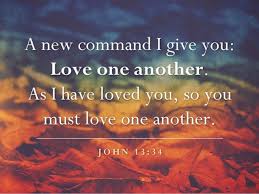
In this Sundays Gospel Jesus calls us to a new way of living when he tells us to love one another as I have loved you.  At one level this is a simple call to love, at another it is a big challenge for us to be Christ like  to others in this sometimes horrible world. This means that we should love as Jesus loves, in order to be the face and heart of Christ the face of the fathers mercy to a wounded and hurting world. It seems to me that our faith should constantly challenge us to live lives of love, love of God and love of one another and this ideal is so very hard to achieve. The love Jesus speaks of seems to be narrow and restrictive. He is addressing his disciples when he says, “love one another.” This love may seem insular and applicable just to an inner circle of his followers. Is he telling us that the sacrificial love he calls us to applies only to those around us in the Church? No, of course he is not saying that because we know from other parts of John’s gospel that Jesus’ mission of love includes an outreach to the world (John 10:16 I have other sheep, that are not of this fold; I must bring them also, and they will heed my voice. So there shall be one flock, one shepherd.)  That outreach in our modern times must include all those who have left the Church for many reasons we should not leave them behind as many people might want to do.

Jesus wants us to be united with him and one another in love. A loving and caring community has a great effect on others bringing those who might be doubtful with it. What more articulate proclamation of the gospel can there be than a group of diverse people drawn together, not by similarities in education, economic status, neighborhood, citizenship, race, etc, but by the love that God has for them and their bringing that love for one another to other people? A community such as this couldn’t help but draw others into it and to one who is the source of their universal love. We are called to be that community of love showing the love of God to those around us especially during this year of Mercy and at all other times as well.


4th SUNDAY OF EASTER Good Shepherd Sunday

SHEP


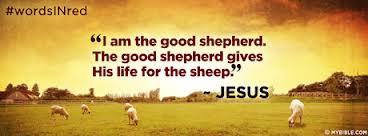
This weekend we celebrate the 4th Sunday of Easter which is also known as Good Shepherd Sunday. The idea of Jesus as the Good Shepherd is a lovely thought because it is a well known fact that the shepherd never leaves his sheep outside the sheepfold. If any are outside the sheepfold the shepherd will seek the lost sheep at all costs until they are found.  The wandering figure of the shepherd, anxiously tending his sheep to the point where he is willing to surrender his life for them, is the image Jesus uses about himself in this Gospel Reading. That mixture of tenderness and toughness, care and self-sacrifice, is one that summarises his own practice of leadership. It is not a leadership of detachment and defensiveness; rather, it is a leadership of physical involvement and self-sacrificial love. In the good shepherd’s foolish extravagant love, his own life matters less than that of his sheep as we know Jesus gave up his life for us on the cross Good Friday. 

The good shepherd is not an image of religious authority that is involved with its own importance, blind to the useless pain it causes in those it leads. The authority of the shepherd costs the shepherd, not the sheep. The image of the shepherd cannot be separated from how the shepherd actually cares for his own sheep. When we see how Jesus actually behaves as a leader, we see his tenderness and courage.   The parable of the Good Shepherd has many consoling truths and promises for people of every century, including ourselves in the twenty first. The good shepherd challenges our own way of leaving people for lost: remember that Jesus also said “I have come to seek out and save the lost.” All of us know people who have wandered away from the Church, who have lost their sense of belonging, who feel they have no community to belong to. How will they know they are welcome back if no one tells them? How will they be helped back if no one offers to make the journey with them?

This as we know is the Year of Mercy a year of return a year of journeying with those who want to return to God as well as those who believe. Turning our gaze to God the merciful Father, and to our brothers and sisters in need of mercy, means focusing our attention on the essential contents of the Gospel: As we celebrate the Jubilee Year of Mercy we are asked to place Jesus Christ, the face of the all merciful Father, at the centre of our personal life and that of our communities. As people of mercy we are asked to journey with those who are trying to return to the sheepfold as well as journeying along with our friends who are still there.


3rd SUNDAY OF EASTER

images (1)

This Weekend we celebrate the third Sunday of Easter it seems strange that we have come so far from the ashes of Ash Wednesday right through to Easter and Jesus resurrection but time waits for no one. In Jesus resurrection we are given the possibility of forgiveness, of being forgiven and of forgiving each other. That new possibility and its radical mercy should never be understated or forgotten as we celebrate the joy of Easter. We celebrate the resurrection of the one who affirms for us that our God has walked on our streets, confronted the evil we confront and suffered for us, even though we celebrate Easter Joy the craziness of some people is still there.

The resurrection assures us that life can come out of death and good can overcome evil and it does. It doesn’t always seem that way these days but for people of faith that is people who have faith in God and Faith in each other nothing is impossible. Of recent times we are being harangued by unyielding ideologues that say I am right even though they are inherently wrong. After a tragedy like Paris, Brussels, or whatever there is a strong response of self-sacrifice and compassion from everyone to help the victims and those affected by the violence.

Then with the passage of time we go back to where we were before the crisis, preoccupied by our concerns and yet through all of this bad stuff God is with us remember at Christmas we sing about Jesus, Emanuel and that means as we all know that God with us. After the earth shattering events of Good Friday and Easter Sunday Peter and the others were ready to put the events of those days behind them and return home to what they did before they came across Jesus. But Jesus won’t let them go. In our Gospel Story for this Sunday he comes to the shore fishing for them. He gets their attention, as he did when he first called them, with a large catch of fish. He prepares breakfast for them and invites them to eat, “Come, and have breakfast.”

After the meal Jesus asks Peter three times about the reality of his love. Insisting on love is something of a mark with Jesus. Three times Peter affirms his love, as three times Jesus insists on it. And when Peter professes his love Jesus commissions him to care for his flock when he says feed my sheep. And that is what Peter does – as we hear in Sunday’s first reading. In his ministry of preaching and healing Peter gets through to many people, and the authorities become nervous at the ability of Peter and the apostles to work in the name of Jesus. In spite of the opposition Peter will continue insisting on his love for Jesus and this insistence will take him to martyrdom in Rome.

No matter whether the believer is new or old, a pew sitter or a leader of people, the call of Christ is the same: “Follow me.” Following Christ means life in the community where we are. Are we, like Peter, spreading the net for new believers and professing a true love for our Savior? Or are we on the sidelines watching others doing the work when we should really be out there doing the work with them? At the end of the day whatever happens we remember that God is with us and wants us to be with him now and in the future, He is with us in good and bad times so let us take courage this Easter to go forward in faith.

DIVINE MERCY SUNDAY

images

I was sitting here a few days ago  just thinking that the season of Lent, Holy Week and  Easter  Sunday have come and gone. Many people think that Easter begins and ends on Easter Sunday but it doesn’t end there, the celebration of the season of Easter goes on to Pentecost Sunday. I wonder what the Apostles would think if they were to come down to us these days and find that we are celebrating the Death and Resurrection of Jesus that took place all those years ago, they would be amazed especially as they thought everything was over with the Crucifixion on Good Friday. In this Sundays Gospel reading the Apostles were still huddled together behind locked doors, pondering the shocking experience of the week before when all seemed to be lost. Then we are told that Jesus came to them and to assure them that He was alive. His message must have troubled them as well when he told them: “As the Father has sent me, so I am sending you.” 

In the same way as the apostles were sent out we are sent out to bring his message of mercy to other people wherever we are. Then of course there is doubting Thomas who heard the witness of the those who saw Jesus but, like so many of us today he wanted more proof. Jesus says to Thomas, “Have you come to believe because you have seen me?  Blessed are those who have not seen and have believed.” That is a favourite quote for many of us, who have not “seen” the risen Christ as the disciples did. We have come to believe though we have not seen him in the flesh but he is with us in the midst of our communities through so many different people. When Jesus says to the Apostles Peace be with you the Peace he is talking about is much more than the lack of conflict. True peace, gives us happiness, since it is built on trust.  The gospel tells us how Jesus gave his followers peace because they trusted him. In spite of the scepticism of Thomas and so many others, Jesus  offers us the same peace of heart mind and soul. As we celebrate Divine Mercy Sunday we remember the joy, the hope, the grief and the anxieties of the people in our time those we know and those unknown to us and we bring them to the Lord. As Pope Francis says, we must courageously reach out to those who are doubtful among us, and assure them of the great mercy of Jesus the face of the father’s mercy. Our world is hurting so much because of the things that are happening within it with so many people at each other’s throats for so many reasons. May all of us be witnesses to the joy and mercy of the Gospel as we bring the caring face of God’s mercy to the people in our own communities wherever we are called to be.


EASTER SUNDAY

Copy of images (48)

Having  completed our Lenten observance and after the liturgies of Holy Thursday and  Good Friday we  are now at the stage of celebrating the Easter Vigil on the day of resurrection that is Easter Sunday. Holy Saturday is about emptiness, the cross is empty and Jesus lies in the tomb everything around us is still.  The heavens and the earth cry out with longing for the sinless one who is not to be found, if we stop to think for a moment we remember that Jesus died and rose again on the third day. We wait, as mourners beside a grave, unsettled, ill at ease, not knowing what to do with ourselves. The Church has only one thing to do today: to pray through the emptiness of Holy Saturday.

Holy Saturday is the day when we experience watching and waiting at the tomb as we await the celebration of the Resurrection which we celebrate in the Easter Vigil and the season of Easter. The Psalm for Easter Sunday says, “This is the day the Lord has made; let us rejoice and be glad in it.”Above all days, Easter is a day of joy. At Easter, we celebrate the kind each of us longs for, when every tear is wiped away, and there is no sorrow any more no more suffering from weather or hunger or hurtful human beings. As we sing in the much-loved hymn by Fr. John Foley, S. J., at Easter, “the cross and passion past, dark night is done, bright morning come at last!”  When we ourselves rise to meet our risen Lord, in that bright morning we will hear him say, “Come away, beloved. The winter is past; the rain is gone, and the flowers return to the earth” (Song of Songs 2:10-12). In the loving union of that encounter, all the heart brokenness of our lives will be redeemed. That will be perfect  joy.So in that same vein of perfect joy we say “this is the ‘day which the Lord has made.’ Alleluia!  let us take fresh hope,  with Christ our Passover everything is possible! Christ goes forward with us in our future!” Let us go forward together as Easter people rejoicing in the Resurrection.


SPY WEDNESDAY

images (5)

As we continue our Holy Week journey we have come to the Wednesday of Holy Week and it is called Spy Wednesday, it was the day when Judas made his bargain with the high priest to betray Jesus for 30 silver pieces (Matt 26:14-16; Mark 14:10-11; Luke 22:1-6). In Germany, this day was often called ‘Crooked Wednesday’, while some other countries called it ‘Black Wednesday’. Early Christians also used to fast on Wednesdays throughout the year in remembrance of the betrayal of Jesus. The name ‘Spy Wednesday’ is said to be of Irish origin, although the Bible never refers to Judas as a spy. His surname, Iscariot, is believed by some to be a corruption of the Latin ‘sicarius’, meaning “murderer” or “assassin”.  Matthew narrates everything, not to criticize or to condemn, or discourage the readers, but in order to underline that acceptance and the love of Jesus exceed the defeat and the failure of the people of God! Because of the frequent persecutions, many were discouraged and had abandoned the community and asked themselves: “Will it be possible to return? Will God accept and forgive us?” Matthew responds by suggesting that we can break the relationship with Jesus, but Jesus never breaks it with us. His love is greater than our infidelity. As we look towards the three great days of the Easter Triduum we know that it is possible to return and that  God will accept and forgive us remember the prodigal son and the woman caught in adultery whose stories we heard recently in our Gospel readings at our Sunday Masses.

PALM SUNDAY 2016

images (4)

For the last five weeks of Lent we have journeyed along the path of reconciliation forgiveness and mercy with Jesus. As those who know his mercy we now begin Holy Week with our annual celebration of our Lord’s entrance into Jerusalem, his own city on the day more commonly known as Palm Sunday. As we end the season of Lent it isn’t really the end as we all know that first Holy Week was the beginning and here we are in 2016 celebrating the life changing events that took place all those years ago. There was an American TV programme called That Was the Week that was which I’m told went out in the 1960’s and in many ways for us as Christians Holy Week was the week that was in the past, as it is for us now in our own time and will be the week that was in the future for other generations. So now in the context of faith we stop and ponder where our Lenten journey of mercy has brought us and what Holy Week is about. It is simply not just about the death of Jesus on Calvary it is about a great deal more and the cross is one of the central parts of this week.  We begin on Palm Sunday with a few days to go until Good Friday, days that are packed with symbolism and meaning. We hear in the Gospel the crowd goes from rejoicing and singing Hosanna to the Son of David to calling out crucify him, crucify him. The entrance into Jerusalem is one of the very few events in Jesus’ life which is mentioned in all four gospels.  It is the only time that Jesus accepts and encourages public acclaim as Messiah even at that it wasn’t really about him it was about doing his father’s will.  He even goes as far as organising his entrance by telling the disciples to go and fetch the donkey.  The key moment in God’s great plan of salvation is about to begin and Jesus knows exactly how it will unfold and where he will end up. As we reflect upon the story of Jesus going up to Jerusalem we recommit ourselves to Jesus and his message of mercy and salvation.The events of Palm Sunday were foretold thousands of years ago.

The first reading from Isaiah, was written at the time of the Babylonian captivity and it speaks of a courageous and obedient messiah-figure, who says, “I have set my face like flint” set my face against the beatings and scourging that lie ahead, “knowing that I shall not be put to shame.”  On Palm Sunday we feel an certain amount of embarrassment when we cry out “Crucify Him” with the palm branches still in our hands. It reminds us of our own fickle response and our lack of courage in responding to His Mercy, love and truth. Yet as we know it was the sins of us all which brought Jesus to Calvary. Palm Sunday and Holy Week are all about Jesus suffering for our inadequacies and our own very real sins. Holy Week is a time for us to realize what we are like, and to find that the only remedy for our fears is mercy and love. That is the Mercy and Love of God. Are we ready to join our own fears to the Master’s? Are we ready to add as much love and mercy as we can possibly muster to His boundless love and endless  mercy?


FIFTH SUNDAY OF LENT

download

This weekend we hear another of the great gospel stories of mercy as we continue our journey of mercy. Following on from the parable of the prodigal Son we hear the story of the woman caught in adultery. Jesus did not deny the Scribes and Pharisees the right to carry out this prescription of the Law, but he insisted on one condition, namely, that they have no sin on their consciences.”Let the one among you who is without sin be the first to throw a stone at her.” So many of us today are like the Pharisees in that we are prepared to lift the stone and be the first person to throw it despite our own shortcomings. This story is about so much more that throwing the stones it is really about God’s mercy to the woman and by association God’s mercy to us. When Jesus and the woman were left alone, he looked up and said, “Woman, where are they?” Ironically, the self-righteous observers of the Law, so eager to throw stones, could not measure up to the requirement that Jesus had laid down and all of them had left.

After they had gone, Jesus lifted up his eyes to the woman looking at her with the eyes of gentleness; he asks her, ‘Has no one condemned you?’ She replies, ‘No one, Lord.’ And he says, ‘Neither do I condemn you. What does this say to you and me today as so many of us are prepared to throw stones of condemnation at so many people and of course there are also people who would throw stones at us as well.   If we remember what Jesus tells us when he says let the one among you who is without sin be the first to throw the stone then we won’t go far wrong. The simple truth whether we like it or not is that all of us are sinners and none of us are in a position to throw the stone!! As we continue our celebration of the Year of Mercy let us ask the Lord to show us his mercy especially as we head towards Palm Sunday and Holy Week.

Post Navigation