Fullerton T

RELIGION LITURGY AND LIFE

3RD SUNDAY IN ORDINARY TIME
images

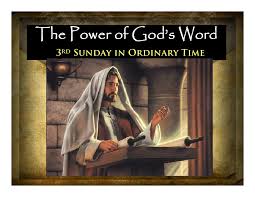
This Sunday we celebrate the 3rd Sunday of ordinary time which falls during the week in which we pray for the unity of Christians. The second reading from St. Paul tells us that though the Church has many parts we are one body, the body of Christ and this is true. As Christians there are different faiths and each of us has a different faith journey but the one thing that unites all of us as one body is Jesus Christ the son of God.

In the Gospel Reading for this Sunday Luke wants to make very clear to his readers what drives Jesus the Prophet from Galilee and what is the goal of his action. We as Christians need to know in what direction God’s Spirit pushes Jesus, since following him means that we are walking in the same direction as he did. The Spirit descended upon Jesus at his Baptism in the Jordan. With the Spirit poured upon him, Jesus would proclaim freedom for the trapped (captives), the diminished (blind), and those in need (oppressed). When Jesus proclaimed the Good News, he proclaimed the Spirit. Since Spirit meant breath, Jesus breathed God’s word in his words and deeds.  The power of his proclamation changed people, situations, and environments because he breathed out the power of God.

When Jesus spoke, hearts turned to God and health of mind body and spirit were restored. There is an immediate life-implication of today’s passage that is easy to overlook for us in our I want I get world. it is this: The Spirit of the Lord comes upon Jesus and comes upon the Church in order to bring good news. The presence of the Spirit means joy. In the 21st century we’re OK with entertainment and pleasure, but we are often suspicious of Spiritual joy because it might be a pie-in-the-sky illusion. How can we talk about or even allow ourselves to experience joy, when there is so much false hope, so much suffering, so much serious work to be done in the world around us? The paradox of Christian faith is the cross of Jesus. The cross symbolizes the pain and sorrow that Jesus and we know so well. At the same time, the cross of Jesus is the ultimate revelation of the love and mercy of God shown to us through his son. “For the sake of the joy that lay before him he endured the cross despising its shame, and has taken his seat at the right of the throne of God” (Hebrews 12: 2). The joy that lay before him was not only that God would wipe away his every tear, but that through his self-giving love, his joy might be in us and our joy might be complete. We pray that as individual Christians and as Church, through the power of the Spirit, we will have the courage to bring Mercy to the poor, liberty to captives, sight to the blind, and freedom to the oppressed especially during the Year dedicated to  Mercy in all its forms.

iec2016_banner1452722818

This weekend we also have the beginning of the week-long Eucharistic Congress in the Philippines. It seems like yesterday when we celebrated the 50th Eucharistic Congress in Dublin in 2012 and yet four years have passed and so many things have happened. We pray this weekend for a successful congress for all those who will be going there in the days  ahead.
3RD SUNDAY OF ORDINARY TIME

images (5)

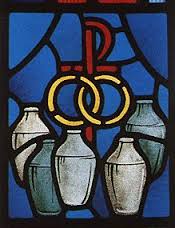
This weekend we have the gospel story of the wedding at Cana which was the first time that Jesus worked a miracle when he changed the water into wine. We hear Mary telling Jesus that ‘they have no wine’ Jesus said ‘Woman, why turn to me? My hour has not come yet.’ His mother said to the servants, ‘Do whatever he tells you.’  This Gospel is a story with many threads – the insight into the relationship between Mary and Jesus – the miracle of the wine itself – the fact that the miraculous wine is better than the original – the fact of Jesus honoring the young couple in this way – and so on. Images of marriage feasts and bridegrooms, wine and water, appear in the Old and New Testament with great regularity. The relationship between God and Israel was often seen as a marriage – Israel the bride, God the bridegroom. The coming of the Messiah was described in terms of a wedding feast and later, in Revelation, we hear of the marriage feast of the Lamb. Jesus spoke of himself as the vine and of longing to celebrate Passover, blessing wine into the cup of his blood. The abundant wine reminds us of the “new wine” spoken of by Jesus: the new order of things that he was inaugurating through his Paschal Mystery.

In contrast, the water jars of the Jews represent those who refuse to believe in Christ are empty and there must be a large number of empty jars in people’s lives these days for the same reason they don’t believe! The wedding celebration provides the context that enables us to see the greater reality. The bride and groom whose wedding is being celebrated are in the background as a matter of fact scripture says nothing about them or who they were. In the foreground we see Mary and Jesus. Mary, who asks for help when she tells Jesus “they have no wine”, Mary the faith filled disciple, has trust in divine providence. In the place of the divine spouse, stands Jesus. “The Word was in the world, yet the world did not know it.” The care, concern and affection of God are manifest in the Son.  Today there are so many different definitions of marriage and what exactly being married means and as we know so many freely choose not to get married and for some they live together which of course has its own particular problems.  In her response at the wedding at Cana Mary shows herself a model disciple who trusts in God. She shows that trust with the words that are meant for all of us even now we read them again “Do whatever he tells you.”  If we place ourselves at that wedding banquet, Mary is giving us direction. 

She is mother to us all and also the first disciple of her son. She knows the way to live because she learned it by listening to her son and thinking in her heart and in her mind about what he did and said. We should listen closely to what she says as Mary is the one who “keeps all these things in her heart, pondering them.” She learns to understand the message that is Jesus. Do whatever he tells you is Mary’s message for us. Today what does Jesus ask us to do as we think about the wedding at Cana are we like Mary prepared to trust in the Father who can give us all things or are we prepared just to trundle along accepting the things that come along. Or are we prepared to learn and understand the message that is given to us through Jesus whose mother asks us in the to ”do whatever he tells you.”

THE BAPTISM OF THE LORD

images (2)

This Sunday we celebrate the baptism of the Lord, when Jesus was baptised in the river Jordan by John. None of us remember when we were baptised when we were infants but that said we may know an Adult who was baptised at the Easter Vigil or at another time through the RICA process.

Sometimes beginnings are not remembered because they didn’t seem important at the time. However, some events in our lives become important because later on we see that it was then that something started, it was when we met that particular person or did a particular thing that changed our lives. Of course there are beginnings that are important like baptisms, marriages and ordinations. We like to mark these beginnings so we surround them with ceremony to give a sense of occasion. So the relatives are called in, photographers are hired, priests officiate, solemn words are spoken, cameras click, music is played, and there is an atmosphere of rejoicing. Clearly, something happened to Jesus while he was with John. He underwent a change that gave his life a new direction while he is with John, Jesus makes his big beginning. As Peter says in the second reading, “Jesus of Nazareth… began in Galilee, after John had been preaching baptism.” John was a very important turning point in the life of Jesus – so important that Jesus says of him later: “of all the children born of women, there is no one greater than John” (Luke 7:28).

It is a measure of John’s importance that Jesus makes a three-day journey south to the place in the Jordan valley where people immerse themselves in the river in response to John’s call. It is unlikely that Jesus’ relationship with John was confined to the moment of baptism; but it is the baptism that is the most important moment. Jesus is baptised in the company of many other people; for him, as for them, a new time begins. For us when we celebrate baptism there is a new beginning for the person who is baptised infant young person or adult. The baptism of Jesus by John in the Jordan marked the beginning of a journey which ultimately led Jesus to the Cross on Good Friday and our own baptism was also the beginning of our faith journey which won’t lead to the cross but will lead to eternal life.  Through our baptism we died with Christ and thus have been reborn into a whole new life (Romans 6). We, the baptized, are made a part of the body of Christ. We are called to imitate Jesus. We have the companionship of the Spirit of Jesus who is our wisdom, impulse and help to do good.

That same Spirit will enable us to do what is right in every situation we may find ourselves in. So today as we are reminded of our baptism by renewing our baptismal promises and being sprinkled with holy water. Take a moment and reflect on where your baptismal journey has brought you. What has been joyful for you on this journey? Then look around at everyone else and give thanks that together we can celebrate our life in Christ and look forward to further adventures in the life of faith  as we journey along the road.


Second Sunday after Christmas

download (1)

Yes you did read the heading correctly it is the second Sunday after Christmas and we are now almost  at the arrival of the Three Wise Men on Epiphany which takes place on Wednesday 6th January in Ireland. By long standing tradition Christians celebrate Christmas as a season, with the twelve days between Christmas and the Epiphany as one long “Christmas feast.” The season ends with the Baptism of the Lord which is also the first Sunday of ordinary time and that takes place next Sunday. The Christmas and New Year festivities are now a distant memory, and I am certain many people  out there are asking themselves the time honored question for this time of the year,  why did I make such a fuss!!!  So many make a fuss about the secular part of Christmas and as a result they have missed the essential message of the season.  The essential message is that Jesus Emmanuel was born in the stable in Bethlehem at Christmas and  that he is the reason for the season.

Our readings this weekend are all about Wisdom and the blessings of God and the Gospel tells us about the word who was in fact the Son of God. Jesus Christ, therefore, the Word made flesh, was sent as “a man to men.”  He “speaks the words of God” to us and completes the work of salvation which His Father gave Him to do. To see Jesus is to see His Father. To see Jesus is to see the face of the Fathers Mercy. Through the “least,” and the poor, Christ comes to us. That’s a lesson that we the members of the Church need to continually remember and proclaim in our lives and our dealings with other people. We will find Christ among the “least” and this is the message, the humble message that lies at the heart of our faith It is the message that Pope Francis is proclaiming in our own time and place. May we not be afraid in the year that has just begun to seek the wisdom that God wants for us, that is the wisdom and the light of faith so that we will be able to show the mercy of God to those around us during the year of mercy and throughout our lives.     

4th SUNDAY OF ADVENT

images (1)

This weekend the Holy year of Mercy is underway throughout the world and we light the third purple candle on the Advent wreath.  Last Sunday we opened the doors of mercy in our diocesan centers of mercy and opening the door means much more than just simply opening a door. We usually open a door to let someone in of course we also close the door to keep people out as well. In the sense of this Holy Year opening the door means that we open ourselves up to let the grace and mercy of the Father into our hearts and minds. I think that one of the ways we might show mercy to others these days is in our treatment of the refugees from other countries as they come to live in our communities in the days ahead.

The final Sunday of Advent draws us closer to the celebration of the Christmas mysteries. Christmas is almost upon us: yet are we ready in the true sense of the word remembering that Jesus is the reason for the season? Christmas we are told is a time for so many things  yet for many of us it is a time of stress and pressure with all the extra work to sort out every­thing that needs to be done.  For many it is a time when we are fearful that the children won’t be disappointed or that there won’t be tension in relationships or there won’t be a breakdown in the ceasefire with the in-laws.  And on top of all this there is a feeling of guilt for feeling like this when we should be happier that we are. Now in the midst of the preparations we meet Mary and her cousin Elisabeth in our Gospel reading for this weekend. Mary, who herself had been prepared for the coming of the Messiah. She has received the angel’s greeting, and his strange news, and has accepted her role in God’s plan.

Now she hurries to her kinswoman, Elizabeth, who herself bears John the Baptist in her womb. John, alerts us to the presence of the Lord, as he leaps for joy in his mother’s womb. His joy is that God has kept his promise, and is with his people.  That two women were chosen to play such a role in the story of salvation is remarkable, as women were often marginalized in the society of their time. In all of these events we see the great mission that Mary undertook as a privileged instrument in the hands of God. Mary is not only the mother of the source of grace; she is the very model of what a Christian heart should look like. We look to Mary to see our fullest Christian dig­nity. In Lumen Gentium 68, Vatican II describes our contem­plation of Mary as an act of entering our own deepest mystery, catching a glimpse of what we shall he at the end of our faith journey.

Over the next few days the journey to Christmas will have many pressures for everyone especially those who are worried or afraid about so many things family and otherwise.  Mary in her calm gentle way encourages us to trust in God’s word and to believe in God’s promises as she did. If we believe and have trust in God as Mary did then all the problems that might arise will assume their proper perspective and we will get through them and come out the other side wondering why we got so worried in the first place.

3rd SUNDAY OF ADVENT

images (1aaaa)

THE FIRST SUNDAY IN THE YEAR OF MERCY

This weekend we celebrate Gaudete Sunday which translates as rejoicing Sunday and we light the pink candle on the Advent Wreath. During last week  the beginning of the Year of Mercy took place on the feast of the Immaculate Conception on Tuesday. Pope Francis opened the holy door into St. Peter’s basilica and at the Mass for the feast day during his homily he said:  ‘ To pass through the Holy Door means to rediscover the infinite mercy of the Father who welcomes everyone and goes out personally to encounter each of them.  It is he who seeks us!  It is he who comes to encounter us!  This will be a year in which we grow ever more convinced of God’s mercy.  How much wrong we do to God and his grace when we speak of sins being punished by his judgment before we speak of their being forgiven by his mercy (cf. Saint Augustine, De Praedestinatione Sanctorum, 12, 24)! 

But that is the truth.  We have to put mercy before judgement, and in any event God’s judgment will always be in the light of his mercy. In passing through the Holy Door, then, may we feel that we ourselves are part of this mystery of love, of tenderness.  Let us set aside all fear and dread, for these do not befit men and women who are loved.  Instead, let us experience the joy of encountering that grace which transforms all things.

In our Gospel reading we this weekend we hear John the Baptist John spoke to people in words they could grasp. Here was a man who cared nothing for comfort, money or fame, who could not be bought, and who could speak the truth without fear. John makes such a deep impression on people that word goes around that he might be the Christ. Again, that expectancy is a measure of John’s effect on people. John doesn’t claim to know who the Messiah is; all he knows is that he is not. That role is for someone else, someone greater and more powerful than John. And as we know that person was Jesus the Son of the Father who is the face of the Father’s mercy, the face of mercy that we should always contemplate.

These words might well sum up the mystery of the Christian faith. Mercy has become living and visible in Jesus of Nazareth, reaching its culmination in him. Jesus of Nazareth, by his words, his actions, and his entire person reveals the mercy of God. We need constantly to contemplate the mystery of mercy. It is a wellspring of joy, serenity, and peace. Our salvation depends on it. Mercy: the word reveals the very mystery of the Most Holy Trinity. Mercy: the ultimate and supreme act by which God comes to meet us. Mercy: the fundamental law that dwells in the heart of every person who looks sincerely into the eyes of his brothers and sisters on the path of life.

Mercy: the bridge that connects God and man, opening our hearts to the hope of being loved forever despite our sinfulness. During the Year of Mercy we will have many opportunities to celebrate the Mercy of the Father as we begin the year we recall the corporal and spiritual works of mercy:

The Corporal Works of Mercy call us to:

  • feed the hungry
  • give drink to the thirsty
  • clothe the naked
  • shelter the homeless
  • visit the sick
  • visit the imprisoned
  • bury the dead

 The Spiritual Works of Mercy call us to

  • counsel the doubtful
  • instruct the ignorant
  • admonish sinners
  • comfort the afflicted
  • forgive offenses
  • bear wrongs patiently
  • pray for the living and the dead


While we remember these works of mercy we also think about what we as individuals and community are supposed to be and that is merciful like the Father which is the theme for the year of mercy. There will be time for pilgrimage and prayer there will be time for conversion of heart in the tribunal of Mercy that is confession. It takes imagination to be merciful, to seek out occasions of mercy, all of the time to take the initiative, not merely await the mercy of the Father but work to bring it about through the acts of mercy listed above. I often  remember the words of Shakespeare when he said “The quality of mercy is not strained” this does not mean that we must not strain ourselves, it means that true mercy does not recognize any limit, holds nothing back, and gives all.

Our Father in heaven gave us so much in Jesus his Son he continues to give us much in our own time let us not be afraid to be people of mercy that are a reflection of the Merciful Father. So in our Joyful liturgy this weekend we have the double celebration as we rejoice at the beginning of the year of mercy and we rejoice with John the Baptist as we look forward to the coming of Jesus the face of the Fathers mercy at Christmas. Rejoice in the Lord always; again I say, rejoice. The Lord is near.


2ND SUNDAY OF ADVENT

8765799_orig

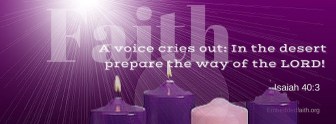
This weekend we light the second purple candle on the Advent Wreath and our readings are all about preparing the way for the Lord. In our readings we hear four voices encouraging people to imagine the good future that God has in store for them. The readings invite all of us to imagine the best and then act accordingly. In the first reading the prophet Baruch asks the people to change their wardrobe – to throw away the dress of sorrow and distress and wrap the cloak of God’s integrity around them. Things are going to look up, they should be dressed appropriately and have courage again in the future. So, too, the psalmist asks people to imagine a time when they will no longer be in bondage, sowing in tears, but will return full of joy carrying a harvest of good things.

In his letter to the Philippians, Paul takes a similar line. He compliments the people for helping him in his work, tells them how much he loves them, and invites them to prepare for that day “when you will reach… perfect goodness”.

Finally, John the Baptist in the Gospel story is travelling around the Jordan district announcing to anyone within earshot the great day to come when “all mankind shall see the salvation of God”. John the Baptist is one the central figures whom we meet over and over again in the Scripture texts chosen for use in the Advent liturgy. He stands at the threshold between the Old & New Testaments, a bridge linking the two. In John we see the culmination of centuries of prophecy, anticipation, and preparation.  John’s message did not die with him. The need for repentance and conversion of heart remains constant among God’s people even now. John’s words have continued to resound in Christian ears throughout the centuries. In a few days time on December the 8th we celebrate the feast of the Immaculate Conception it is also the day when we begin the Holy Year of Mercy with the opening of the Holy Door in St. Peters in Rome the theme of the year will be Merciful like the Father.

The Advent liturgy vibrates with the challenge of the Baptists cry, “Reform your lives!” May we take John’s call to heart the Holy Year which is in our midst!

1430832550293

FIRST SUNDAY OF ADVENT

11141157_1606343736288278_5910075055057336030_n

Here we are at the beginning of another Church year, today  we have a change of colour and a change mood we go from the green of Ordinary time to the Purple which symbolizes the penitential season of Advent last week, at the end of the Church’s year, we had the  highpoint of the Feast of Christ the King. This weekend we begin all over again as we light the first purple candle on the advent wreath. Advent is the season that brings us back to the ancient longing of the human race for the coming of one who would bring to this world liberation from sadness and the fulfillment of perfect peace.


The word Advent derives from the Latin word meaning coming. The Lord is coming may the heavens rejoice and earth be glad. We may reflect that every year at this time and celebrate his coming, so that in a sense we can lose the feeling of expectancy and joyful anticipation, because at the end of the season everything seems to return to pretty much the same routine. If that is the case, then our preparation may have been lacking and we have therefore been robbed of much of the true meaning of this season.

During Advent we recall the history of God’s people and reflect on how the prophecies and promises of the Old Testament were fulfilled.  At the beginning of each church year we are reminded that Jesus the Christ is present as a person to us.  When we think that his presence is something so exalted as to be beyond our own experience, we are reminded that he was born in the lowliest of places, a common stable.  The first visitors were rough shepherds.  The preparation of Advent is for us to prune, weed and convert our way of thinking. 

The prophet Jeremiah foretold the day when God would send his Messiah King  to “execute justice and righteousness in the land” (Jeremiah 33:15). Jesus is the fulfillment of this promise and every promise which God has made. In these short verses in the Gospel, Jesus described the beginning of God’s final initiative. He would give signs of warning across the sky, cause anxiety on earth with violent sea storms, and shake up the heavens. What we would explain scientifically today as eclipses, meteor showers, and the result of storm systems on earth, the ancients attributed to God’s intervention in the order of the cosmos. God would shake things up and so he does just look at Pope Francis for example and the way he challenges us as individuals and as members of the Church.

People of Jesus time would grow anxious because their faith systems and rituals failed.  But, Christians were to rejoice. Their Savior was at hand! Now, their world view and lifestyle would be vindicated. For, Christians saw the world and lived in the world differently. Finally, Luke presents a time of hope. Through great power and glory, the Son of Man would come and free his followers. Unlike the anxious people of the world, the Christians were to anticipate the end in hope. During Advent, we are invited to prepare our hearts for the coming of the Lord – to wait in joyful hope for his return in glory at the end of time  and to prepare for the annual celebration of his birth. So now let us go forth in peace and hope to prepare meet the Lord at Christmas.

FEAST OF CHRIST THE KING

images

This Sunday we celebrate the feast of Christ the King the last Sunday of the Churches year. The Feast of Christ the King was established by Pope Pius XI in 1925 as an antidote to secularism, this is a way of life which leaves God out of a person’s thinking and has us living life as if God did not exist as we all know God does exist and we see this through so many people throughout history right down to ourselves.  In a week that has seen murder, mayhem, and attempts to dominate the world and its people the word ‘king’ might seem a bit  harsh. Having said all of this we need to remember that the kingship Jesus is talking about is not about thrones or dominions or anything as negative as all of the recent violent episodes that have taken place in our world. Jesus is not king in an earthly sense. The acclamations of the crowds on Palm Sunday and the enthusiastic endorsement of the disciples that Jesus is the Messiah might mislead us. Jesus is king because he is the anointed one of God, who comes to do the will of God.

Our Gospel reading for this Sunday has Jesus before Pilate. The exchange between Jesus and Pilate makes it clear that the execution of Jesus is a consequence of his rejection by the Establishment of the Jewish nation. The authorities of the time did not like the truth that Jesus was speaking about on so many things.  In the reading from John’s Gospel  which is also part of the Good Friday Passion Narrative we see  this conflict is described in terms of the “truth” that Jesus  has brought from his Father: “It is because I speak the truth that you cannot believe me” (8:45). Jesus urged the people of his time as he encourages you and me in our time to find again our true calling in the work of God, to be “a light to the nations,” showing the world the life and joy of a people living according to the ways they have learned from Jesus son of the Father. The way for us to be a light to the nations  is to work for the for the relief of the deprived, the oppressed and the outcast. When we do this we are serving Christ because he fully identifies himself with all those in need and we should do the same. The disciple of Jesus cannot afford the luxury of saying “I keep myself to myself” or “I do nobody any harm.”

To be deaf to the cries of the oppressed is to be deaf to Christ. To be blind to the agony of those around and about us is to be blind to Christ  At the end of this church year , we are asked to embrace the cross and walk in the victory of the King of Kings and the Lord of Lords. What began as a humble event with the birth of Jesus in the stable has changed the world. As we prepare for Christmas during Advent are we with Jesus and his call to us to be merciful as the father? Are our lives an open sacrifice in a demonstration of the love of God? We can be sure that nobody there on Good Friday  thought they were witnessing the death of a great King. The kind of kingship Jesus spoke about has to be learned neither in palaces nor in schools of diplomacy but among the poor and needy and those whom the world has forgotten. For our king is the servant of the poor and we only belong to his court when we do likewise become servants of the poor. As we begin the Jubilee Year of god’s mercy in a few days time on December 8th, let’s not forget the beautiful truths that we have learned, let’s continue to learn more about them, celebrate them, live them, and pass them on. So that when people look at us, they will see that “Christ is King to the glory of God our merciful father.”

33rd SUNDAY IN ORDINARY TIME

download (1)

We pray today for all those who perished in Paris on Friday night this atrocity serves no one. This Sunday in our Gospel story we hear about the End times and I am sure that the people who died didn’t  think that they were approaching their end times may all of them through the mercy of God rest in peace.

For the past two millennia, Christians have looked to the future and asked, “When, Lord, when is all this going to kick off?” Jesus saw the end of time event as the visit of the divine King. God would prepare the visit with cosmic signs and events as a means of announcement. The King would arrive in a way that reflected his power and reputation (on the clouds); his messengers (“angels”) would go throughout the known world to gather all the faithful. Remember that the Jewish people had been displaced throughout the known world because of economic opportunity or oppression. Jesus implied that the injustice of Jews living on foreign soil would be corrected during his lifetime  How did his disciples know Jesus spoke the truth? Jesus gave a farming analogy of the fig tree to support his belief in God’s immanent judgement.

Every spring we observe the twigs on a bare tree start to grow and go green then Leaves appear and we know that summer is on the horizon. As Spring is a prelude to Summer, and Autumn warns of Winter so we must not be complacent, imagining that life can be held in suspension because life keeps marching on.

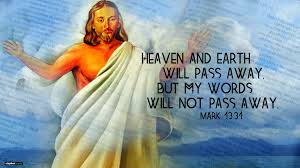
After the cosmic fireworks, Jesus imagines a peace beyond suffering. This vision of peace is important for Mark’s persecuted community: they need more than a firework display to see them through their own historical apocalypse. If their hope is not to be exhausted by force of circumstances, they need help to imagine a far side to pain and suffering. Mark gives their hope help in sharing Jesus’ vision. For that is the purpose of all apocalyptic writing: to fund the hope of those who suffer in the present. We live in an age of uncertainty: the future never looks wholly secure. But Jesus holds out a vision that takes us beyond our worst imaginings. There is a place beyond the mountains of arms and weapons, beyond environmental damage and terrorism. This vision doesn’t free us from the duty to strive for peace and right living, but it does free us from the blasphemy of believing that a nuclear holocaust will be the last word in the human story. In the meantime, we have to depend on the promise of Jesus: “Heaven and earth will pass away, but my words will not pass away.” No one, not even the Son, knows when all this will take place. The only sure thing we can hold on to is the word of Jesus and all we are asked to do is hold fast to what we know to be good and in these times when we look at all that is happening around us this is good advice.

Post Navigation