Fullerton T

RELIGION LITURGY AND LIFE

SECOND SUNDAY OF EASTER Divine Mercy Sunday

download (2)

This weekend we celebrate the second Sunday of Easter. This Sunday is also known as Divine Mercy Sunday, we also have the launch of the extraordinary Jubilee of the Holy Year of  Mercy in Rome. The holy year will begin on the 8th December and will last until the feast of Christ the King 2016.

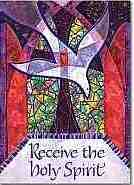
The Easter season has the most exciting Scripture readings of the year. They take us from the empty tomb of Easter Sunday all the way to the coming of the Holy Spirit 50 days later at Pentecost. The Apostles are huddled together in fear in the empty room. They weren’t so sure that the women’s report that Jesus had risen was believable. They weren’t singing for joy! Now, a whole week has gone by. They still felt “rocky” about their future.

Thomas wasn’t the only one who had doubts about Jesus, I think so many were doubtful then as so many are doubtful right here and now. The Apostles were pondering the shocking experience of the week before when all seemed to be lost as Jesus hung on the Cross. But here we are over 2000 years later thinking about how they felt after the events of that first Holy Week. Jesus had broken through those doors and came to assure them that he was alive and then his message must have troubled them: “As the Father has sent me, so I send you.” in the same way we are sent out in the Joy of the Gospel to bring his message to other people wherever we are by what we say and do. We are asked to bring the mercy of God to all those out there who need his healing merciful love.

We remember the joys the hope, the grief and the anxieties of the people in our time these are the joys and hopes, the grief and anxieties of the followers of Christ that means you and me. As Pope Francis directs us, we must courageously reach out in the joy of the Gospel to those who are doubtful among us, and assure them of the great mercy of Jesus. Our world is hurting so much because of the many evil things that are happening within it. May all of us be the witnesses to the joy of the Gospel bringing the caring face of the mercy of God to the people of our time and place as Christians in our own communities.

MERCY YEAR

EASTER VIGIL AND EASTER SUNDAY

images (35)

Having  completed our Lenten observance and after the liturgies of Holy Thursday and  Good Friday we  are now at the stage of celebrating the Easter Vigil on the day of resurrection that is Easter Sunday. Holy Saturday is about emptiness, the cross is empty and Jesus lies in the tomb everything around us is still.  The heavens and the earth cry out with longing for the sinless one who is not to be found, if we stop to think for a moment we remember that Jesus died and rose again on the third day. We wait, as mourners beside a grave, unsettled, ill at ease, not knowing what to do with ourselves. The Church has only one thing to do today: to pray through the emptiness of Holy Saturday.

Holy Saturday is the day when we experience watching and waiting at the tomb as we await the celebration of the Resurrection which we celebrate in the Easter Vigil and the season of Easter. The Psalm for Easter Sunday says, “This is the day the Lord has made; let us rejoice and be glad in it.”Above all days, Easter is a day of joy. At Easter, we celebrate the kind each of us longs for, when every tear is wiped away, and there is no sorrow any more no more suffering from weather or hunger or hurtful human beings. As we sing in the much-loved hymn by Fr. John Foley, S. J., at Easter, “the cross and passion past, dark night is done, bright morning come at last!”  When we ourselves rise to meet our risen Lord, in that bright morning we will hear him say, “Come away, beloved. The winter is past; the rain is gone, and the flowers return to the earth” (Song of Songs 2:10-12).

In the loving union of that encounter, all the heart brokenness of our lives will be redeemed. That will be perfect  joy.So in that same vein of perfect joy we say “this is the ‘day which the Lord has made.’ Alleluia!  let us take fresh hope,  with Christ our Passover everything is possible! Christ goes forward with us in our future!” Let us go forward together as Easter people rejoicing in the Resurrection.


THE EASTER SEASON

 Art Advent 2C

It can seem that once Easter Sunday has passed Easter is finished, but the’ celebration continues for fifty days. The next Sunday of Easter after Easter  day  is traditionally known as Low Sunday or Dominica in Albis (White Sunday) which refers to the white baptismal garment of the newly baptised. Divine Mercy Sunday is a new feast also celebrated on this day. It comes almost as an opportunity in which anyone who missed out on celebrating the mercy of Christ in Holy Week has another chance. After forty days we celebrate the feast of the Ascension of Christ who returns to the Father to send us the Holy Spirit at Pentecost. We spend the novena (nine days) between the Ascension and Pentecost praying for the Spirit like Mary and the apostles in the Upper Room. On the fiftieth day (which is the literal meaning of the word “Pentecost”) Easter ends. On that day “Christ’s Passover is fulfilled in the outpouring of the Holy Spirit” (CCC 731). Our celebration of Easter resonates throughout the rest of the year: full of gratitude for Christ’s passion, joy in his resurrection and, strengthened by the Spirit, we continue our Christian journey.


Holy Thursday and Good Friday

Lent has ended and now we begin the Holy Week Triduum. The word Triduum is the Latin for three days that is the three days of Holy Thursday, Good Friday and the great Easter Vigil on Holy Saturday night. The Church celebrates one liturgy each day. We should not think of the liturgies of Holy Thursday, Good Friday and the Easter Vigil as three separate events, all three form part of one single extended liturgy. In fact at the end of the Mass on Holy Thursday there is no dismissal and blessing instead we accompany Jesus to the Altar of repose. In the same way there is no formal beginning and end to the Good Friday liturgy.  This three-day liturgy concludes with the solemn blessing at the end of the Easter Vigil or at the morning Mass on Easter Sunday.


HOLY THURSDAY
734506_10152104728687991_8069566745559020741_n

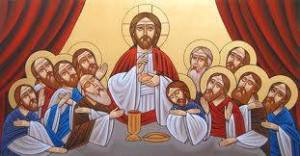
Holy Thursday is all about the priesthood and the institution of the Eucharist at the last supper. On the Morning of Holy Thursday, there is only one mass celebrated in a Diocese (Although the Chrism Mass may be celebrated earlier in the week). All the priests gather around the Bishop and the people of God to renew their commitment to priesthood. Also at this Mass the oils of Chrism, Catechumens and the Oil of the Sick are blessed by the bishop, these holy oils will be used in the Baptisms, Confirmations and anointing of the sick in the local parishes over the next 12 months. The theme running throughout this day is one of humble service that is service of God and his people.

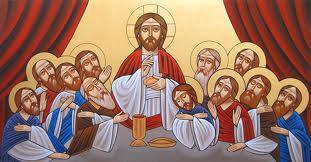
The Evening Mass commerates the Last Supper again the theme is service and sacrifice both of these are aspects of the same mystery.  We see Jesus as one who serves, who gives himself. Just as he freely gives himself in washing the feet of his disciples, so too he gives himself  in the bread and wine he takes, blesses and hands to the disciples.  

In the same way we receive Jesus in the form of Bread and wine from the hands of our priests. All these acts of self-giving are the same act – that of the Son of Man who came ‘not to be served, but to serve, and to give his life as a ransom for many.’ May we take up the mantle of humble service giving a helping hand to others and not counting the cost to ourselves. Many people over the years have given much at great personal cost and have not failed in their example of humble service and that for me  is what  Holy Thursday is all about  Humble service for others and not being afraid of being the presence of Christ for others no matter what the cost is.
images (33)

 GOOD FRIDAY

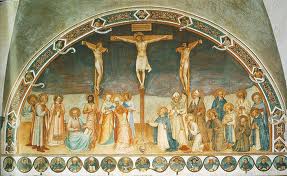
On this day in the liturgy we read St. Johns account of the passion, we pray for the needs of the Church and the world, we venerate the Cross and we receive the blessed Eucharist. We think of the death of Jesus on the cross, his death was a result of the courage of his convictions. He lived his life with a message of compassion, of equality and love, Jesus was often critical of those who lorded it over those who were less well off or who had little or even nothing at all. The cross of Good Friday is a sign and a symbol that all of us recognise, it is a sign of the completeness of the love that God has for each one of us faults and failings included. It is not accidental that the Passion according to John is always read on this day.  This account shows Jesus always in charge, in total command of his situation.  John’s Passion is an extended commentary on an earlier statement of Jesus found in John 10:17-18:  “I lay down my life that I may take it up again.  No one takes it from me, but I lay it down of my own accord.”   

 The focus of the liturgy of Good Friday, is not primarily a meditation on Jesus’ pain, nor on our sinfulness, nor on our imitation of Jesus’ humility on their own.  Rather the focus is a reminder to us that we are beneficiaries of this event, and so we call the Friday “Good” by thanking God for what God has done for us in Jesus.  The final words of Jesus from the cross say it all for us, “Is is accomplished!”  Jesus is not overcome.  On the contrary!  He has overcome! When we go up to venerate the cross on Good Friday we should allow the cross to move us to be better people. Consoling, comforting and challenging the people we meet with the values of Jesus and the Cross.

How splendid is the Cross- of Christ!

It brings life, not death;

Light not darkness;

Paradise, not its loss.

It is the wood on which the Lord,

like a great warrior;

was wounded in hands, and feet and side,

but healed thereby our wounds.

A tree had destroyed us,

a tree now brought us life.


Theodore of Studios
 

PALM SUNDAY

images (46)

As we gather together this weekend  we have come to our annual celebration of our Lord’s entrance into Jerusalem his own city at the beginning of Holy Week more commonly known as Palm Sunday. The entrance into Jerusalem is one of the very few events in Jesus’ life which is mentioned in all four gospels.  It is the only time that Jesus accepts and encourages public acclaim as Messiah.  He even goes as far as organising his entrance by telling the disciples to go and fetch the donkey.  The key moment in God’s great plan of salvation is about to unfold and Jesus knows exactly how it will unfold.

As we reflect upon the story of Jesus coming to Jerusalem we recommit ourselves to Christ and his message of salvation.The events of Palm Sunday were foretold thousands of years ago. The first reading from Isaiah, one of the four Suffering Servant oracles written at the time of the Babylonian captivity, speaks of a courageous and obedient messiah-figure, who says,

“I have set my face like flint” against the beatings and scourging that lie ahead, “knowing that I shall not be put to shame.” The second reading from Philippians reminds us of Jesus’ total emptying out of His divinity in order that He might identify Himself with the lowest criminal being led to His execution, “obedient to the point of death, even death on a cross.” We move towards the heavenly Jerusalem only because Christ himself has already made that journey to the Cross for us and now he offers to make it with us. 

 The full drama of the Gospel  begins with the crowd’s fickle acclamation of Jesus as King at the beginning of the reading. It is a foreshadowing of the blasphemous mockery the soldiers will hurl at our thorn-crowned Savior a few days later on Good Friday. And yet, we raise our voices joyfully with the crowd, linking the honor given Him, especially by the children, with His ultimate victory beyond the grave. We wonder and rejoice as the veil is raised to permit a glimpse of Jesus, the Messiah-King and liberator.

The Church is a master of drama in the liturgies of this week. Through the use of lay readers for the Passion and the voices of the congregation, we all become part of the action. On Palm Sunday we feel embarrassed to cry out “Crucify Him” with the palm branches still in our hands. It reminds us of our own fickle response and our lack of courage in responding to His love and truth. Yet we know that it was the sins of us all which brought Jesus to Calvary. Palm Sunday and Holy Week are all about Jesus suffering for our inadequacies and our own very real sins. Holy Week is a time for us to realize what we’re really like, and to find that the only remedy for our pains and our fears is love. That is Love of God and  love of others . Are we ready to join our own pains and fears to the Master’s? Are we ready to add as much love as we can possibly muster to His boundless love? As we recall the Passion story on Palm Sunday and then more solemnly on Good Friday we are called as witnesses to respond and to imitate his life. And as God’s family, we are called to look out for one another. It’s not just about “me.”It’s about “us.” Our journey is a journey of self-emptying in love too so let us not be afraid to set out on our Journey through the week that we are beginning with Palm Sunday so that we will be able to celebrate the bright light of  the resurrection at Easter.

HW

5TH SUNDAY OF LENT

SEED

Well here we are at the fifth Sunday of Lent often known as Passion Sunday; we are now heading towards Palm Sunday and Holy Week. The Sundays of Lent give us the opportunity to look at where we have been, where we are and where we need to go as we listen to the Word of God and what it tells us. Indeed we should be listening to the Word of God every time we hear the scriptures being read in Church or wherever. In the Gospel for this weekend some Greeks ask to see Jesus. Jesus responds by saying that anyone who loves his life will lose it; to gain your life, you have to be like a grain of wheat which brings forth much fruit only by falling into the earth and dying. The seed which must die to produce a harvest is a powerful image of Jesus death. The Greeks must have been baffled. They were baffled in much the same way that we are when we listen to the stories from scripture about Jesus and all the things that he had done. The gospel goes on to tell us that a voice is heard from the cloud, as at the Transfiguration in the other gospels, but here it speaks of the ‘glory’ that will come to Jesus for giving up his life. It is in his death and resurrection that he draws all people to himself, both Jew and Greek.

Many Learned men and women have tried to put their interpretation on the Scriptures but if we listen with open hearts and minds what the word of God means in our lives and the way we live them will become apparent. For many people including me God’s presence is not often thought of  at the time when it is upon us, but afterwards, when you look back at what has happened or what you have said you often see that the hand of God was with you. I have often said things to people about situations that they are in and thought to myself where did I get that from? Then on reflection I know that what I said was inspired by the Holy Spirit and was the right thing to do or sat in the right place.

As we come to the last few days of Lent let us prepare with great intensity for Palm Sunday and the Easter Triduum and then we will really be able to enjoy the Easter feast on Easter Sunday which we have been preparing for since Ash Wednesday and don’t forget the Easter celebration lasts until Pentecost Sunday !!!

4TH SUNDAY OF LENT

download (1)

This weekend we celebrate the fourth Sunday of Lent and this is also known as “Laetare Sunday” since its mood and theme is one of hope and rejoicing that Easter is near.  So what is the cause for rejoicing? The opening prayer offers an important clue. We pray to God as “[you] who through your Word reconcile the human race to yourself in a wonderful way.” it then goes on to say that  we pray, that with prompt devotion and eager faith the Christian people may hasten toward the solemn celebrations to come on palm Sunday and Holy Week

The Gospel reading from John tells us that a person is condemned because that  individual “has not believed in the name of the only Son of God.” God has no desire to condemn, but people condemn themselves by putting God and the ideals of faith out of their lives. Over many centuries many people have said there is no  god. There are so many people out there in our so called modern world  who have turned out the light of faith in their lives permanently for many reasons.  I know people of all ages who have been brought up in the Christian Faith and then have left it all behind .

At the end of the Gospel we are told that Jesus the Light came into the world, but the people preferred darkness to light, because some of the things that they had done and were doing were evil.

For everyone who does wicked things hate the light because the light shows up what they were doing. Jesus was sent by God; light in the darkness of our daily lives and living. At the Easter Vigil we proclaim the risen Lord as Christ our Light and we celebrate with joy. We are invited to celebrate this Sunday with joy, because we have been invited through baptism and confirmation to live in the light of Christ and to act accordingly

We also pray for those adults in the RCIA process who will take up the light of Christ for the first time when they are baptized at the Easter Vigil.  may they be a light to those around them as they come to the joy of baptism and confirmation. We also remember and pray for all those who have left the faith and extinguished the light of faith in their lives and we pray that they may reignite the faith in their lives by seeing the good example of those around them.

10985242_905359062848496_9013887000996625708_n

3RD SUNDAY OF LENT

10985242_905359062848496_9013887000996625708_n


 This weekend we celebrate the third Sunday of Lent and our readings take us from the Ten Commandments in the first reading to Jesus putting the tax collectors out of the temple in the gospel. What does this say to you and me about our journey during this time of Lent? For each person the scripture for this weekend will mean something different.

In the first reading we are presented with the ten commandments  they  challenges us to establish a right order with God (the first three commandments) and then with our fellow human beings (the last seven commandments) and ourselves. The words of the second reading tell us that God’s foolishness is wiser than human wisdom, and God’s weakness is stronger than human strength.  Our sins are signs of the weakness that we must overcome.“Christ is the power of God”; his weakness is more powerful than our strength and with God on our side who can be against us?

This Sunday’s gospel puts Jesus’ knowledge of our human nature so clearly: He really knew what was going on in the hearts of those around him. He knew what they thought as he knows what we think and what is going on in our hearts. He saw what they did to the Temple. The Temple was a place of worship. It was a place of celebrating the spiritual presence of God in the world. And  they changed the Temple into a marketplace.For many in our modern world the day of the Lord Sunday has been replaced with so many secular things taking the place of God and religion. Jesus knew that we would hide the celebration of the Resurrection behind the Easter Bunny. He knew that people would see the signs that he worked, the miracles he performed, but would refuse to see the messages behind the signs and the miracles. Instead they would see him as a wonder worker, a superman, a good show. Of course our faith is not about a good show instead it is about our relationship with God and with one another. Jesus shows us  what real love is. He went on to die on the cross for us.  Our dying with Christ during Lent is an identification with the power of Christ crucified. Our calling, then, is to be strong, not weak. The commandments represent not just a set of rules but an ideal of a social order for which we are to give our lives, as Christ did on the cross.

Second Sunday of Lent

images (4)

Well here we are at the second Sunday of Lent. It is hard to believe but time is marching on. In the Gospel reading for this weekend we hear about Jesus going up the mountain taking Peter and James and John, with him and we hear the voice from the cloud identifying  Jesus as “my beloved Son.”  the God who speaks to the disciples on the mountain directs them to Jesus and instructs them and us, “Listen to him” and our journey during lent is a journey of listening to scripture and listening to one another as we tell our own stories of faith. Jesus invites us to an exciting journey as a matter of fact our lives if lived in faith should be an exciting journey from birth right until we get to the pearly gates when we die. “The kingdom of God is at hand, Repent, and believe the Good News is all about Lent and in a particular way it is our call to take up the spiritual fight beginning on Ash Wednesday.  We’re not invited to a trip to Disneyland or any other holiday place we might want to go to. Instead we are called to explore the great depths of God’s love for us as we try to move and live in God’s Spirit as we climb the mountain of the Lord which is represented by our faith led observance of Lent.

2015  happens to be the Year of Consecrated Life, it is a time in  which we honor and support those who give total commitment to following Jesus Christ. Many people have taken up the call to go on an exciting journey of faith as priests, brothers and nuns in so many diocese and religious orders throughout the world.


Lent provides inspiration for all Christians  to remember and celebrate the days of their Baptism and Confirmation. Every year we hope to rise again from the ashes of our sins and failures “to recreate ourselves anew.” Every year we take a journey, a pilgrimage through the penance, self-discipline, prayer, and  good works in Lent leading  to the refreshing Easter waters of renewal. For many their journey began last Sunday in the cathedral churches as they began the journey to their Baptism at Easter as Catechumens. The  Catechumens are led to the sacraments of initiation by means of the rite of election, the scrutinies and catechesis. The faithful, listening more intently to the word of God and devoting themselves to prayer accompany them on their journey and  through a spirit of repentance all of us are able to renew our baptismal promises at the Easter Masses. We remember once again the voice of god from the cloud, our heavenly father identifying  Jesus as “his beloved son.”  The god who speaks to the disciples  also speaks to us and directs all of us to Jesus. That same voice of God also  instructs us  to “listen to him” may we sit up and take note of what he is saying and not be afraid to do what he asks of us.


1ST SUNDAY OF LENT 2015

images (1)

Well Lent has begun, after the ashes of Ash Wednesday comes the commitment of the next 6 weeks. Our gospel story for this weekend tells us about Jesus going out into the wilderness where he was tempted by the devil in the wilderness.  God asks us to undertake this time of renewal and that is why we have the penitential season of Lent. Why do we have Lent every year? Why penance? Why fasting? Why almsgiving? What does that have to do with us? If we take our faith seriously then Lent, penance, fasting and almsgiving have a great deal to do with all of us.

This reading from the Gospel of Mark also tells us that the time has come for us to repent and believe in the Good News. It is an ancient custom in the Church that the story of the temptation of Jesus in the desert should be read on the first Sunday of Lent. Jesus spent forty days in the wilderness. At the beginning of the forty days of Lent the Church always puts before us his time of solitude and it also puts before us a time for renewal. We ask ourselves what in our homes, at work, local, and parish communities needs to be changed for so many are out there in the wilderness of a godless faithless life.

During the season of Lent we stop to take stock of where we are in our lives and where we really need to be as people of faith who believe in God. These next few weeks will be a time of refreshment, a time of repentance and also a time of renewal that prepare us for Holy Week and Easter. So now as we begin Lent we are invited to commit our lives fully to God and God’s ways remembering that god’s ways are not our ways. Jesus preaches “Metanoia” – that is “Repentance” – which requires change of heart, mind and Spirit. Let us ask ourselves whether we are open to be really changed as gods people s so we will be able to enter more fully into the great ceremonies of our redemption during Holy Week and Easter.

images

ASH WEDNESDAY 2015

LENT

Here we are once again at the beginning of the holy season of Lent. It seems like yesterday when we began our observances of this Holy Season with the Ashes and the words repent and believe in the Gospel for Lent 2014.  But here we are on the ongoing circle of the year and have arrived at Ash Wednesday. In a packed programme over the next six weeks we will give up things and we will take up things. I like to think of Lent as a time when we take up things such as the daily Mass we have mass at 7.30am each weekday or perhaps we might travel the road of the Way of the Cross. It is also a time when we give up things in order to renew our spiritual lives. There are so many opportunities to give up and take up things to renew our spirit there are also chances to give alms to other people through Trocaire and other agencies. 

A few days ago I spoke in this blog about many who are disheartened by what they see within the Church of recent times Young and Old sense what seems to be the tedium and a staleness about our religion and our practice of our faith. Lent is a time to change that within ourselves! Though we live in the world and are of the world we need to remember that all of us who have to deal with and live in the world should not become engrossed in it as the world and its life has taken many people including at times you and me  down the wrong road and that road  leads one  away from god and his ways. Lent then is a good time to start a renewal within ourselves and our Church and it is a time to banish the tedium and staleness within our lives of faith.  When we come to Palm Sunday we will be able to sing Hosanna with renewed heart and mind  and then during Holy Week and Easter we will truly be able to celebrate the great things that God has done for us and is doing in our lives.

Post Navigation