Fullerton T

RELIGION LITURGY AND LIFE

22ND SUNDAY IN ORDINARY TIME

images (2)

Well here we are at the last weekend of  August and the youngsters are going back to school. Time is flying by for all of us both young and old as we move into the new school year. I’m sure at this stage everyone will be happy to get back to the daily routine of school and home life instead of the frenetic activity of the summer.

Our Gospel reading for this Sunday deals with tradition it also deals with the opposition to Jesus which came from the Pharisees and the temple officials as a result of his challenge to their version of tradition. When it comes to the subject of tradition, people’s attitudes can vary dramatically. Some people have an affectionate loyalty to traditional ways of doing things they often say we’ve always done that this way. They feel secure when they adapt their own values and behaviour to received wisdom, reassured by the knowledge that they are following in the footsteps of many others. Problems occur if laws themselves become more important than the people whose lives they are designed to serve and protect . According to the written Law, ceremonial washing was required only of priests before they entered the sanctuary. By the time of Jesus, however, the ritual of hand-washing, before every meal and between each course, had been extended to include all pious Jews.As we all know Jesus interpreted the Jewish Law in a different way and as a result of his interpretation he clashed with the Pharisees.  The Pharisees were mainly concerned with the externals of faith and didn’t understand the message of Jesus that faith comes from the heart. In our Gospel reading Jesus teaches a central truth: it is what comes from within that determines whether we are clean or unclean, good or evil not the washing of our hands.  In our secular world, so many couldn’t care less about ritual observance or conversion of heart. When things are going well, there seems to be no need for God, much less religious observance. Conversion of the heart means that we have discovered that all our goodness comes from the love of God for us. This leads to genuine prayer of praise and gratitude as well as a real yearning to share this gift with others.
21st Sunday in Ordinary Time

download

Well here we are past the midpoint of August with the return to school for our youngsters looming in a few days time. Spare a thought for all the parents out there getting the bits and pieces needed for the kids return to school. I’m sure they are running round trying to bring it all together and I hope that it all goes well for the kids and their parents as September looms large on the horizion. This Sundays Gospel reading has a resonance with the modern world for me. In today’s Gospel, Jesus puts the choice to His apostles of following Him, or of leaving Him. Many of the Lord’s followers had left Him because of His teaching that He Himself is the Bread of Life. After hearing Jesus’ teaching on the bread of life, many of the people find Jesus’ language intolerable. As a result of this intolerable language some  of them choose to leave him. Today in a similar way so many people find the words of Jesus to be intolerable language as many Christians have got up and left their faith behind them and some may never return again.

No one who accepts Christ for what he is, the Son of God in human form, has any difficulty in believing that he left us himself in the Eucharist as a sacrifice and a sacrament This does not mean that we understand this gift of Christ in all its details I certainly don’t but it was an act of divine power and as such beyond full human comprehension.  We can understand enough about the actuality of the Eucharist because we accept the words of Christ, who “has the words of eternal life,” even though its innermost nature escapes us. In Galilee he promised to give his body and blood in the Eucharist—to be our spiritual nourishment — communion — and our means of offering an absolutely pleasing sacrifice to God every time his body and blood are made present by the words of the priest. He fulfilled that promise at the Last Supper. He gave to his Apostles and their successors the power to repeat this act of divine love when he said: “Do this in memory of me.”

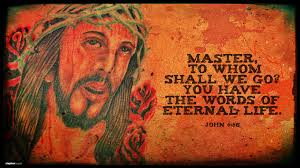
When Simon Peter answered Christ’s challenge—”will you too go away?”—he spoke not only for his fellow-Apostles that day with: “Lord to whom shall we go? You have the words of eternal life.” but for all of us in our own time and place as well, people who really believe that Christ was the incarnate Son of God. Peter made his act of faith before he was fully convinced of the divinity of Christ, but he was already convinced that Christ was close to God and spoke nothing but the truth.

We have the proofs of Christ’s divinity which Peter and the Apostles later got. We have also the faith of two thousand years of the Christians whose belief in the Blessed Sacrament the bread of life as a sacrifice and sacrament was at the very center of their Christian lives. This belief was passed down to us through each generation. We have also the noble example of many martyrs who gladly gave their lives in defense of this truth. Our faith may never be put to such an extreme test, but should it be, God grant that we will not be found wanting. “Lord to whom shall we go? You have the words of eternal life.”

20 TH SUNDAY OF ORDINARY TIME

ce08ccee9da85f2bcefcf92cf8b96767

 We are now at the midpoint of August and summer has flown by and the thoughts of the children and their parents turn towards going back to school at the start of September. Over the next few weeks the preparations will get going and hit fever pitch with the buying of school uniforms and all the other things required for the school going population. This indicates an unending circle from one September to the next, each year being the same with the people involved getting a bit older as time goes by. Also this week the exam results are is for those doing the A levels and next week we have the results for those doing the GCSE exams. 

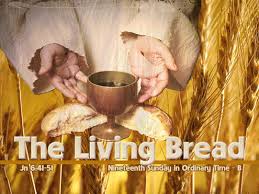
 Our Gospel Reading for this Sunday suggests when we take Communion we really are taking real Food and real Drink.   The receiving of this gift becomes the acceptance and acknowledgment of the Lord’s care for us and thus, ultimately, the nourishment we need to continue the journey. Sometimes it is not easy to put one foot in front of the other, let alone continue on the journey of faith.

In His book To Live Is to Love, Ernesto Cardenal says, “If in everything you fulfil God’s will rather than your own, every encounter in the street, every telephone call, every letter you receive, will be full of meaning, and you will find that everything has its good reason and obeys a providential design. To “live in love” requires us to be connected to the Love of God.     There is one concrete way that the Lord helps us to make this connection that is by providing the Eucharist the bread of Life.   In the bread and wine offered at the Eucharist, the risen Lord makes himself present.

While the priest invokes the words of blessing (thus acting as the instrument of Christ or “in persona Christi”), the conversion of the bread and wine into the blood into the Body and Blood of Christ remains the initiative of God (specifically, the Holy Spirit). The offer to partake in the “living bread” is God’s offer of unity with Christ and his followers (his “body,” the Church). The attraction of the Eucharist or Blessed Sacrament is dynamic. Jesus is dynamic.

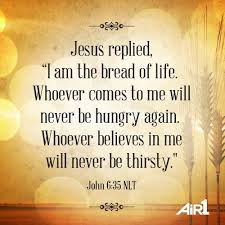
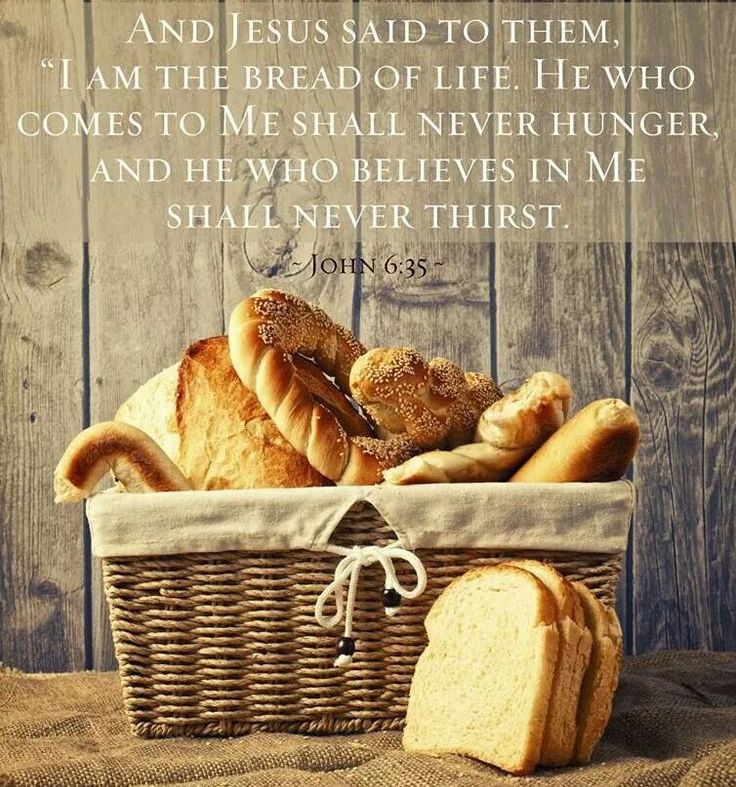
When we receive communion or when we come to pray before the Blessed Sacrament, we don’t receive an inanimate object.  We don’t kneel before a static entity. This is not a crucifix or a statue that reminds us of something. This is Jesus. The One Who Is who was and will be in the future. When we receive communion or come to adoration, we take within ourselves or we come before the dynamic, powerful Presence who speaks to us through the life He has given us. How great is our God. He has found a way for each of us to have continual, intimate encounters with Him. Let us pray, for those whose access to the Gift of the Eucharist or Blessed Sacrament is not so easy whether they have left the faith or perhaps they might be struggling with it or for many they may not yet found it as we remember that Jesus has said ‘I am the Bread of life he who comes to me will never be hungry.’

19 TH SUNDAY OF ORDINARY TIME

images (2)

Here we are heading into another week end and our gospel this Sunday is about bread. Some of the greatest stories I have heard were told around the kitchen table at family meal times so in a similar vein we listen to the Scriptures as we gather around the table of the Lord each Sunday as the family of God. Jesus is the life-giving word. God is feeding us through the Word. “We do not live on bread alone, but by every word that comes from the mouth of God Deuteronomy (8:3).” The Gospel reading for this Sunday deals with a doubting audience, they were shocked and critical of Jesus’ claim to have come down from heaven as the Bread of Life. Despite the miracles they had witnessed, and the words of wisdom they have heard preached with such convincing authority, they could not go the extra step to accept His claim. We are able to take that extra step because our Christian faith has come to us from Jesus, we know where he came from, we know where we are going and we know how to reach that destination. Of all the knowledge a human being can acquire on this earth, the above facts are the most essential and important. The knowledge our Christian faith gives us concerns eternity and our journey toward it. The personal faith that we have has passed down to us through each generation and this means that “God out of the abundance of his love, speaks to us as friends and lives among us as  the living bread which came down from heaven.

The Gospel lesson for today tells us that we can’t do it by ourselves.  We need Jesus.  And we find Jesus through the teachings and Word of God.  It is through our communion with him, in him, and through him in the eating of the bread of life that his flesh becomes the life of the world.  It is in our relationships of love with each other and our listening to God and learning from God that we experience Jesus among us.  In our simple day-to-day lives of being kind to one another, compassionate, and forgiving one another, we are empowered to be imitators of God.  So, at the end of each day, when we give thanks for all of our blessings, most of all, we should give thanks to God for the presence of Jesus in our lives. 

18TH SUNDAY IN ORDINARY TIME

images

Here we are at the beginning of August and it seems a very short time since the summer holidays began and yet it will be no time until the schools go back at the start of September.

Our Gospel reading this weekend has as its focus Food that is food for the body that is bread and food for the soul that is the Bread of life. Jesus tells the people that they are only following him because they have enjoyed the food that physically satisfies them; they should work, he says, for the food that endures to eternal life. The one thing which earns this food is believing in the one God has sent. The Galileans promptly ask Jesus for a sign to aid their belief in him – a sign like the manna their fathers ate in the desert.

Jesus points out that it was God, not Moses, who supplied the manna, he compares himself to the God who now gives bread from heaven. Jesus declares that he himself is the bread of life, the bread come down from heaven. Whoever believes in him will never be hungry. Yet there are so many people in our world who suffer from hunger, physical hunger for so many do not even have a wee bit of bread to eat or water to drink. Also there is a great spiritual hunger, there are many people out there who have lost their faith and there are also many people searching for faith who have yet to find it. I think that in our day and age we need to be the bread of life for all those who are out there who have lost the faith or those who are searching. What does it mean for you and me to be the Bread of Life to others? It really means feeding the hungry through our donations to organisations that bring physical bread to the people who need it in the world. It also means being a light showing that God the Father has sent Jesus from heaven to be our food, our strength, our hope, and our joy in living. Nothing else in life can surpass this Bread of Life given freely and freely accepted by those who choose to accept this great gift of God. 

17TH SUNDAY OF ORDINARY TIME

download

Well here we are nearly at the end of July and for us here in Ireland the summer break is almost at the half way mark. I’m sure the kids have been enjoying their time off from school and by the same token I am sure their parents are pulling their hair out wondering what are we going to do next, these days family life is not easy!!!

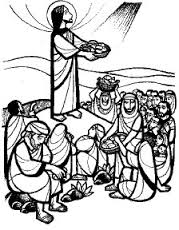
In the Gospel reading for this Sunday we hear the story of the feeding of the five thousand. The crowd is huge can you imagine five thousand people and all of them are hungry: for physical food in a deserted place and hungry for still more. They are hungry to be acknowledged, to feel counted and recognized. Like those of us gathered for Eucharist each Sunday, they are also hungry for what Jesus had to say about God. They hunger to know that God is on their side, when the rest of the world considers them insignificant. How can their physical hungers be fed, there is no food around? How can their spiritual and human hungers be noticed, their need to feel important, and their hunger to know God be filled? In their Roman- occupied world they are slaves. In their religious world, a long way from the seat of their faith in Jerusalem and the religious elite, these Galileans were considered next to pagans;

ignorant and a long way from God when in truth they were nearer to God than many of the righteous people of the day. There is some food there, but almost nothing in the light of the numbers who are hungry. In this story the food of the poor barley bread counts and it is not an insignificant gift. It’s given by a boy, it’s all he has, and he makes it available.We tend to measure the size of any problem that may arise and then back away, shrugging our shoulders, “What can I do about such a big problem?” Well we in simple terms have to face the problems head on and the boy in this Gospel is a good example for us: better to do something about the situation we are in than nothing at all. The life implication of this gospel is simple: Jesus wants to work the miracle of feeding a huge number of people who are hungry; but the miracle will not happen without someone to provide five barley loaves and two fish. The end of this passage is important: “and all ate and were satisfied. And they took up what was left over, twelve baskets of broken pieces”. Jesus asked the disciples to ensure that nothing was wasted: nothing thrown out!

The people in this story realize that Jesus had something to offer them in the deserted and lonely places in their lives. Jesus wasn’t just filling their stomachs he was also nourishing their souls. They weren’t rich, famous, educated or powerful; they were the afflicted and marginalized people that Jesus went out of his way to seek out.  Life may have passed them by, but Jesus didn’t.  He took note of them, and they in turn saw in him a place to be nourished, a place where deep hungers and longings of life would be fulfilled. The Gospel account of the multiplication of the loaves proclaims who Jesus is and provides food for thought and prayer. This Gospel also proclaims who we are as people who are hungry for what Jesus the bread of life has to say to us about God.  Are we prepared to open our ears and listen to the message of Jesus in the Gospel so that we can pass that message on in what we say and do in our lives ?

16TH SUNDAY IN ORDINARY TIME

images

As we listen to the scripture readings this weekend we hear about shepherds. The first reading is a call to those who were not good shepherds who allowed the flock to be both destroyed and scattered to come to their senses. And the gospel story seems to suggest that we should separate ourselves from our work at times in order to find some peace and quiet. That is surely part of it as we are often encouraged to go on retreat, but something much more profound is the issue here. We must in fact find the quiet place in our hearts to which we can withdraw at any time, whether at work or at play. It is in this quiet place that we ponder the word of God, our loving Father. These words are spoken to all of us, just as they were to Jesus in his time. The biblical reader knows the significance of a “deserted place.” We recall that, after God delivered the Israelites from their Egyptian slavery, God led them out to the desert and tended them with food and drink. And more! In the desert God revealed himself to the people and made a lasting covenant with them.

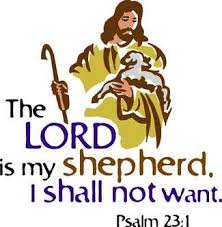
Jesus is doing what God did for the people in the desert. He teaches them “many things.” They are spoken softly but very insistently. When we take time to hear them in that quiet place in our hearts, there is nowhere else that we would rather be, for they affirm us and liberate us to be all that we are meant to be.  When this happens, we are no longer like sheep without a shepherd, no longer confused about the meaning of life or about our ability to live in peace and joy. One may object that, if this happens, we will soon be “out of touch or distracted or living in fantasy. But that does not happen when we are really in touch with God, we become far more attuned to what is real in life than the so-called “practical people” do. Those who really encountered Christ, especially the Apostles had an anchor in their lives. That anchor was the care of Jesus the Good Shepherd for each of those around him in his day. This is the Christ we to believe in today, he is the good shepherd who cares for us in the here and now of our daily existence. We remember the words from the psalm The Lord is my Shepherd there is nothing I shall want Or just to change it a wee bit Jesus is Our  Shepherd there is nothing we shall want.

15TH SUNDAY OF ORDINARY TIME

images

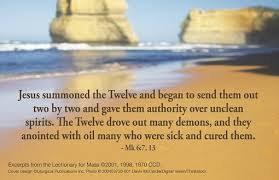
This Sunday our Gospel reading is all about Mission. Jesus summons the twelve apostles and sends them out on a missionary tour.  The chosen followers of Jesus have to carry the word of God as a challenge to others. In that mission the apostles have the authority and the power of Jesus. They have to travel on that. They are not to rely on their own resources but on the authority that has been given to them and the hospitality that will be offered them. With no bread and no money, they have to depend on the kindness of others: that vulnerability makes their message their real resource. If they have bread to eat, it means that people are not only hospitable to them but to the word they preach. If they are not accepted, they have no option but to move on. And when a town rejects their message, the apostles are to shake the dust from their feet – a symbolic act performed by strict Jews returning to Palestine after journeying abroad. The Twelve went out and preached. Jesus and his Twelve preached that God would adopt humanity, making its members which include you and me “sons” and “daughters” of the Father This was Good News then just as it is now!  In recent times we have seen the decline in people attending Church in our parishes for many reasons and I think we need to be like the twelve who were sent out with the message of Jesus but with one difference we need to seek out those who do not want to hear the message instead of shaking the dust off our feet we really need to let our feet get dirty. We have to have carry the word of God as a challenge to others and it should also be a challenge to ourselves in our time and place. There is much within the Church that needs to be challenged but there is so much more that is of value even now. In telling us about the beginning of the church in so dramatic a fashion, Mark, wants to be certain that disciples in his church and in the church  of our time will be mindful of some important implications. We, like the first disciples, are inadequate for the task; yet Christ’s mission for God’s kingdom is given to us. If we labor under the illusion that we can bring about God’s reign on our own, we will be advancing something other than God’s kingdom on earth. Paul refers to his experience of preaching the gospel as foolishness (1 Corinthians 1: 1831). He relishes saying “we are fools for Christ’s sake? Because he understands that it is because of his weakness that the power of Christ can dwell in him (1 Corinthians 4: 10 and 2 Corinthians 12: 9). Of course, we know that is a task not confined to the clergy or to religious sisters and brothers. It is the job of every single member of the Church. The message of hope from today’s Gospel is that we don’t have to communicate the Gospel in highfaluting or overly technical language. We will be far more effective if we just use ordinary words and simple concepts. We don’t have to have spent years of study before we can explain what Christ means; we can do it quite easily using concepts we already understand as well as examples from our own lives.

The crucial point in the Gospel  is that by doing things Jesus’ way the Apostles get close to the people, they understand their concerns and they share their life. There is no better way of communicating the love of God to the people around us than sharing the concerns of others and getting close to the people of God. Let us be fools for Christ like St. Paul as we remember that it is through our weakness that the power of Christ can dwell in us and work through us for other people.

14TH SUNDAY IN ORDINARY TIME

images

This Sundays  Gospel sees Jesus going back to his roots in Nazareth. This is not a social visit: like other towns in Galilee, Nazareth and its people have to hear the Good News of the kingdom. When Jesus teaches in the local synagogue, many of the townspeople are astonished at the performance. They wonder at the origin of Jesus’ teaching and the nature of his wisdom, as well as the miracles that are done through him. From the unanswered questions about Jesus’ wisdom, the neighbours move to more familiar territory and focus on what they do know about Jesus. Whatever their wonder, they are not going to allow the wisdom of Jesus  to interfere with their memories of him. Prior to this section in Mark’s gospel, Jesus has been doing some extraordinary things. His baptism by John in the river Jordan was accompanied by an affirming voice of the Father from the heavens, “You are my beloved Son. On you my favor rests.”

After his desert testing Jesus called his first disciples, cured the man in the synagogue with the unclean spirit and the paralytic in Capernaum; expelled the legion of devils from the Gerasene man, you may remember last week in our Gospel Reading Jesus raised the daughter of Jairus, cured the woman with haemorrhage, Jesus is doing wonderful things as he proclaims, in word and deed, the coming of the reign of God. Though he did all the wonderful things the people still had little faith which also seems to be the case these days. The people wanted the powerful signs of God’s final coming with a strong right arm to rescue them. But when Jesus spoke about the signs of the kingdom’s presence, he spoke of scattered seeds and, to emphasize the kingdoms small beginnings, he compared it to a mustard seed, “the smallest of all of the seeds of the earth” Where was God’s show of power and mighty arm in a tiny mustard seed? Mark sums up their reaction, “And they took offense at him.”

And so it is today as many take offence at the values of Christianity and the good it makes for all of us in our world. A world which in many respects is so faithless with many  people taking offense at Jesus and his teaching. Jesus revealed God’s presence to the people of Nazareth as a different kind of power: the power used only to help others, not ourselves; a gentle power that does not force or coerce people to do our will; the power of compassion and gentleness, when others are expecting force. All of us know from our own experience that when we admit our failures and limitations, that exercise in honesty can mark the beginning of a new understanding. If our Lord and God can take failure in his stride, we might even end up boasting about God’s fantastic message! What is the message of the wisdom of Jesus? Jesus message is really about using whatever power that we might have in a positive way to help others and the greater our weakness the more powerful we will be that is powerful with the power of compassion and gentleness.

gentleness.

LOURDES PILGRIMAGE

9D074B40

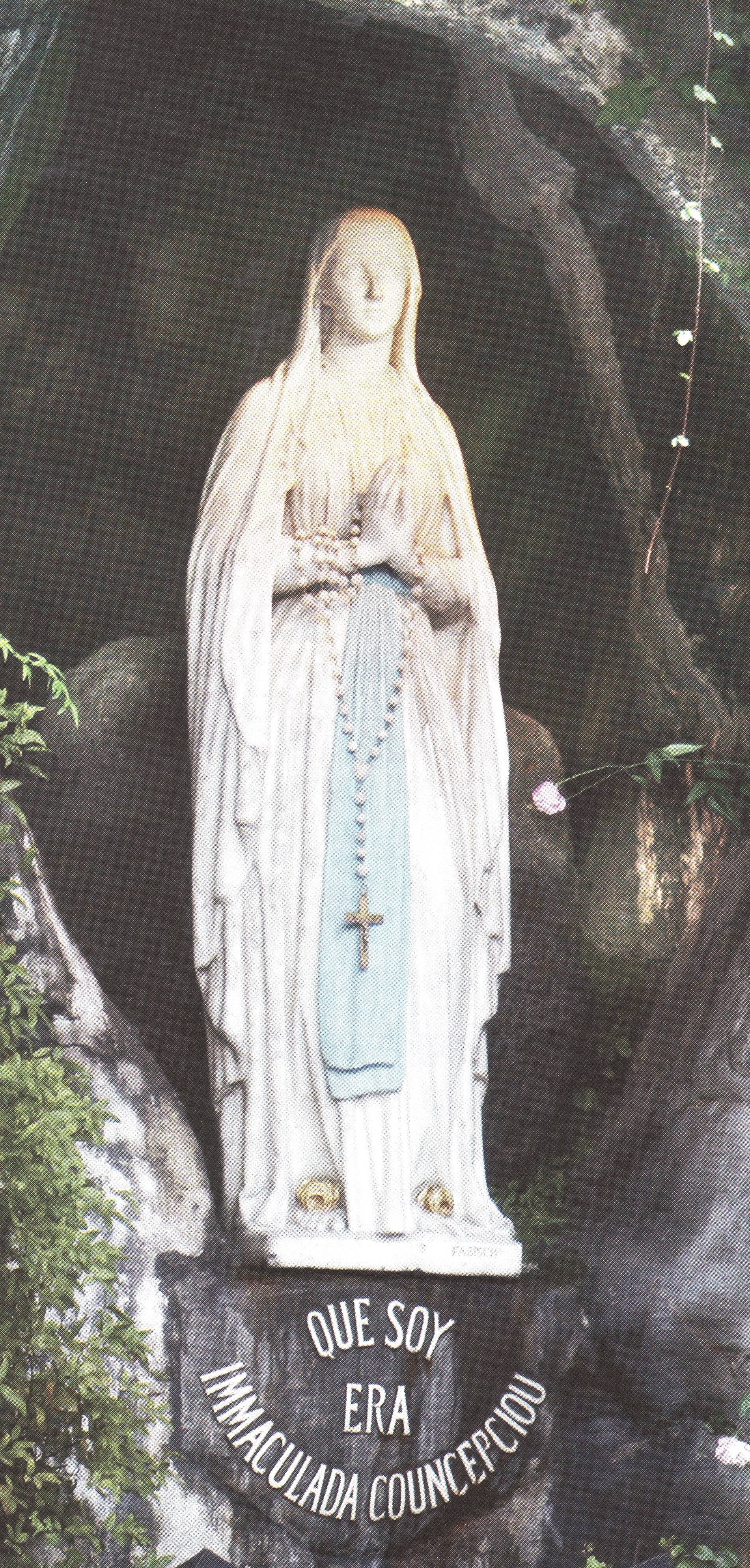
 Over the next few weeks a number of friends of mine will be travelling to Lourdes here are a few thoughts on what the place and the people mean to me 34 years on from my 1st pilgrimage as a 14 year old in 1981.

When I think about Lourdes so many things like the cold water of the baths and people such as Fr. Leahy and Mrs. Smye and CLM all come to mind. After all the  years of coming and going so much has changed and so many people have gone to God both young and old and all the ages in between. There have been So many happy and sad times together with those who began to mean a lot to me way back at the start in August 1981 and many of those people mean so much more to me now they all know who they are and hopefully they might even be reading this !!!. Lourdes is the one thing that I have in common with all of my friends. The experiences that I have had over the years have changed me So much for the better I hope that I am more thoughtful and a less annoying person than before other people will have to tell me whether that is true or not. Lourdes has many meanings for everyone who visits the place but for me it means love, joy happiness and yes even sadness but above all else it is about the presence of Mary our mother in my life.

It is about Mary bringing all of us to Jesus who in turn brings us to the Father and the father’s house. Lourdes is not about me as an individual instead Lourdes is about giving yourself away in service for others the pilgrims of all nationalities who need your help physical, medical, spiritual or for many including myself it is simply about just sitting listening to what is important to someone which often times is a load of rubbish or at least it seems that way to you but to them it is the most important thing in their lives at that moment. One friend recently stated that Lourdes was the annual dose of steroids for her faith she said this in an interview on the radio and that is a great description of the Lourdes experience it certainly is a boost for those whose faith is strong to keep on going and a kick up the 90’s for those whose faith is not so strong to a start walking along on the road of faith.

In our pilgrimage to Lourdes all of us come with the sick, the fragile, those who long for many different kinds of healing perhaps body, mind or spirit. We place them at the heart of our pilgrimage week as a visible sign of our faith in God’s love for the weak and those in our modern world who count for little or nothing at all when in truth they are of great value more valuable than Gold and Silver.  Those of us, who are sick or weak or powerless, like Bernadette, teach the rest of the able bodied world something of great and vital importance. They teach us that God is with the weak and the powerless and through them he points us along the right road.  We may, at least for part of our lives, enjoy comfort, good health, various kinds of success; they are not what life is about. Life is about the journey we make to God, not about what we think of as our achievements or our plans. Remember the old saying that man proposes and god disposes, this means god does what he sees is good for all of us both as individuals and community. 

When I went overland to Lourdes for the 1st time August in 1981 I didn’t think that I would go back and yet here I am talking about the one thing that is so much of what I have become over the intervening years. There is a line of Patrick Kavanagh that says “Only they who fly home to God have flown at all” I certainly have flown high above the clouds and so many others have been in the flight with me and given me so much in relation to Lourdes and the life I have back as a result back home. I only hope that I have been able to give them something back.  So much good has come into my life as a result of Lourdes and all the experiences that I have had there and I will always be grateful for the people and the place that mean so much to me.

Post Navigation