Fullerton T

RELIGION LITURGY AND LIFE

Archive for the tag “bible”

The Ascension

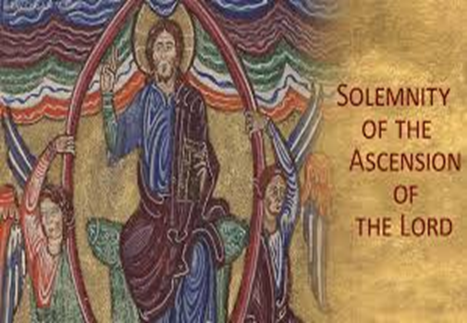
This Sunday we celebrate the Ascension: this is the day when Jesus returns to the Father in heaven. There seems to be a contradiction in Jesus leaving as he assures us that he is staying with us when he said know that I am with you to the end of time. Jesus is going to heaven, but it is not a farewell because he is with us today right where we are through all the ups and downs we have in 2026. He is with us in a particular way through the Holy Spirit and through the signs of bread and wine and the sacramental life of the church. We celebrate the Risen Lord Jesus as he returns to the Father the same Riesen Jesus who belongs to everyone who accepts him as the beloved son of God.

In the First Reading from  the Acts of the Apostles we are reminded about the death of Jesus, his resurrection and how the risen Lord met with the disciples, Jesus told them, you will receive power when the Holy Spirit has come upon on you, and you will be my witnesses in Jerusalem and… to the ends of the earth. And when he had said these things, as they were looking on, he was lifted up, and a cloud took him out of their sight.’ In the second Reading Paul prays that God, the Father of glory, ‘give you the Spirit of wisdom and of revelation in the knowledge of him, having the eyes of your hearts enlightened, that you may know what is the hope to which he has called you.’ For Paul, the resurrection of Jesus is the foundation of his faith and of all his missionary endeavors, and it is the risen Christ ascended into glory who is ‘the head over all things to the Church, which is his body, the fullness of him who fills all in all.’ This Gospel reading is all about the future it is also about us in the here and now of today, and what we are doing to make disciples of all the nations in 2026. Simply put where do we fit in when we hear Jesus telling us to make disciples of the nations and do we recognize him as being with us now in May 2026. In today’s gospel, Jesus has little to say, but he is definite about what he has to say. This is in sharp contrast to the fact that, even at this last minute, some of his disciples still doubted.

The disciples did what he told them to do. He asked them to meet him on the mountain, and they did that. Like any gathering of people, their feelings were varied. Some of them worshipped him, while some of them still doubted him. Jesus didn’t seem to have any great problem with that, because he knew that, when the Spirit came, all of those doubts would be ended. It would seem, indeed, that he was in a hurry to take his leave of them, maybe he was so that the second part of his plan of salvation could get underway. The mission of the apostles was simple to understand; difficult to carry out. It was to teach others all that Jesus had taught them. Just as he asked his disciples to obey him, they were to ask that others should obey his directions and instructions also, which is so hard in the world of today.  The programme of redemption and salvation that began at Pentecost must continue from generation to generation, until the end of time and here we are in 2026 talking about the ascension. With all the changes in the church and in society, the two things that have not changed are Jesus the Son of God, and every word of his message. Again, we ask ourselves what we are doing to make disciples of all the nations realizing that Jesus and his message is always new for each generation. May the Lord give us faith when we struggle, courage when we hesitate, and hearts open to the power of the Holy Spirit. so that salvation will reach the ends of the earth.

6Th Sunday of Easter

This Sunday is the 6th Sunday of Easter time, and it doesn’t seem that long since we celebrated Easter Sunday as we head towards Ascension and Pentecost which take place over the next 2 weekends. in the First Reading Philip goes to Samaria and preaches the word of God to the people, performing many miraculous signs and healings, which resulted in many people believing and being baptized. Peter and John arrive in Samaria and prayed for the new believers, laying their hands on them, and they received the Holy Spirit. The second reading is one that I always love to hear as it speaks of us having reverence for Jesus and that we should always be ready to give an explanation to anyone who asks about the reason for our hope, the reading goes on to tell us to give our answers with gentleness and reverence. What is the answer for our hope simply put the reason for our hope is Jesus Christ the Son of God the Father.

If we live for Christ, we will be criticized and many people over the centuries lost their lives for their defence of the faith. Would we be able to stand up and tell those around us the reason that we have for the hope that is within us today? Would we be prepared to stand up for the faith that so many have turned their backs on and point towards Jesus Christ the reason for the hope that we have within us both these questions are hard to answer for us in the world we find ourselves these days that does not seem to have a lot of good within it.  In The Gospel for this Sunday Jesus promises to ask the Father to send us the “Paraclete,” or “Advocate.” The Paraclete, or advocate, is the Spirit of Truth, the Holy Spirit. Jesus is preparing his disciples for his Ascension, his going back to the Father. He doesn’t leave his followers a detailed plan for when he leaves them.  Instead, he promised them and he also promises us the Holy Spirit, who as the advocate will never leave our side. This is why he says, “I will not leave you orphans.”  The Spirit is with us to open our hearts and minds to the fullness of the truth of Jesus’ words.  The one thing that will remain as it has up to now is the reason for our hope who is Jesus Christ who is with us in all our troubles whatever they are.

As we look around us, we may come across people who are the least likely to join us in prayer.  But here they are and they are part of us! We cannot ignore them, especially if they, like the Samaritans, show signs of the Spirit’s life that is the life of faith in what they are saying or doing. We welcome and respect one another whether we are in Church every week or not; No one is less in God’s eyes, nor should anyone be in ours. Peter calls us today to “good conduct in Christ.” What better conduct can we do as a Christians, than be a community of Christ’s disciples as we move forward together in faith. God the Father is merciful and full of compassion. He is our source of life and of the longings of our hearts and our hearts are restless till they rest in him It is through the Holy Spirit that we are drawn into the life of Faith so we can rest in him. May we always be open to the transforming power of the Holy Spirit in our lives, and may we be bold witnesses to Christ in the world where we are.

5TH SUNDAY OF EASTER

In this weekend’s first reading, we see how human the first Christians were. Some were Palestinian Jews, while others were gentiles of Greek origin. When food was distributed to the widows, those of Greek origin complained that they were often passed over. Tensions were bound to arise since each group had different ways of thinking and acting.  The second reading, from the First Letter of St. Peter, uses the image of “stone” or “rock.” Peter, referring to Isaiah’s prophecy, tells us that God the Father long ago had established His Son, Jesus, as the “cornerstone, chosen and precious in his sight.” Peter, with warm and welcoming tone, urges us to come with hope and trust to the living stone of salvation, and there to become ourselves a holy temple. Of course, there’s a price to pay. Through our own sufferings, we offer sacrifice and praise to the Father along with the Son. All of this happens through our Baptism and the power of the Holy Spirit. Then comes a warning. Just as many have rejected this rock of salvation to their own condemnation, so too, if we attempt to bypass Christ, then we will ourselves stumble and fall. Peter quotes Isaiah as his authority for referring to Christ as a stumbling block to those who reject Him.

This Gospel Reading is about Jesus and the disciples. He is helping them get ready for his suffering and death. For the apostles this was a huge reversal from the adulation of the entrance into Jerusalem on Palm Sunday to the despair of the Cross on Good Friday. Remember when he asked them whether they would leave him, along with the rest of the crowd? Now it is he who is leaving. They are stunned. Peter’s reply at that time might even be appropriate now. “Where will we go? You have the words of eternal life” Jesus tells them as he tells us now. “Do not let your hearts be troubled or afraid. You have faith in God, have faith also in me.” The straightforward meaning of this directive is, you know how to trust, you do it with God. Use that same trust with me. This trust in Jesus and in God is also what we are called to these days.  There is much division within the world community and there is also a lot of division within the lives we lead as people who follow along the way the truth and the life that we are called to by Jesus. Jesus speaks to us not at us.  His presence is in the word proclaimed in the Assembly of the people of God gathered together.  His word is proclaimed to us in the readings from scripture as well as in lived example of others in the community where we live.  We come to Church week in week out to hear the Word.  We come to share the joys and sufferings of all the community gathered together.   We make a spiritual communion with Jesus; risen from the Tomb We don’t stay in Church all the time as the hard pew might well become the soft bed.  

All of us have duties and obligations to family, work and the communities where we live.   When we’re confused about the decisions we should make, Jesus Himself will show us the Way. When we don’t know what is true and what is right and what is wrong, the Holy Spirit through the Church and the faith of its members will enlighten us. And when we are drawn into false pleasures that promise us life, Jesus will bring us back to real life and the joy of that life through the power of His love.  As we walk along the roads of life let us take up the call of Jesus in the gospel to trust in him and he will not let us down as we follow him.

4Th Sunday of Easter

This weekend we celebrate Good Shepherd Sunday and the annual Day of Prayer for Vocations. We remember our call to follow Christ and the beauty of vocations to the ordained ministry and the consecrated life. As members of His flock, we are entrusted with fostering and supporting new vocations. Let us pray to the Lord of the harvest to send holy and generous laborers into His vineyard shepherds after the heart of the Risen Christ, who gave His life for the sheep. In the 1st reading continuing his address to the crowd near the Upper Room, Peter boldly proclaims that Jesus is both Lord and Messiah, and that salvation comes only through conversion and baptism. in the 2nd Reading Peter describes Jesus’ heroic love as the Good Shepherd, who endured great suffering and even gave His life so that His flock could come to eternal salvation and peace.

In this weekend’s Gospel we hear about Jesus the “Good Shepherd” who tends his sheep and the “Gate” through which they enter eternal life. The idea of Jesus as the Good Shepherd is a lovely thought because it is a well-known fact that the shepherd never leaves his sheep outside the sheepfold. If any are outside the sheepfold the shepherd will seek the lost sheep until they are found.  The wandering figure of the shepherd, anxiously tending his sheep to the point where he is willing to surrender his life for them, is the image Jesus uses about himself in this Gospel Reading. The good shepherd is not an image of religious authority that is involved with its own importance. The authority of the shepherd costs the shepherd, not the sheep. The image of the shepherd cannot be separated from how the shepherd cares for his own sheep. When we see how Jesus behaves as a leader, we see his tenderness and courage.   The parable of the Good Shepherd has many consoling truths and promises for people of every century, including ourselves in 2026.  All of us know people who have wandered away from the Church, who have lost their sense of belonging, who feel they have no faith community to belong to. How will they know they are welcome back if no one tells them? How will they be helped back if no one offers to make the journey with them? 

The good shepherd asks us to make the journey with them as people who have listened to his voice calling us to follow him. Jesus the Good Shepherd is for all of us, and we should listen to his voice amidst the trials of our daily lives. Many of the voices we listen to in so many places in the world claim to speak for the good of everyone, but they lead us astray and disappoint us but our Faith and Hope in Jesus does not disappoint. With Jesus’ life becomes richer and that with him it is easier to find meaning in everything. The Gospel of the Good shepherd is a hope filled call for us to follow Jesus the loving shepherd who seeks out the lost sheep and rejoices when they are found.

Third Sunday of Easter

We gather this weekend after the solemn celebration of Easter and Divine Mercy Sundays, we also remember that the celebration of Easter continues until Pentecost Sunday and then Easter Time ends and the paschal candle is placed near the baptismal font.  In the first Reading we are told that Peter’s preaching on Pentecost centered on the firm belief that Jesus was the promised Messiah and had been raised from the dead by God the Father. In this reading, he proclaims these truths as the fulfillment of ancient prophecies. In the second reading from the 1st letter of st Peter the apostle reminds believers of the great price Jesus Christ paid for their redemption, helping us to remember and never forget the depth of the Lord’s love for all of us all the time.

This Sunday’s gospel recounts the Jesus appearance on the evening of Easter to two disciples who were going from Jerusalem to Emmaus, their life with Jesus had ended abruptly as all seemed to be lost after the events of Good Friday.  Jesus, their beloved Leader, friend and Teacher, had been arrested, tried, sentenced, tortured and killed. Now they are feeling that without his presence, his inspiration, his support and encouragement, they simply cannot go on.  They are so disappointed and disillusioned about what has happened that they have even decided to leave the Church, the community of his followers. Slowly but surely, they are walking away from it all. They are putting Jerusalem and the other disciples behind them. They are heading for the village of Emmaus, to start a new and different way of life. And there Jesus was walking along with them they were talking about what had happened in Jerusalem and how they had put Jesus to death. Jesus explained all the passages of scripture that were about himself, but it was only at the breaking of the bread that they recognized him. They then went back to tell the others that they had seen the Lord and told their story and how they recognized him at the breaking of the bread.

The Emmaus story is the story of you and me as the two disciples represent all of us who claim that we are Christians with all our doubts and disagreements our joys and sorrows. We come together in faith each Sunday in answer to a call, often a quiet murmur from the recesses of our hearts which calls out to us saying come to me you who are weary and overburdened and I will give you rest.  All of us are searching just as the companions on the road to Emmaus were and they were weary as a result of all that had happened to them. As we are often weary of the things that happen to us as well as the things we see going on in the world at the present time. The people of God come together for a great and good purpose and that is to seek God and what he wants us to do. All of us work together for God’s kingdom since the kingdom provides meaning and purpose. In the scripture readings we find explanations and understanding of events and relationships which have shaped the faith from the beginning. Our faith is lived out in the real world, the world of family, work, and recreation. We don’t live in two separate worlds, one spiritual and the other secular.  

Those who would have us believe that we can separate our lives into two compartments are mistaken as faith and life go together.  The fellowship we share helps us ask questions of faith.  It is the application of scriptures to the events of our own times that reveal that God is walking with us and maybe even working through us.  But it is in the breaking of bread that we recognize Jesus who is with us on our journey.  The journey on the road to Emmaus is the journey we make as gods people.  We are on this journey in fellowship with one another being led by Jesus who calls out to us to follow him from the Cross of Good Friday as well as from the empty tomb of Easter Sunday. As we grow in faith, we are led to understand those past events as we experience them in our time and place and they are as relevant today as they were when they first took place.   The Risen Lord uses so much gentleness with us! He doesn’t oblige us to ‘believe’ but He offers us the things that enable us to judge based on the measure of our own hearts. As St Augustine extraordinarily wrote in the opening of his Confessions ‘our heart is restless until it rests in you’ May our encounter with the Risen Jesus make us compassionate fellow travelers attentive to the struggles of others, ready to listen, and eager to share our faith in His Resurrection as we move forward in faith.

2nd Sunday of Easter

This weekend we celebrate the second Sunday of Easter also known as Divine Mercy Sunday. It is a day to remember that God’s mercy is for all people. The readings tell us about faith, hope, and the joy that comes from meeting the risen lord. They also remind us that believing in Him brings new life. In the First Reading from the Acts of the Apostles, we see that the early Christian community was devoted to apostolic teachings, fellowship, sharing meals, and prayer. United, they shared resources, sold possessions to support the needy, and worshiped together, growing daily in number and favour. In the Second Reading from the first letter of st peter, we are told that we are reborn into a living hope and an imperishable inheritance through Christ’s resurrection. Our faith, tested by trials, is precious and will bring praise at Christ’s revelation. Unseen, He is loved, believed in, and brings us inexpressible joy.

The Gospel reading tells us that the Apostles are huddled together in fear in the empty room. They weren’t so sure that they could believe the women’s report that Jesus had risen. They weren’t singing for joy! Now, a whole week has gone by. They still felt “rocky” about their future. Thomas wasn’t the only one who had doubts about Jesus, I think so many were doubtful then as so many are doubtful right here and now and we see that throughout the world. The Apostles were pondering the shocking experience of the previous week when all seemed to be lost as Jesus hung on the Cross. However, all was not lost and here we are in 2026 thinking about how they felt and how we feel after the events of Holy Week. Jesus had come to assure them that he was alive and then his message must have troubled them: “As the Father has sent me, so I send you.”  as the Apostles were sent out, we are sent out to bring the good news of salvation to other people wherever we are. We are asked on this Divine Mercy Sunday to bring the mercy of God to all those out there who need his healing merciful love.  We remember the joys the hope, and the anxieties of the people in our time and we bring all of to God in faith filled prayer.  Our world is hurting so much because of the many evil things that are happening within it, especially these days. There are so many people out there who are scared to stand up for what they believe in to speak honestly and openly about their convictions. It is difficult for those who have suffered much or have seen much evil and distress to accept things that can change for the better and they can.

All this becomes possible when we meet the risen Lord where we are and then like Thomas, we acknowledge him as our lord and God as we say with Thomas My Lord and My God.  Jesus has the scars of his wounds but yet he is still our glorious Lord who has risen from the dead and brings us his light and his love. Today the Gospel assures us that the Easter season is not about sustaining emotional excitement, instead it’s about recognizing the steady presence of the risen Lord who is with us in Word, Sacrament and community life. one week after Easter, the message we receive is simple Christ comes to be with us, speaks words of peace, and sends us out into our world. May all of us be the witnesses to the Gospel bringing the caring face of God and his merciful love to the people in our own local faith communities.

5th Sunday of Lent

It seems no time since we began Lent with the ashes of Ash Wednesday and now, we have come to the 5th Sunday of lent. We look forward to Palm Sunday and Holy Week and all the opportunities that they give us to prepare for the Easter Feast. in the 1st Reading Ezekiel tells us that our God is the God of Life, able to bring life even to dry, scattered bones. He can do the same with our broken lives and shattered communities—this is the powerful promise He made to the people of Israel.in our 2nd Reading from St. Paul’s letter to the Romans we are told that 8:8-11 Living according to the flesh brings death, but life in the Spirit brings eternal life through Jesus’ resurrection, the firstborn of the dead. This is our calling, nurturing both body and soul.

In this weekend’s gospel reading we listen to the story of Lazarus, and we hear about the compassion that Jesus had towards him and his sisters Martha and Mary. This story is also the faith that Martha and Mary had in Jesus when they sent the message to him that Lazarus was sick; indeed, he had died and was in the tomb for four days when Jesus arrived and called him to come out from the tomb. When Lazarus was called from the tomb, it was the last sign worked by the Lord before his triumphant entrance into Jerusalem, everything seems to flow to that ‘new reality’ inaugurated by Jesus who is Emmanuel, God with us. Sharing our lives and our existence, Jesus loves us with a supreme passion right up to sacrificing Himself for us on the cross of Good Friday. He was moved by those who were linked to him by ties of the most profound friendship who understood that jesus could not be anything but God’s presence amongst them.  John’s message for us today is that Jesus raises us to new life even with all the wars that are going on in the world at the present time. This raising to new life does not mean that we no longer suffer. As a matter of fact, this new life leads through pain and suffering before it reaches fullness of resurrection. Jesus demonstrates this to us as it leads to his painful death on the Cross on Good Friday.

But the new life we live leads us to a new way of living. The proof of this is Christ who rose from the dead on Easter Sunday. After his resurrection he appears to those at the beginning of their new life in Christ. We ask the Lord for the courage to listen to the voice that is calling us. The story of Lazarus invites us to look at our own lives and ask what might need to be brought back to life. Lent for 2026 may be winding down as next Sunday is Palm Sunday, but there is still time for us to do a bit spiritual spring cleaning. As we prepare for Holy Week, let us embrace these remaining days of lent trusting that, with God’s grace, even the most hidden parts of our hearts can be made new. So that when we come to the Easter celebration, we will be able to accept the invitation of Jesus to be his people and walk in his light.

4Th Sunday of Lent

On the Fourth Sunday of Lent the Church celebrates Laetare Sunday, a moment of joy in the middle of the penitential season. With the Iran war continuing and the Middle East and other countries in turmoil there does not seem to be a lot to happy about this weekend however as people of faith we continue to pray for the Peace of the world. Peace should be at the heart of anything we do but sadly for some peace is not an option, and war is the easy way out of doing the right thing. As we continue our Lenten journey this week, we are at the midpoint of Lent as we celebrate laetare Sunday at the midpoint of Advent in the same way we celebrate Gaudete Sunday these are the 2 days in the annual penitential seasons when we rejoice because the Lord is near. Hopefully, the things that we have given up or taken up have not been as stressful as we thought. Lent is a time for giving things up that might not be as good as we think it is also a time for taking up other more meaningful spiritual things. Things that lead us out of the darkness into the light of Christ that we celebrate at Easter.

In the first reading we hear about Young David’s selection as Israel’s king, and it shows God’s plan unfolding and we are reminded that he values the heart over outward appearances. In the second reading, St. Paul reminds us that baptism makes us “light in the Lord,” calling us to live as “children of light” in a world shadowed by false values and mis-placed priorities we are called to be a light to the nations. Our gospel is the story of the blind man, in this story we have another example of God’s choice, one which confuses the religious leaders of the day. John’s beautifully crafted story tells how a blind man comes to see the light in Jesus, both physically and spiritually. When Jesus’ disciples first see the blind man, they presume that his affliction is a result of sin. But Jesus sees in the blind man something else: this roadside beggar who has always inhabited a world of darkness will be the one to display the work of God and point to who Jesus really is. If we are to really see clearly, we need to let Jesus heal us of our blindness and open our eyes as He did the man born blind in this weekend’s Gospel.  This is a challenging gospel story for all of us even today because so many people are spiritually blind. It is possible that the places and things we think we are seeing clearly are not as clear as they should be. Remember that the ones, who were 100% sure they knew what was going on, the Pharisees, were blind to God. They were religious experts, like other experts they missed the truth staring them in the face. The one who is turning their world upside down was the Son of God who was trying to open their eyes and send them along the right road. There may be things that raise questions and upset our routines these may be the very places God is trying to open our eyes and give us the vision to set things in the right light for our lives.

The story of the blind man getting his sight gives us the opportunity to pause and ask ourselves:  How well do I see? Do I see what is really going on in my life? Has the road I have taken made me lose my way? What is dulling our appreciation of life and gods place within it? As we remember the Blind spots in our own lives, we also remember that faith always remains a choice that we make that helps us to see with great clarity of vision. When we choose to trust in God and believe in what he reveals to us, we exercise our freedom to believe. Our hearts and minds freely cooperate with God’s grace. Faith in God and each other is a journey that we take during our Lent. The 6 weeks of Lent lead us to Jesus the light of the world at Easter. The question we should ask ourselves this weekend is this: will we continue to be blind, or will we let our faith in God heal the blindness of our lives and our world so that we will be a light to the nations.

3rd Sunday of Lent

As we gather this weekend to celebrate the Third Sunday of Lent, all of us are troubled by the news of the conflict in Iran. The United States and Israel initiated military action against Iran, resulting in the deaths of that nation’s leadership and many other people mostly civilians. This operation, called Operation Epic Fury, has drawn widespread criticism from the international community, as many nations have condemned the lack of proper consultation and authorisation for this act of war. In these uncertain times, we unite in prayer for peace not only in the Middle East, Ukraine, and all places afflicted by violence, but also within our own hearts that we may be people of peace as we journey towards Holy Week and Easter. In the First Reading we hear about the Israelites, thirsty and doubting God’s presence, quarrel with Moses. God instructs Moses to strike a rock at Horeb, miraculously providing water, and the place is named “Massah” and “Meribah.” In the Second Reading – we are told that Through faith, we are made right with God, gaining peace and the hope of sharing His glory. God’s love, given through the Holy Spirit, affirms this hope, shown in Christ dying for us.

The gospel reading from Johns Gospel tells us about the Samaritan woman. One of the responses for the Easter Vigil is with joy you will draw water from the wells of salvation, and this sums up what this reading from john’s gospel is about. Jesus breaks the law to speak to a Samaritan woman who had come to Jacob’s well to draw water. What a surprise it must have been to her, when Jesus, tired, hungry and thirsty, asks her for a drink of water! He broke all the rules in speaking to her. Now, he keeps on talking, ignoring her hostility, aware that, in this unexpected encounter, the Father has provided Him with an opportunity for piercing the heart of this sinful woman with his love leaving an example for all those who thirst. Jesus suggests that He can give her living water that is far superior to anything she had ever tasted. We know that she had tried cheap love, and we presume she was no stranger to intoxication, power, and money! This isn’t a gentle lady who comes to draw water from the well, but a toughened cynic. Cynical with the world around her in her time as so many are cynical in our modern world for many different reasons. Jesus forgets His own needs and offers this woman living water that is spiritual grace. Finding her heart curious and open to this miraculous water, He proceeds to raise her vision. He asks her to go back and bring her husband to the well with her.  Of course, this is the turning point of the story. When He confronts her with the truth, she could have flounced off in righteous indignation and denial as many people do when confronted with the truth, but she doesn’t. In true humility, she accepts the reality of her life.  Because of her humility, Jesus floods her soul with grace. Dropping the bucket, she runs back to spread the good news. “I’ve found the Messiah!” And she had!  

Lent is a time for us to let Jesus satisfy our thirst for the truth and life. Like that woman, we too have tried the wrong kinds of water to quench our thirst for happiness, satisfaction, and peace of mind without really finding it. The psalm in the Easter Vigil tells us that with joy we will draw water from the wells of salvation, and this is the time for us to find real joy and satisfaction of letting the Lord fill us with the grace during the season of Lent so that we will be able to enjoy the season of Easter. We will find that our joy is greatest when we share the gift of salvation with others by really listening to them, praying from the heart in a quiet place, reflecting on the Word privately or at Mass, and letting the Eucharist change us into the Body of Christ. The Samaritan woman reminds those who doubt, or struggle with faith that we are asked to stay in a conversation with Christ.  It’s all about shunning the type of thirst-quencher that doesn’t really satisfy and actively seek the Living Water that wells up to salvation that Jesus gives us.

Post Navigation