Fullerton T

RELIGION LITURGY AND LIFE

Archive for the tag “jesus”

Mass of the Lords Supper
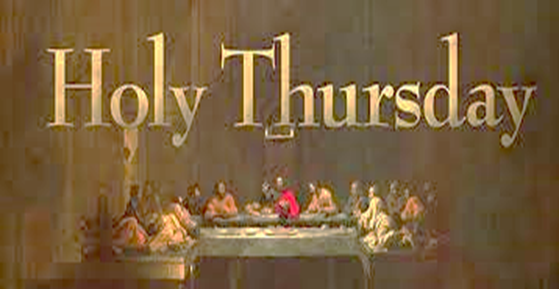
Lent has ended and now we begin the Holy Week Triduum for the Holy Year of Hope. There is a saying that hope springs eternal and in the Holy Week Triduum we celebrate  the hope of Holy Thursday we go to the despair of Good Friday and then on Easter Sunday we  go back to the greatest hope that all of us have that is the resurrection. The word Triduum is the Latin for the three days Holy Thursday, Good Friday and Holy Saturday. We should not think of the liturgies of Holy Thursday, Good Friday and the Easter Vigil as three separate events, all three form part of one single extended liturgy. In fact at the end of the Mass on Holy Thursday there is no dismissal and blessing instead we accompany Jesus to the Altar of repose and then leave in silence. In the same way there is no formal beginning and end to the Good Friday liturgy we enter in silence and again we leave in silence.

This three-day liturgy concludes with the solemn blessing at the end of the Easter Vigil or at the morning Mass on Easter Sunday.  On Holy Thursday In the first reading from exodus we hear about the blood sacrifice on the door posts a sign that the people inside would be spared, freed from slavery and death. The death of Jesus becomes the Christian Passover, the sign of gods liberating love. We hear Paul’s account of the institution of the Eucharist in the second reading when he tells us this is what I have learned from the Lord and I am passing it on to you.  These readings make us aware that the institution of the Eucharist is tied to the demand of mutual love  and respect for one another.  On this day  we act out Jesus’ command by participating in the foot washing.  When supper had ended, Jesus took water in a basin and a towel and began to wash his disciples’ feet. He then commanded his disciples to follow his example by giving such loving service to others. Following the celebration of the Eucharist, we move in procession  with the Blessed Sacrament to the  chapel Of reservation there we keep watch up to midnight.  

On Holy Thursday we all bring our different stories here to the table of the Lord.  And we know there will be times when we will be sore, hurt and wounded; when there will be no one to talk away the terrors of the night; when we will occupy the garden of grief alone.  But Jesus has already travelled that road and stands with us. The liturgy on Holy Thursday evening is a meditation on the essential connection between the Eucharist and Christian love expressed in serving one another. Christ is not only present in the Eucharist but also in the deeds of loving kindness offered to others through us. We are the ones who make ‘real’ the presence of Jesus in every smile, kind word and loving action. As I said at the beginning hope springs eternal and we are called to be people of hope filled faith who look out for one another, people who follow Jesus  example by giving such loving service to others. It’s not just about “me” It’s about “us” and our hopeful journey of faith during these days of Holy Week and Easter and beyond as we go on into the future.  

PALM SUNDAY

5th Sunday of Lent

4th Sunday of Lent

2nd Sunday of Lent

1St Sunday of Lent

ASH WEDNESDAY

We start our annual  journey of repentance and conversion for 2025 with the Ashes of Ash Wednesday. The readings and the ashes call on us to change our lives in the spirit of conversion and renewal. There is a big question for all of us as we begin lent will the ashes of today help us to realise that we should have a change of heart and mind as we seek spiritual renewal in Lent, each individual will have the answer to that question for themselves. All of us will have many opportunities to strengthen our spiritual lives during  the 6 weeks of lent as we ponder what our faith really means to us as individuals and as a community.  Ashes hold deep symbolism in the Church, representing both our mortality and the need for repentance. This powerful symbol finds its roots in the Scriptures, where ashes were used as a sign of mourning and repentance. In the Old Testament, ashes were often associated with expressions of grief and sorrow. Job, for example, sat in ashes as a sign of his deep mourning and repentance before God.

The prophet Daniel also fasted and covered himself in ashes as a way of seeking God’s mercy and forgiveness for the sins of his people. These practices served as a visible reminder of our need to turn away from sin and return to God. On Ash Wednesday, we receive ashes on our foreheads as a sign of our own personal need of conversion and renewal of heart  and spirit. As the priest or minister applies the ashes, they say the words, “Remember that you are dust, and to dust you shall return.” This solemn reminder prompts us to reflect on the brevity of life and the importance of living in accordance with God’s will. The ashes are a call to return to god and let go of the things that hinder our relationship with God and embrace a life of holiness.

In the First Reading –Joel 2:12-18: The Lord urges a heartfelt return to him with fasting and repentance, highlighting His gracious and compassionate nature, Slow to anger abounding in love. A communal fast is called, involving everyone, with priests pleading for mercy, leading to God’s compassionate response as he had mercy on the people. In The Responsorial Psalm – Psalm 51  we hear that each person in acknowledging their own sinfulness, implores God’s mercy. As all of us seek a renewed heart and spirit, with God’s presence in our lives and the restoration of the joy found in salvation. The Second Reading  tells us that we are called to be reconciled with God. Christ bore our sins to make us righteous as we  Embrace God’s grace, for now is the time of salvation. As ambassadors of Christ we are called to be reconciled to him and through this reconciliation we are called to be reconciled to one another.

In the Gospel reading from  Matthew  Jesus emphasizes the importance of sincerity in the practice of faith. He advised against performing acts of charity, prayer, and fasting for public admiration, as such actions lack true spiritual value.  Instead, he encouraged discreet and private expressions of faith, assuring that God, who sees everything that is done  in a quiet prayerful way, will duly reward genuine devotion. Lent is all about moving forward in a spirit of conversion and prayerful return to god that is the spirit of metanoia. So the Church asks us at the beginning of Lent to renew our own lives through the great spiritual works of prayer, fasting and almsgiving, and to listen to Jesus’ advice in today’s Gospel. On ash Wednesday the ashes are a call for us to change our lives and how we live them. We begin our journey for lent 2025 and we receive the ashes as a sign that we are willing to return to god who says return to me with all your heart and we do that in a special way during this holy  year of hope.

8Th Sunday of ordinary time

Next week we begin the season of Lent with the Ashes on Ash Wednesday and we begin our annual  journey of repentance and conversion for 2025 as pilgrims of hope. All of us will have many opportunities to strengthen our spiritual lives over the 6 weeks of lent as we ponder what our faith really means to us as individuals and as a community. We also continue our prayers for the health and wellbeing of Pope Francis.

In the First Reading  this Sunday we are told that a persons  speech reveals their faults and true character. Do not praise someone before hearing them speak as this is the test of men. The Responsorial Psalm is  Psalm 91 and we hear that  It is good to thank and praise the Lord, whose kindness and faithfulness are constant. We are also told that the righteous flourish and bear fruit, proclaiming God’s justice and reliability to those around them. In our Second Reading  we are told that Through Jesus, we have victory over death. Again we are called to be steadfast and devoted to the Lord’s work, knowing all we do is not in vain even though sometimes it might look that way for in the Lord we do not labour in vain.

This Sunday in our Gospel Reading Jesus is coming to the end of what, in Luke, is called the “Sermon on the Plain”. He has instructed his disciples to love their enemies, turn the other cheek, treat others as they would want to be treated, not judge them, etc. Jesus is the wise person teaching the disciples a practical wisdom on how to live their lives as his disciples. Jesus says, in summary, a person’s words and actions will reveal their character. The Gospel tells us There is no sound tree that produces rotten fruit, nor again a rotten tree that produces sound fruit. For every tree can be told by its own fruit: people do not pick figs from thorns, nor gather grapes from brambles. A good man draws what is good from the store of goodness in his heart; a bad man draws what is bad from the store of badness. For a man’s words flow out of what fills his heart.’ God’s love is effective, it produces good fruit for the benefit of others. The good we do is the  way to spread the faith to others. Jesus sends us to be witnesses to the faith we profess to practice what we preach in all we do and say. Jesus words to us in this weekend’s gospel  show his concern for the integrity and quality of our lives. We cannot, he says, teach others if we ourselves are not witnesses to what we teach. There are many people out there who were witnesses to the truth of the gospel who have turned away and betrayed the truth and become rotten fruit.  Lent is the time to renew our  selves in terms of faith so that we are able to move forward in the certain knowledge and hope of being true witnesses to the faith. Lent is all about moving forward in a spirit of conversion and prayerful return the spirit of metanoia.

 During Lent we are provided with many opportunities for spiritual renewal but that will be for the weeks ahead. But for now let us stop and reflect on the good we do for others and how that becomes a way of  bringing the faith to the people where they are. As we continue our journey as pilgrims of hope we remember  that  God’s love is effective, and it produces good fruit for the benefit of others and we are called to show gods love through all we do and say for one another.

7th Sunday ir Ordinary Time

We pray this weekend for the well being of our Holy Father Pope Francis as he remains in hospital.  The readings for this Sunday teach us about mercy, forgiveness, and love. These themes show us how to live like Jesus in our everyday lives. The readings call us to live a hope filled life of mercy, just like David showed mercy to Saul in the first reading. Mercy means choosing kindness over revenge. It means forgiving others, even when it is hard.  The First Reading from the first book of  Samuel tells us that David, finding Saul asleep, refuses to harm him, saying it’s wrong to strike the lord’s anointed. He takes Saul’s spear and jug, proving his mercy and faithfulness from afar. The Second Reading 1 Corinthians tells us that The first Adam was earthly, the last Adam (Christ) is a life-giving spirit. We, once earthly, will transform to bear the likeness of the heavenly man.

This weekend we think about the things the Lord asks us to do in following Him, nothing is more difficult that the teaching  “Love your enemies, do good to those who hate you, bless those who curse you, pray for those who mistreat you. To the person who strikes you on one cheek, offer the other one as well, and from the person who takes your cloak, do not withhold even your tunic. Give to everyone who asks of you, and from the one who takes what is yours do not demand it back. Do to others as you would have them do to you It is much easier to sacrifice our wants for the needs of others, then it is to avoid lashing out at someone but that is what Jesus is calling us to do.  The point of this kind of prophetic speech by Jesus is to stimulate his audience (and us) to reflect on the whole pattern of behaviour in human relationships. Jesus is not really suggesting rules to be followed literally in certain circumstances. Rather, we are being invited to reflect on how we can respond to unreasonable demands and personal injuries with nothing but generosity and abandoning all claims to retribution and restitution.  What we are talking about in this Gospel is not some ethical system for the good of society or for our own self-interest but something way beyond this.

What Jesus gives us is the very principle behind the creation of the universe: God’s infinite love for us all. This is the extraordinary challenge that he lays before us: To love the people around us just as he loves us, just as he loves them.  It is not easy and we won’t achieve it often but we know that this is what God wants from us and it is something that deep in our hearts we are glad to do. The way God treats us should be the guideline for our life as Christians. God is infinitely compassionate and merciful, he is extraordinarily patient with our many shortcomings and he puts up with all sorts of foolishness on our part.  What Jesus is suggesting are responses to insults and injuries which break cycles of violent retaliation and provide pathways to peace and reconciliation. By doing this, Jesus says, we can allow the utter generosity of God to shine through us. Doing good only to those who do good to us is not enough to convey the generosity and welcome of God. Only acting with overwhelming generosity and compassion allows the mercy, generosity and compassion with which God meets each of us to be clearly seen in concrete actions It is our task as a true disciple to imitate our master, to imitate the behaviour of God himself. In the words of Micah this is what God asks of us: only this, to act justly, to love tenderly and to walk humbly with our God.

5th Sunday in Ordinary Time

This Sunday we celebrate the 5th Sunday in Ordinary time and we remember and pray for all those who are sick as we celebrate the world day for the Sick on 11th February. We ask God through the intercession of Our Lady of Lourdes to bless our sick and all those who look after them. The 5th Sunday in Ordinary Time readings highlight important themes. These themes help us understand our faith and God’s call in our lives. In the  First Reading from Isaiah  Isaiah saw the Lord on His throne, felt unworthy, but was cleansed by a seraphim. When God asked for a messenger, Isaiah offered to go. In the Responsorial Psalm I will thank and praise God for His kindness and truth. He answers me and gives me strength. All will praise Him for His great glory and enduring kindness.

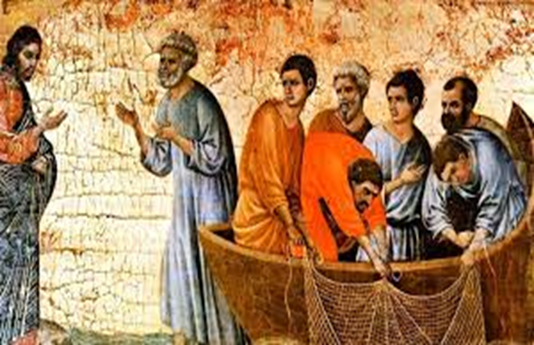
The Second Reading from Corinthians tells us that Christ died for our sins, was buried, and rose on the third day. Saint Paul says He appeared to many, including me. By God’s grace, I preach, and you believed. Our Gospel story for this Sunday recounts the story of the of Peter’s calling to be a fisher of men. After a fruitless night’s fishing, Peter obeys the word of Jesus and catches a huge number of fish. He feels unworthy before Jesus; but he is now called to be a fisher of men. Peter recognises the hand of God in what has happened and at the same time realises his own sinfulness but Jesus comes to show us the mercy of his Father. Jesus did not come to be a hermit with an unreachable address in the desert; rather, his whole mission moves in the opposite direction, for he has come “to seek out and save the lost” (Luke 19:10). So Jesus travels into our lives not away from them.  He entertains sinners he enters their homes, meets their families, eats at their table, listens to their stories, and calls all of us to a new way of life when he says follow me. Throughout his life Jesus is never far from sinners he is not far from all of us as well for are sinners too. Jesus doesn’t write us off because we are sinners; Jesus has other plans because he knows that we sinners have a future, not just a past. Simon Peter received his call while he was doing his work. He said, “Yes,” and responded by changing his life.

Every day, in the midst of our routines, at work, home, school there are opportunities to respond to Jesus’ call to follow him. In innumerable ways our Christian vocation must guide what we say and what we do. In all  our decisions big and small, we are asked to live what we profess as Jesus’ followers; to be attentive to what God may be asking of us at that moment of our lives. This may entail being faithful to the commitments we already have; responding to a need we see, or taking the opportunity to witness to what we believe. Our responses may seem small and insignificant. They may be small, but they are never insignificant! In addition, who knows where the next “Yes” we say to Christ may lead us?  Our call as disciples is not only to personal holiness but also to partnership with Christ in transforming the world with words and actions of  justice, peace, integrity, forgiveness, mercy, tolerance, hope and love. We must allow ourselves to be caught and taught by Jesus. The response that is asked for, is to be prepared to give up everything in our quest to know Jesus. In spite of our sense of sinfulness, unworthiness and lack of faith in ourselves, we are called to trust in God’s choice of us and in God’s faith in us who are his beloved daughters and sons.

Post Navigation