Fullerton T

RELIGION LITURGY AND LIFE

Archive for the tag “jesus”

12th Sunday in Ordinary Time
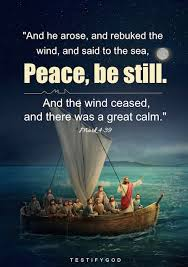
The readings for the 12th Sunday show us God’s power and our need to trust Him. In the first reading, God reminds Job of His control over the sea. He set boundaries for the waters and commands the waves. This shows God’s authority over creation. Even the mighty sea, which can be so powerful and frightening, obeys God’s commands.  Our gospel reading for this week is all about being Calm amid the storms of life that sometimes come our way. The context of this passage is the calming of the storm when Jesus rebuked the wind and said to the sea, ‘Quiet now! Be calm!’ And he says the same to us now in all our trials ‘Quiet now! Be calm!  Jesus understood that all would be well even if he and the disciples perished or if the storm subsided. Mark’s original audience was a community undergoing persecution. Their leaders had been martyred and, they questioned what was happening to them. The church was undergoing internal strife as they struggled to bring Jews and Gentiles into their new Christian community.  Mark’s church was hardly sailing on calm waters not unlike our church today.

Jesus’ previous parables of sowing, growth and harvest showed God’s control over the land. This passage also shows that God is in charge and has control over the chaos we often see and hear about exemplified for us today by the calming of the storm.  Jesus asks the disciples in the midst of the storm, why are you so frightened and why do you have so little faith. He could be saying the same thing to us today as many lack faith in God and mankind.  Amongst all the hurt and devastation in our lives Jesus changes the darkness that is in our daily lives into the sunshine of everlasting life, and replaces our distress with comfort and peace. When we don’t know the best way forward or the best way out Jesus gives us peace of mind and heart to make the right decision. At such a crossroads of life, we can ask him, ‘Lord, what road should I take what way should I Go?’ The best way will become so much clearer, and bring us calmness and peace as well as the knowledge of a decision well made.  We have so many things to occupy our minds these days with all the things that are going on in  our world.  If we stop and look around us we see the signs of Jesus in people trying their best to look after others, to provide meals and shelter, to keep themselves and their loved ones safe, to work for peace in the midst of conflict to bring comfort and to pray.  The disciples’ fear during the storm teaches us about our own fears and who we should trust. We often feel overwhelmed by life’s challenges and there are many. But Jesus shows us that He is greater than any storm. We remember that Jesus is with us in the good times and bad as a gentle calming presence as we go through the storms of life that affect all of us from time to time and we should trust him to be our helper and guide as we go forward.
11Th Sunday in Ordinary Time

This weekend we celebrate the 11th Sunday of ordinary time The readings for the 11th Sunday in Ordinary Time Year B are filled with images of growth. In the First Reading –  from Ezekiel the Lord promises to take a shoot from a cedar, plant it on a high mountain, and make it a great tree where birds will find shelter.. In the Second Reading – from 2 Corinthians 5:6-10: We are told that we walk by faith, not sight, aiming to please the Lord. We will be judged by Christ for our deeds. In the Gospel  we hear once again the story of the mustard seed. Jesus seemed especially fond of using parables. Parables are meant to leave the hearers wondering. They are not straight-forward answers to questions. They are food for thought. By using parables Jesus is trying to engage his listeners at a deeper level. He wants his teaching to seize their hearts. He wants them to discover the truth of what he is saying for themselves. It is part of the business of conversion – coming to see with new eyes

The faith that we have handed down to us through the generations is represented in this Sundays Gospel by the mustard seed and our faith is something that all of us need to nourish When the seed that is the Word of God takes root within us the Kingdom grows.  We are called upon hearing the Word to meditate upon it in prayer so that it may take root in us and bear fruit in joy and hope.  We are usually helped by books, and Christians do not want for them: the Sacred Scriptures, particularly the Gospels, liturgical texts of the day or season, writings of the spiritual fathers, works of spirituality, the great book of creation, and that of history the page on which the ‘today’ of God is written. (CCC 2705) The Kingdom of God is like a tiny seed within each of us. It’s a strong seed, like those that push their way through the hard ground  in order to grow toward the light. Sometimes we nurture it and have expectations. Sometimes our expectations are fulfilled, sometimes not. Other times, we don’t know how, but we find ourselves bearing the fruits of joy, compassion, peace, generosity, faith-fullness, gentleness with thanksgiving for the wonder of it all.  

Then we know our growth is a partnership with god the father and, while we can care for the seed, we can’t make it grow or flower or reproduce on our own. The parable of the seed growing of itself which we hear this Sunday shows us that there is an almighty power working with and for us.  Our part is to do a good job preparing the soil of our hearts and minds as we  sow the seed. When we think of the small beginnings of Jesus’ ministry in Galilee to the spread of his message throughout the world, we appreciate the vast growth from the small mustard seed that has taken place over the years. We have reason to rejoice that the kingdom still attracts and welcomes so many different people as they respond to the mustard seed of faith that someone has planted for them. So let us rejoice and be glad for the lord has done great things for us in our time and place  and helped us to nurture and grow our own faith.

CORPUS CHRISTI

This Sunday we celebrate the feast of the Body and Blood of Christ also known as Corpus Christi. The readings for the Solemnity of Corpus Christi Year B give background for the notion of sacrifice and explain why we call Jesus the Lamb of God. The first reading describes how the Israelites sacrificed animals to seal their covenant with God. Moses relayed God’s laws to Israel, recorded them, and confirmed the covenant by sprinkling blood on the people, symbolizing their commitment to God’s commands. The second reading explains Christ is our high priest, but he also demonstrates sacrificial love. Christ, the perfect high priest, entered heaven with his own blood, not that of animals, offering us eternal redemption and mediating a new covenant. in the gospel Jesus instructs his disciples to prepare the Passover in a designated room, where he institutes the Eucharist and predicts he will not drink any more wine until he drinks the new wine in the kingdom of god.

 When we see the Eucharistic Bread, we believe that it is Jesus who is there before us what is known as the real presence such is our faith in the Eucharist.  We are thus in the presence of Jesus who has risen and conquered death and is now in Heaven, in the Glory of the Father!  The Church teaches that the Eucharist is “the source and summit of the Christian life.” (CCC 1324) This means that, because Christ is really, truly and substantially present in the Eucharist, we recognize that all the graces we enjoy come from this great Sacrament, and all we aspire to, the fullness of the life of God. Corpus Christi is a Eucharistic solemnity that is, the solemn commemoration of the institution of the eucharist. It is, moreover, the Church’s official act of homage and gratitude to Christ, who by instituting the Holy Eucharist gave to the Church and to us as members of the Church our greatest treasure the bread of life.  Each time we celebrate the mass we embody the covenant of Christ, wherein God sees in us anew the flesh of Jesus. It was not by the “blood of goats and calves that we hear about in the first reading but by the blood of Jesus that our sins were forgiven and our redemption was achieved.

Jesus Christ, “body, blood, soul, and divinity,” becomes substantially one with us as our food and sustenance. Thus God beholds each of us and sees in us the beloved Son he sent to save us. But it is not only God’s vision of us that is affected. Our own vision of ourselves and of each other is transformed. If we fully enter into the eucharistic mystery of Jesus we will  see each other as God sees us. By following in our Lord’s footsteps. Christians over the centuries have sacrificed greatly, in a labor of love, for their faith, their Christian way of life and their families. Then as now, it begins with each individual humbly asking God to show the way and to provide the eucharistic food needed to follow in His footsteps. This strength comes from the Eucharist the Bread of Life which is the body of Christ.

Pentecost Sunday

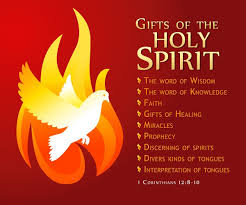
Today we celebrate the decent of the Holy Spirit upon the Apostles and the beginning of the apostolic mission to bring the Church to the world. The readings for the Pentecost clearly tell us that we need to be willing to receive the Holy Spirit and then use the gifts we receive. In the first reading we hear how the Holy Spirit came to the disciples and empowered them to share the gospel with people from different nations as a result of this we are able to hear the word of God spoken in our own language. The second reading tells us that it is the Holy Spirit who enables us to proclaim the gospel in unity. By the time John wrote his gospel, Jewish Christians had been excommunicated for their belief in the Messiah. Ostracized and socially persecuted, some Christians reacted in fear, while others boldly proclaimed the gospel. Early Christians needed a sense of stability, a sense of divine peace.

Through the words of Jesus, “Peace” was John’s prayer for his readers as we listen to this gospel reading. With the sight of Jesus, fear turned into great joy. Anxiety turned into relief.  Desperation turned into vindication. And the lack of spiritual direction turned into a real sense of deep spiritual grounding. The divine presence stood close to them and with the divine presence came divine peace. We too have the divine presence in the Blessed Sacrament and it brings Joy and spiritual grounding to all those who come and Jesus says to each and every one of us you are welcome. We can’t ignore the problems that are there and there are many in our own lives and the lives of those around us church and otherwise.  If we pray through the problems as well as thinking them through we will find that they are much easier to get through the tough times.   Gathered at Mass week in week out we bring our prayers to God. We each have our own needs. Family and friends may be sick.  People we know need work. The person who has been central to our lives for so long has passed on.   

We bring all our concerns in prayer to church because they remind us of our need and they raise our hopes in the power of God made real to every generation through the Holy Spirit.  Through the Holy Spirit our relationship with God is fruitful, satisfies our longings, and brings us peace.  Because of God’s faithfulness to all of us, we give thanks and once again present our needs as we remember the presence of God and the Holy Spirit who are with us. The feast of Pentecost is a day of thanksgiving for the beginning of the Church, in which are contained all the treasures of spiritual grace. Pentecost is also the day of thanksgiving for the coming of the Holy Spirit firstly to  the Apostles as well as all of us. It is a day on which we renew our trust in the working  of the Holy Spirit within us and the Church in the world and  we thank Him for His inspiration and guidance in all the good and bad times and things that are part of our lives.

6th Sunday of Easter

This Sunday is the 6th Sunday of Easter. it is also the beginning of the month of May. May is the month in  which we venerate the Mother of Jesus in a special way and in our parish we are hosting the annual Novena to our Lady of Perpetual Help.

In the first reading from the Acts of the Apostles, we see a remarkable event where Peter, a Jew, realizes that God does not favour one group of people over another. As Peter spoke to a gathering that included both Jews and Gentiles, the Holy Spirit came upon everyone present. This was a clear sign that God’s love and salvation were available to all, not just a select few. Moved by this understanding, Peter baptized the Gentiles, officially welcoming them into the Christian community. This passage teaches us that God’s love knows no boundaries and that we, too, are called to transcend our prejudices and share God’s love with all.

The second reading, from the first letter of John, tells us straightforwardly: “God is love.” This profound truth is at the heart of Christian life. It means that loving others is not just a command from God, but a reflection of God Himself. When we love one another, we are participating in God’s own life.John goes on to explain that God showed this love most clearly by sending His Son, Jesus, to save us from our sins. This act of sending His only Son as a sacrifice is the ultimate example of love. Every act of love we show to others is a reflection of God’s love for us and an encounter with Him. In the Gospel for this Sunday Jesus tells us ‘As the Father has loved me, so I have loved you. Remain in my love. This is my commandment: love one another, as I have loved you.  The teaching about love is not a recent innovation, or a new-age trend as many people seem to think. Jesus does lay down a commandment for us today, but he does so, not as the master talking to servants, but as a friend speaking intimately  to other friends. Servants follow rules, their lives are dictated by the one who holds authority over them. Jesus’ religion isn’t based on such a model though many in the church today seem to think otherwise. Instead, love is the foundation of our faith. Jesus is asking us to live out of the realization of that love. We are his friends, he tells us, so now we are asked to go out and live like friends with one another. “Friends,” in this context, means “beloved ones.” We need to live out of that description for we are the beloved disciples. The instructions that Jesus gives are valuable  lessons by which we will master the love of God our Father in what we say and what we do. Jesus chose his followers to carry out God’s plan of salvation in every age he chooses us today in our turn to do the same.  

Love is the best way to become his “co-worker,” since it reveals the reason he made the world and affirms our friendship with the creator. Love changes everything it touches. It tells us to stop bragging about this or that. It enhances our reputation. It denies the power of position and wealth which we sometimes feel is ours by right, it raises us up as true leaders. It connects us to God and to one another. Divine love transcends mere emotion. It becomes our lifeline to God. And it forms the basis of real community where everyone is valued and none are left out. It is inexplicable in theory, yet easily seen in action. Wherever God loves, he acts. Wherever he acts, he is there with us. HE IS WITH US simply because he loves us and the love of God knows no bounds; we remember the love that God has for each and every one of us each time we look at the Cross. There was no greater love than the Cross of Good Friday. We are called to bring the love of God into our own lives as well as the lives of those around us remembering that the Love of God lasts forever.Jesus assures us that whatever we ask the Father in His name will be granted, emphasizing the power of living in accordance with His command to love. We experience God’s presence through the love we give and receive in our everyday interactions. Through His words and example, Jesus has equipped us to bring this divine love into the world.

As followers of Christ, we are called to live out the love of God in a real way, showing love to everyone we meet without partiality. When we show love genuinely, we make the truth that “God is love” visible and active in the world. Let us strive to embody this love in all that we do, bringing the light of Christ into every corner of our lives and our world.

2nd Sunday of Easter Divine Mercy Sunday

This weekend we celebrate the second Sunday of Easter also known as Divine Mercy Sunday when we celebrate the mercy of God in a special way. Our first reading from the acts of the apostles tells us that the early believers were united, sharing possessions and resources. The apostles’ powerful testimony about Jesus’ resurrection earned them high regard. They distributed funds meet everyone’s needs, ensuring no one was in need. These days we ask ourselves are we helping to provide for those who have needs in our own places. In the second Reading we see that  Belief in Jesus as the Christ the son of God  shows we are born of God. Loving God and His children means obeying His commandments, which are not burdensome. Our faith in Jesus as God’s Son overcomes the world, affirmed by the Spirit of truth. In the Gospel story Jesus appears to his disciples, offering peace and showing his wounds, which brought them joy. He empowered them with the Holy Spirit and the authority to forgive sins.

The Apostles were huddled together in fear. They weren’t so sure that the women’s report that Jesus had risen was believable. They weren’t singing for joy! Now, a whole week has gone by. They still felt “rocky” about their future and what it would hold for them. Thomas wasn’t the only one who had doubts about Jesus, I think so many were doubtful then as so many are doubtful right here and now. The Apostles were pondering the shocking experience of the week before when all seemed to be lost as Jesus hung on the Cross. But here we are over 2000 years later thinking about how they felt after the events of that first Holy Week.  Jesus had broken through those doors and came to assure them that he was alive and then his message must have troubled them: “As the Father has sent me, so I send you.”  The disciples  were to go out to  teach, to preach, to heal by announcing the gospel. They were going  to open the eyes of the blind, to give hearing to the deaf, and soften the hardened hearts of man. They were sent to bring the message of Jesus to others and in the same way we are sent out to bring his message to other people wherever we are by what we say and do.

We are asked to bring the mercy and love of God to all those out there who need his healing merciful touch.  We remember the joys the hope, the grief and the anxieties of the people in our time these are the joys and hopes, the grief and anxieties of the followers of Christ. The Apostles felt rocky about their future as many of us do today but god is with us as we go out into the world as his messengers. May all of us be witnesses to the Gospel bringing the mercy of God to the people of our time and place as we go forward into a the future as Easter people with Christ as our light  to help and guide us along the road we travel.

HolyThursday

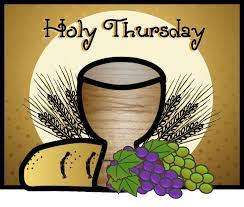
On this day  we recall Jesus’ commandment to love one another, his washing of the disciples’ feet and the breaking of the bread. The liturgy on Holy Thursday is a meditation on the essential connection between the Eucharist and Christian love expressed in serving one another. In the 1st Reading we hear  The Lordcommands Moses and Aaron to mark the new year and prepare for Passover. Each Israelite family is to select a flawless lamb, share as needed, and eat it with unleavened bread and bitter herbs. The lamb’s blood will protect them from the impending plague, signifying the LORD’s mercy as He strikes Egypt but spares His people, establishing an eternal commemoration. The Second Reading tells us  how Jesus established the Eucharist.Breaking bread, He offered it as His body, and the cup as the new covenant in His blood, instructing us to commemorate His sacrifice in this act until He comes again.

The Gospel  tells us that Before Passover, aware of his imminent departure, Jesus demonstrated his love by washing his disciples’ feet, a task for servants. Peter initially resisted but accepted upon understanding its necessity for fellowship with Jesus. Jesus used this act to teach humility and service, emphasizing that followers should emulate his example of serving others. Christ is not only present in the Eucharist but also in the deeds of loving kindness offered to others through us. We are the ones who make ‘real’ the presence of Jesus in the world today in what we do and say as Christians. The theme running throughout this day is one of humble service of God and his people.  The Evening Mass commemorates the Last Supper with the theme of service and sacrifice both of these are aspects of the same mystery.  We see Jesus as one who serves, who gives himself.  Just as he freely gives himself in washing the feet of his disciples, so too he gives himself  in the bread and wine he takes, blesses and hands to the disciples.  

In the same way we receive Jesus in the form of Bread and wine from the hands of our priests. All these acts of self-giving are the same act that of the Son of Man who came ‘not to be served, but to serve, and to give his life as a ransom for many.’ The action of the Church that is our action  as the body of Christ on this night also witnesses to the Church’s respect for Christ’s Body present in the consecrated Host in the Adoration of the Blessed Sacrament, carried in solemn procession to the  Altar of Repose. No Mass will be celebrated again in the Church throughout the world until the Easter Vigil on Saturday evening when we proclaim the Resurrection of Christ.  As people who are Christians that is followers of Christ We should embrace all those who are in need of any kind as Christ did. We should be leading lives of generous service to all those who need our help wherever they are and there are many people around who may need our help and care.    When we serve our brothers and sisters we are called them that our God is an all-loving and caring father in heaven then the Eucharist whenever we partake of this great sacrament will bring us joy and peace.May we take up the mantle of humble service giving a helping hand to others and not counting the cost to ourselves. Many people over the years have given much at great personal cost and have not failed in their example of humble service and that for me  is what  Holy Thursday is all about  Humble service for others and not being afraid of being the presence of Christ for others in our world.

Post Navigation