Fullerton T

RELIGION LITURGY AND LIFE

Archive for the category “Life”

The Ascension

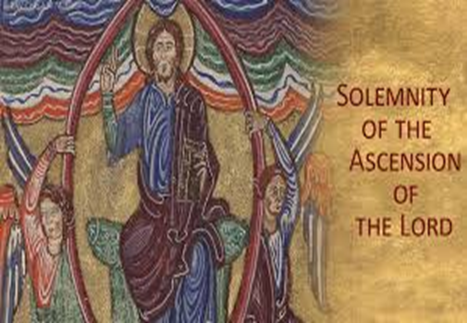
This Sunday we celebrate the Ascension: this is the day when Jesus returns to the Father in heaven. There seems to be a contradiction in Jesus leaving as he assures us that he is staying with us when he said know that I am with you to the end of time. Jesus is going to heaven, but it is not a farewell because he is with us today right where we are through all the ups and downs we have in 2026. He is with us in a particular way through the Holy Spirit and through the signs of bread and wine and the sacramental life of the church. We celebrate the Risen Lord Jesus as he returns to the Father the same Riesen Jesus who belongs to everyone who accepts him as the beloved son of God.

In the First Reading from  the Acts of the Apostles we are reminded about the death of Jesus, his resurrection and how the risen Lord met with the disciples, Jesus told them, you will receive power when the Holy Spirit has come upon on you, and you will be my witnesses in Jerusalem and… to the ends of the earth. And when he had said these things, as they were looking on, he was lifted up, and a cloud took him out of their sight.’ In the second Reading Paul prays that God, the Father of glory, ‘give you the Spirit of wisdom and of revelation in the knowledge of him, having the eyes of your hearts enlightened, that you may know what is the hope to which he has called you.’ For Paul, the resurrection of Jesus is the foundation of his faith and of all his missionary endeavors, and it is the risen Christ ascended into glory who is ‘the head over all things to the Church, which is his body, the fullness of him who fills all in all.’ This Gospel reading is all about the future it is also about us in the here and now of today, and what we are doing to make disciples of all the nations in 2026. Simply put where do we fit in when we hear Jesus telling us to make disciples of the nations and do we recognize him as being with us now in May 2026. In today’s gospel, Jesus has little to say, but he is definite about what he has to say. This is in sharp contrast to the fact that, even at this last minute, some of his disciples still doubted.

The disciples did what he told them to do. He asked them to meet him on the mountain, and they did that. Like any gathering of people, their feelings were varied. Some of them worshipped him, while some of them still doubted him. Jesus didn’t seem to have any great problem with that, because he knew that, when the Spirit came, all of those doubts would be ended. It would seem, indeed, that he was in a hurry to take his leave of them, maybe he was so that the second part of his plan of salvation could get underway. The mission of the apostles was simple to understand; difficult to carry out. It was to teach others all that Jesus had taught them. Just as he asked his disciples to obey him, they were to ask that others should obey his directions and instructions also, which is so hard in the world of today.  The programme of redemption and salvation that began at Pentecost must continue from generation to generation, until the end of time and here we are in 2026 talking about the ascension. With all the changes in the church and in society, the two things that have not changed are Jesus the Son of God, and every word of his message. Again, we ask ourselves what we are doing to make disciples of all the nations realizing that Jesus and his message is always new for each generation. May the Lord give us faith when we struggle, courage when we hesitate, and hearts open to the power of the Holy Spirit. so that salvation will reach the ends of the earth.
6Th Sunday of Easter

This Sunday is the 6th Sunday of Easter time, and it doesn’t seem that long since we celebrated Easter Sunday as we head towards Ascension and Pentecost which take place over the next 2 weekends. in the First Reading Philip goes to Samaria and preaches the word of God to the people, performing many miraculous signs and healings, which resulted in many people believing and being baptized. Peter and John arrive in Samaria and prayed for the new believers, laying their hands on them, and they received the Holy Spirit. The second reading is one that I always love to hear as it speaks of us having reverence for Jesus and that we should always be ready to give an explanation to anyone who asks about the reason for our hope, the reading goes on to tell us to give our answers with gentleness and reverence. What is the answer for our hope simply put the reason for our hope is Jesus Christ the Son of God the Father.

If we live for Christ, we will be criticized and many people over the centuries lost their lives for their defence of the faith. Would we be able to stand up and tell those around us the reason that we have for the hope that is within us today? Would we be prepared to stand up for the faith that so many have turned their backs on and point towards Jesus Christ the reason for the hope that we have within us both these questions are hard to answer for us in the world we find ourselves these days that does not seem to have a lot of good within it.  In The Gospel for this Sunday Jesus promises to ask the Father to send us the “Paraclete,” or “Advocate.” The Paraclete, or advocate, is the Spirit of Truth, the Holy Spirit. Jesus is preparing his disciples for his Ascension, his going back to the Father. He doesn’t leave his followers a detailed plan for when he leaves them.  Instead, he promised them and he also promises us the Holy Spirit, who as the advocate will never leave our side. This is why he says, “I will not leave you orphans.”  The Spirit is with us to open our hearts and minds to the fullness of the truth of Jesus’ words.  The one thing that will remain as it has up to now is the reason for our hope who is Jesus Christ who is with us in all our troubles whatever they are.

As we look around us, we may come across people who are the least likely to join us in prayer.  But here they are and they are part of us! We cannot ignore them, especially if they, like the Samaritans, show signs of the Spirit’s life that is the life of faith in what they are saying or doing. We welcome and respect one another whether we are in Church every week or not; No one is less in God’s eyes, nor should anyone be in ours. Peter calls us today to “good conduct in Christ.” What better conduct can we do as a Christians, than be a community of Christ’s disciples as we move forward together in faith. God the Father is merciful and full of compassion. He is our source of life and of the longings of our hearts and our hearts are restless till they rest in him It is through the Holy Spirit that we are drawn into the life of Faith so we can rest in him. May we always be open to the transforming power of the Holy Spirit in our lives, and may we be bold witnesses to Christ in the world where we are.

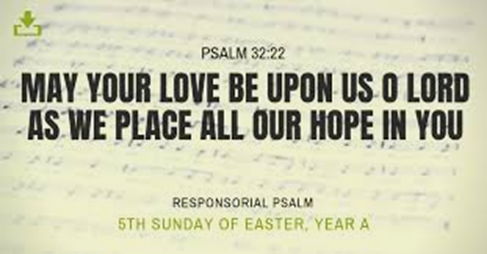
5TH SUNDAY OF EASTER

In this weekend’s first reading, we see how human the first Christians were. Some were Palestinian Jews, while others were gentiles of Greek origin. When food was distributed to the widows, those of Greek origin complained that they were often passed over. Tensions were bound to arise since each group had different ways of thinking and acting.  The second reading, from the First Letter of St. Peter, uses the image of “stone” or “rock.” Peter, referring to Isaiah’s prophecy, tells us that God the Father long ago had established His Son, Jesus, as the “cornerstone, chosen and precious in his sight.” Peter, with warm and welcoming tone, urges us to come with hope and trust to the living stone of salvation, and there to become ourselves a holy temple. Of course, there’s a price to pay. Through our own sufferings, we offer sacrifice and praise to the Father along with the Son. All of this happens through our Baptism and the power of the Holy Spirit. Then comes a warning. Just as many have rejected this rock of salvation to their own condemnation, so too, if we attempt to bypass Christ, then we will ourselves stumble and fall. Peter quotes Isaiah as his authority for referring to Christ as a stumbling block to those who reject Him.

This Gospel Reading is about Jesus and the disciples. He is helping them get ready for his suffering and death. For the apostles this was a huge reversal from the adulation of the entrance into Jerusalem on Palm Sunday to the despair of the Cross on Good Friday. Remember when he asked them whether they would leave him, along with the rest of the crowd? Now it is he who is leaving. They are stunned. Peter’s reply at that time might even be appropriate now. “Where will we go? You have the words of eternal life” Jesus tells them as he tells us now. “Do not let your hearts be troubled or afraid. You have faith in God, have faith also in me.” The straightforward meaning of this directive is, you know how to trust, you do it with God. Use that same trust with me. This trust in Jesus and in God is also what we are called to these days.  There is much division within the world community and there is also a lot of division within the lives we lead as people who follow along the way the truth and the life that we are called to by Jesus. Jesus speaks to us not at us.  His presence is in the word proclaimed in the Assembly of the people of God gathered together.  His word is proclaimed to us in the readings from scripture as well as in lived example of others in the community where we live.  We come to Church week in week out to hear the Word.  We come to share the joys and sufferings of all the community gathered together.   We make a spiritual communion with Jesus; risen from the Tomb We don’t stay in Church all the time as the hard pew might well become the soft bed.  

All of us have duties and obligations to family, work and the communities where we live.   When we’re confused about the decisions we should make, Jesus Himself will show us the Way. When we don’t know what is true and what is right and what is wrong, the Holy Spirit through the Church and the faith of its members will enlighten us. And when we are drawn into false pleasures that promise us life, Jesus will bring us back to real life and the joy of that life through the power of His love.  As we walk along the roads of life let us take up the call of Jesus in the gospel to trust in him and he will not let us down as we follow him.

4Th Sunday of Easter

This weekend we celebrate Good Shepherd Sunday and the annual Day of Prayer for Vocations. We remember our call to follow Christ and the beauty of vocations to the ordained ministry and the consecrated life. As members of His flock, we are entrusted with fostering and supporting new vocations. Let us pray to the Lord of the harvest to send holy and generous laborers into His vineyard shepherds after the heart of the Risen Christ, who gave His life for the sheep. In the 1st reading continuing his address to the crowd near the Upper Room, Peter boldly proclaims that Jesus is both Lord and Messiah, and that salvation comes only through conversion and baptism. in the 2nd Reading Peter describes Jesus’ heroic love as the Good Shepherd, who endured great suffering and even gave His life so that His flock could come to eternal salvation and peace.

In this weekend’s Gospel we hear about Jesus the “Good Shepherd” who tends his sheep and the “Gate” through which they enter eternal life. The idea of Jesus as the Good Shepherd is a lovely thought because it is a well-known fact that the shepherd never leaves his sheep outside the sheepfold. If any are outside the sheepfold the shepherd will seek the lost sheep until they are found.  The wandering figure of the shepherd, anxiously tending his sheep to the point where he is willing to surrender his life for them, is the image Jesus uses about himself in this Gospel Reading. The good shepherd is not an image of religious authority that is involved with its own importance. The authority of the shepherd costs the shepherd, not the sheep. The image of the shepherd cannot be separated from how the shepherd cares for his own sheep. When we see how Jesus behaves as a leader, we see his tenderness and courage.   The parable of the Good Shepherd has many consoling truths and promises for people of every century, including ourselves in 2026.  All of us know people who have wandered away from the Church, who have lost their sense of belonging, who feel they have no faith community to belong to. How will they know they are welcome back if no one tells them? How will they be helped back if no one offers to make the journey with them? 

The good shepherd asks us to make the journey with them as people who have listened to his voice calling us to follow him. Jesus the Good Shepherd is for all of us, and we should listen to his voice amidst the trials of our daily lives. Many of the voices we listen to in so many places in the world claim to speak for the good of everyone, but they lead us astray and disappoint us but our Faith and Hope in Jesus does not disappoint. With Jesus’ life becomes richer and that with him it is easier to find meaning in everything. The Gospel of the Good shepherd is a hope filled call for us to follow Jesus the loving shepherd who seeks out the lost sheep and rejoices when they are found.

2nd Sunday of Easter

This weekend we celebrate the second Sunday of Easter also known as Divine Mercy Sunday. It is a day to remember that God’s mercy is for all people. The readings tell us about faith, hope, and the joy that comes from meeting the risen lord. They also remind us that believing in Him brings new life. In the First Reading from the Acts of the Apostles, we see that the early Christian community was devoted to apostolic teachings, fellowship, sharing meals, and prayer. United, they shared resources, sold possessions to support the needy, and worshiped together, growing daily in number and favour. In the Second Reading from the first letter of st peter, we are told that we are reborn into a living hope and an imperishable inheritance through Christ’s resurrection. Our faith, tested by trials, is precious and will bring praise at Christ’s revelation. Unseen, He is loved, believed in, and brings us inexpressible joy.

The Gospel reading tells us that the Apostles are huddled together in fear in the empty room. They weren’t so sure that they could believe the women’s report that Jesus had risen. They weren’t singing for joy! Now, a whole week has gone by. They still felt “rocky” about their future. Thomas wasn’t the only one who had doubts about Jesus, I think so many were doubtful then as so many are doubtful right here and now and we see that throughout the world. The Apostles were pondering the shocking experience of the previous week when all seemed to be lost as Jesus hung on the Cross. However, all was not lost and here we are in 2026 thinking about how they felt and how we feel after the events of Holy Week. Jesus had come to assure them that he was alive and then his message must have troubled them: “As the Father has sent me, so I send you.”  as the Apostles were sent out, we are sent out to bring the good news of salvation to other people wherever we are. We are asked on this Divine Mercy Sunday to bring the mercy of God to all those out there who need his healing merciful love.  We remember the joys the hope, and the anxieties of the people in our time and we bring all of to God in faith filled prayer.  Our world is hurting so much because of the many evil things that are happening within it, especially these days. There are so many people out there who are scared to stand up for what they believe in to speak honestly and openly about their convictions. It is difficult for those who have suffered much or have seen much evil and distress to accept things that can change for the better and they can.

All this becomes possible when we meet the risen Lord where we are and then like Thomas, we acknowledge him as our lord and God as we say with Thomas My Lord and My God.  Jesus has the scars of his wounds but yet he is still our glorious Lord who has risen from the dead and brings us his light and his love. Today the Gospel assures us that the Easter season is not about sustaining emotional excitement, instead it’s about recognizing the steady presence of the risen Lord who is with us in Word, Sacrament and community life. one week after Easter, the message we receive is simple Christ comes to be with us, speaks words of peace, and sends us out into our world. May all of us be the witnesses to the Gospel bringing the caring face of God and his merciful love to the people in our own local faith communities.

HOLY THURSDAY


On this day we celebrate the Sacraments of Priesthood and Eucharist. In every diocese the priests who have given their lives in generous service of the people of God gather with the Bishop for the Chrism Mass and then in front of their brothers and sisters they renew their commitment to priestly service. Also, at this Mass the oils of Chrism, Catechumens and the Oil of the Sick are blessed by the bishop, these holy oils will be used in the Baptisms, Confirmations and anointing of the sick in the local parishes over the next 12 months. The theme running throughout this day is one of service, service to God and his people. The theme running throughout this day is one of service, service to God and one another.

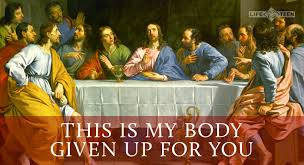
The Evening Mass on Holy Thursday commemorates the Last Supper it has as its theme, service and sacrifice which are aspects of the same mystery. In the washing of the feet in this mass  we see Jesus as one who serves, who gives himself. Just as he freely gives himself in washing the feet of his disciples, so too he gives himself in the bread and wine he takes, blesses and hands to them as he does through the priests down through the generations to us, And in the same way he will give himself on the cross tomorrow.  All these acts of self-giving are the same act – that of the Son of Man who came ‘not to be served, but to serve, and to give his life as a ransom for many.’The gospel of the evening mass clearly indicates a life of love, serving the community and helping out those who are in any need. On Holy Thursday we commemorate the first Eucharist when Jesus gave us the gift of himself to be with us in the here and now of today and for all time.

The action of the Church is our action  as the body of Christ on this night we also witness the Church’s respect for Christ’s Body present in the consecrated Host in the Adoration of the Blessed Sacrament, carried in solemn procession to the  Altar of Repose. No Mass will be celebrated again in the Church throughout the world until the Easter Vigil on Saturday evening proclaims the Resurrection that is the light of Christ.

As people who are Christians that is followers of Christ We should embrace all those who are in need of any kind as Christ did. We should be leading lives of generous service to all those who need our help wherever they are and there are many people around who may need our help and care. Each of us is called to show that we are a caring people showing the love of God to all those whose lives are loveless to all who have nobody to care for them we have to show them that ours is an all loving and caring God.  When we serve our brothers and sisters in whatever way we are called showing them that our God is an all-loving and caring father in heaven then the Eucharist whenever we partake of this great sacrament will bring us joy and peace. In the words of the liturgy let us go forth to meet the Lord in peace and thanksgiving as we celebrate the three days of the Easter Triduum

Palm Sunday

On Ash Wednesday we placed the ashes on our foreheads as a sign of our humility as we began our Journey for Lent. Today on Palm Sunday, we remember Jesus entrance into Jerusalem on a donkey as the people raised their voices in joyful acclamation as they sang hosanna to the Son of David. We stop and reflect for a moment on how we began our journey on Ash Wednesday and where we are now as we approach the life changing and life-giving events of Holy Week.  The first reading from Isaiah, speaks of a courageous and obedient messiah-figure, who says, “I have set my face like flint” against the beatings and scourging that lie ahead, “knowing that I shall not be put to shame.” The second reading from Philippians reminds us of Jesus’ total emptying of His divinity in order that He might identify Himself with the lowest criminal being led to His execution, “obedient to the point of death, even death on a cross.” And the reading continues but God raised him high and gave him the name above all other names.

The entrance into Jerusalem is one of the very few events in Jesus’ life which is mentioned in all four gospels.  It is the only time that Jesus accepts and encourages public acclaim as Messiah.  He even goes as far as organising his entrance by telling the disciples to go and fetch the donkey.  The key moment in God’s plan of salvation is about to begin, and Jesus knows exactly how it will unfold as he understood what the will of the father would mean for him. The full drama of the Gospel begins with the crowd’s fickle acclamation of Jesus as King. It reminds us of our own fickle responses and our lack of courage as we respond to His love and truth. Palm Sunday is about Jesus’s suffering for our inadequacies and our own sins. Our journey during Holy Week is a journey about god’s love for all of us that is manifest in the cross of Good Friday.  In just three years of his public ministry, Jesus set in motion a change in the hearts of many people. Just three years of walking around healing the broken, freeing person’s enslaved spirits, bringing hope, purpose, and meaning to the poor. Those “poor” included people with wealth, with power, with influence.  As we enter Holy Week, let us pause from the rush of daily life and open our hearts to the transformative power of Christ’s example. In doing so, we honour the journey Jesus made for us on the first Good Friday and allow ourselves to be renewed in faith, hope, and love. The Church leaves us in no doubt on Palm Sunday that we have now set out on the solemn journey of Holy Week.

How will we mark this journey in the coming days? Will we let it pass by with little interruption to our normal routines? Or will we walk prayerfully with Jesus through Holy Thursday to the cross of Good Friday and then to the Feast of the resurrection at Easter. We move towards the heavenly Jerusalem because Christ himself made the journey to the Cross for us and now he offers to make it with us here and now in 2026.   May the passion story inspire all of us to try to imitate in some small way the all loving all forgiving Jesus who went through betrayal to the cross and finally came to the resurrection for us so that we will have life and have it to the full. Over the next few days let us prepare well as we walk through Holy Thursday, Good Friday and Holy Saturday and then we will really be able to enjoy the Easter feast which we have been preparing for since Ash Wednesday.

Post Navigation