Fullerton T

RELIGION LITURGY AND LIFE

Feast of the Holy Family
 

HF


This weekend we celebrate the feast of the Holy Family. I struggle with the disparity between the holiness of the Holy Family as reflected in this Sunday’s readings and the reality of family life in the present day. In Luke’s gospel we listen to the story of boy Jesus stepping outside the family circle to engage elders in the temple. That had to be more exciting for Jesus than helping in the workshop or bringing in water from the well. When Mary and Joseph find him in the temple they discover him talking with the teachers of the law. In most families, Jesus would have received a tongue lashing and been grounded. The challenges for families today are as insistent and more intense than ever before in human history. The drumbeat of consumerism focuses us on things instead of relationships. Technology focuses us on how many “likes” we can collect as if those “likes” amounted to being loved and cared about which they really are not about. Cell phone technology removes the need to “listen” to one another. Individuals control their contacts. We quickly learn how to “unfriend.” Even though voices against history’s patriarchal past are loud and insistent, our world seems to be  moving towards authoritarian leadership fuelled by divisive rhetoric pitting race against race, gender against gender, truth against dishonesty.

On this celebration of the family we can only hope to find in the good news a way to transform our families. simply put the message is respect for the other, for listening to the other, and in loving the other. In Luke’s gospel, the return of Jesus with his parents and in his listening to them is a model for not only children but also parents. We should be listening with one’s heart and will. We need to listen to our children, to our spouses, to our extended families. If we listen we learn from them, share with them, and respect them in their personal struggles and in their accomplishments hopes and dreams. As we think about the Holy Family we recognize the sacrifice that Joseph and Mary  made for Jesus, in the same way as we recognize the many sacrifices our own parents made for us  and many more  are making for their children today in our I want what I want and  I get what I want world.

 Our families would find the disagreements, stressful relationships, and resentments that spoil the joy of family harmony so much easier to solve by trying to imitate the faith, love and trust of the Holy Family. “Lord Jesus, you came to restore us to unity with the Father in heaven. Where there is division, bring healing and pardon. May all people and families find peace, wholeness, and unity in you, the Prince of Peace.”

CHRISTMAS 2018

christmas-2


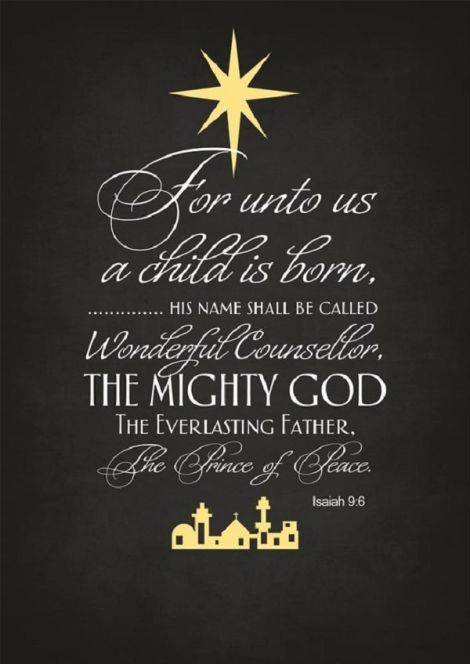
Well here we are it’s that time of the year again and here we are at the big event that all the preparation has been leading up to, but  the question to ask ourselves is this; has all our preparation been about tinsel and glitter without anything else especially the spiritual preparation that the Advent Season calls for. Preparing for Christmas is often a tense time with extra hours at work, standing for hours in the queues at the shops as the craziness goes on around us. Spending more time with families and friends at Christmas can also  be an endurance test in many ways to say the least!! During these days of  celebration we will often have occasion to sing as the angels did long ago, “Glory to God in the highest!” At this time when we celebrate the birth of “a saviour who has been born for us”, the One who is “Wonder- Counsellor and Prince of Peace,”

the One who is “a great light” we welcome an opportunity to put aside our cares and worries, in order to bask in the joy and generosity of the season, and sing out our “Glory to God in the highest as we celebrate the birth of Jesus Christ. As we do this we cannot forget those who are less well off than we are, those who have little or nothing at all. We are mindful of all those organizations such as the Salvation Army and the St. Vincent DePaul who do so much good for so many at this time of year and throughout the whole year. None of us will travel to Bethlehem to behold the newborn infant lying in the manger in the way the original shepherds and the wise men did in. But all of us travel the road of daily life, Some of our Christmas customs seem to turn away from Christ. Or do they? The giving of gifts expresses love of the other person. Festive decorations set this season apart from all others. Santa Claus was originally St. Nicholas, who was bishop of Myra in Lycia which is now in Turkey he was remembered for his generosity. Every letter sent and received bears the stamp of this special season, tidings of good will, and a reminder that those who are far away are close to us in mind and heart.

The customs of this season direct all of us to one message: Christ is born for us. To remove the veil, to hear the good news, we gather together in our churches. There the message of Christmas speaks loud and clear. The Letter to the Hebrews says, “In times past, God spoke in various ways to our ancestors through the prophets; in these last days, he has spoken to us through his Son.” The customs of Christmas speak the message in partial ways, but God speaks the message clearly through his Son, who is born in our midst this Christmas day.

On this day the whole community of heaven joins with all believers of good will on earth in a jubilant song of praise for the good news proclaimed by the angels: Behold, I bring you good news of a great joy which will come to all the people, for to you is born this day in the city of David a Saviour, who is Christ the Lord (Luke 2:10-11). So with Mary and Joseph with the shepherds and Angels and the Arch Angels and the whole company of heaven    Let us take this story and the good news of great joy into our hearts and let the joy peace and mercy flourish.  Let us be thankful for this great light that is Christ the light of the world  we also thank God for all those who are involved in keeping the Light lit. Let us keep the light burning brightly in our hearts and in our lives.  Let us hold this simple story of Jesus birth in the Manger in our hearts throughout the year.

Come let us adore him Christ the Lord the reason for the season the face of the fathers love for mankind.

4th SUNDAY OF ADVENT

4th-Sunday-Of-Advent-Candles-And-Palm-Leaves-Clipart

This weekend we light the third purple candle on the Advent wreath as the anticipation grows to a crescendo as we  draw closer to the celebration of the Christmas mysteries. Christmas is almost upon us: yet are we ready in the true sense of the word remembering that Jesus is the reason for the season? Christmas we are told is a time for so many things  yet for many of us it is a time of stress and pressure with all the extra work to sort out everything that needs to be done.  For many it is a time when we are fearful that the children won’t be disappointed or that there will be tension in relationships or there will be a breakdown in the ceasefire with the in-laws.  And on top of all this there is a feeling of guilt for feeling like this when we should be happier that we are at this particular moment in our lives.

Now in the midst of the preparations we meet Mary and her cousin Elisabeth in our Gospel reading for this weekend. Mary, who herself had been prepared for the coming of the Messiah. She has heard the angel’s greeting, and his strange news, and has accepted her role in God’s plan.  Now she hurries to her kinswoman, Elizabeth, who herself bears John the Baptist in her womb. John, alerts us to the presence of the Lord, as he leaps for joy in his mother’s womb. His joy is that God has kept his promise, and is with his people.  That two women were chosen to play such a role in the story of salvation is remarkable, as women were often marginalized in the society of their time. In all of these events we see the great mission that Mary undertook as a privileged instrument in the hands of God. Mary is not only the mother of the source of grace; she is the very model of what a Christian heart should look like. We look to Mary to see our fullest Christian   dig­nity.

In Lumen Gentium 68, Vatican II describes our contem­plation of Mary as an act of entering our own deepest mystery, catching a glimpse of what we shall he at the end of our faith journey. Over the next few days the journey to Christmas will have many pressures for everyone especially those who are worried or afraid about so many things family and otherwise.  Mary in her calm gentle way encourages us to trust in God’s word and to believe in God’s promises as she did. If we believe and have trust in God all the problems that might arise will assume their proper perspective and we will get through them and come out the other side wondering why we got so worried in the first place.

3rd SUNDAY OF ADVENT

This weekend we celebrate Gaudete Sunday which translates as rejoicing Sunday and we light the pink candle on the Advent Wreath also in some places the vestments may be a rose colour.  In the readings for this Sunday both John the Baptist and Paul share one belief: that the Lord is very near. God’s nearness didn’t act as a threat to them, but gave them a infectious source of joy that no one could takeaway  from them. Their joy in the closeness of God gave an edge to their preaching and teaching exhorting others  as well as ourselves to make ready the way for the lord; it also gave them a vision to see the far side of disaster; it moved them to draw others into that sense of joy. None of them was enclosed in his own joy each moved out going round in the hope his inner joy would be caught by the people of their time and place and many people were caught by the joy they had to pass on to them.

The picture of John the Baptist as a man of joy is not one you hear about very often. John is usually portrayed as a lonesome figure, with a weird wardrobe and weirder diet, who rants and raves at anyone with ears to hear. But John was a character who intrigued people and as a result they would seek him out and follow him. People don’t journey into the wilderness just to get insulted; people don’t become disciples for the wardrobe and diet. Here was a man who cared nothing at all for comfort, money or fame, who could not be bought, and who would speak the truth without fear. In John people could see something of God. John spoke to people in words the people could grasp when he told them exactly what they should be doing.  John made such a deep impression on people that word goes around that he might be the Christ. Again, that expectant feeling is a measure of John’s effect on people around him.

John did not  claim to know who the Messiah was going to be instead he tells the people that he is not that person. That role is for someone else, someone greater and more powerful than he was. And as we know that person was Jesus the Son of the Father. We are called to be joyful witnesses to Jesus but as we know with all that is going on around us these days that is not easy. There are bits and pieces in the Way’s of the World that continue to block the presence of the Lord within us as well as so many other people. Once again It’s time to clean our houses and prepare to welcome the Lord into our lives our hearts and our homes.  As we light the pink candle this weekend to celebrate our rejoicing are we prepared to open our hearts and minds to the fact that the Lord is near and pass on the joy of St. Paul and John the Baptist on to the people around us.

2ND SUNDAY OF ADVENT

download

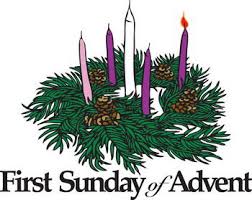
This Sunday we light the second purple candle on the Advent Wreath and we hear the gospel story of the voice in the wilderness that is John the Baptist. John was called to be the herald of the Lord calling the people of his time to  repentance John the Baptist plays a prominent role in all the gospels, but particularly in Luke. John hears the word in the desert and preaches prepare the way for the Lord make straight his paths” throughout the whole region of the Jordan.” The Jordan was another important place in the faith life of the Jewish believers. After their desert wanderings the people crossed over the Jordan river into the promised land. They left behind slavery, came to know God in the desert and were finally prepared by God to cross into new life. All the readings share a marvellous insight: people begin to change when they are encouraged to see the best in themselves, not when they are asked to dwell with the worst in themselves.

Blessed John Henry Newman reminds us that “Advent is a time of waiting; it is a time of joy because the coming of Christ is not only a gift of grace and salvation but it is also a time of commitment because it motivates us to live the present as a time of responsibility and vigilance. We all need help and encouragement to leave behind all the things that have become destructive in our lives. We need help in thinking about ourselves differently, and imagining the good effect that will have on others. We have to take time during advent to reflect what kind of person God wants us to be, what God’s plan is for us as we prepare the way for the Lord. We need to have faith in the future, to see the power of God working in the change that Jesus brings to us and through us to others. In this Gospel passages John calls all of us to a better faith filled life. This  means the necessity, of an industrious, living ‘wait’ as we prepare the way for the Lord pruning away all that hinders us from making him welcome when he comes at Christmas .

As we continue our  advent  journey we need to ask ourselves what are we waiting for. Are we waiting for the presents and razzmatazz that the secular part of Christmas bring or are  we preparing spiritually for the greatest gift of God, his Son, Jesus the light in the darkness who John the Baptist foretold.

1ST SUNDAY OF ADVENT

download-2


Well here we are at the start of another Church Year as we begin our preparation for Christmas. We go from the green of Ordinary time to the Purple which symbolizes the penitential season of Advent. last week, at the end of the Church’s year, we had the  highpoint of the Feast of Christ the King. One week later we start all over again as we light the first purple candle on the advent wreath. Advent is the season that brings us back to the ancient longing of the human race for the coming of one who would bring to this world liberation from sadness and the fulfilment of perfect peace.

The gospel reading for this weekend gives us the last address of Jesus’ public ministry. And Jesus is clearly fretful about the future as he paints a bleak picture of the end of the world. There is talk of nations in agony, of bewilderment, of people dying of fear, of the power which menaces the world.  It is a nightmare view of total disaster which “will come down on every living man on the face of the earth”.

Given that vision of ultimate collapse, it is hardly surprising that it might drive people to drink! Being sober and awake might not seem very attractive in the face of such catastrophe. Nightmares are bad experiences we usually wake up from, not experiences we stay awake for. Yet that is Jesus’ advice: “Stay awake, and be ready praying at all times for the strength to survive all that is going to happen”.  This Sundays Gospel also encourages us to do two things which are difficult to hold together: to be honest about the way the world is going, and at the same time not to lose hope in the future. The danger is that we see the terror clearly, and don’t see our reason for hoping. And given the muddle we’re often in, Jesus has to convince us about a future that is really liberating. The way he does that best is through the example of his own life from birth to resurrection, from Christmas to Easter Sunday we see life through all of these times and events as people of faith.

Advent reminds us that we don’t have to sleepwalk blindly into the future. Every year we remember the story of Jesus life again, and that memory of the past becomes our hope for the future. That’s why we retell the story again and again, beginning on this first Sunday of  Advent and ending on the feast of Christ the King. We all need to be reminded of God’s love from time to time. We need to check the record of the past to reassure ourselves as we go into the future. When we do, we see how far-reaching God’s love is for all of us. The Lord is coming may the heavens rejoice and earth be glad as we go forward together in hope and joy this advent season.

FEAST OF CHRIST THE KING


download


This Sunday we celebrate the feast of Christ the King the last Sunday of the Churches year. The Feast of Christ the King was established by Pope Pius XI in 1925 as an antidote to secularism, this is a way of life which leaves God out of a person’s thinking and has us living life as if God did not exist as we all know God does exist and we see this through so many people throughout history right down to ourselves. In this feast  we profess our common belief: Christ is King. This is reflected when we pray the Lord’s Prayer together We pray, “Thy kingdom come”, i.e., we pray that our lives together will better reflect what Jesus has in mind for us as a community of God’s people.

Our Gospel reading for this Sunday has Jesus before Pilate. The authorities of the time did not like the truth that Jesus was speaking about on so many things as many within and outside the Church do not like the truth that the Church teaches.  In the reading from John’s Gospel  which is also part of the Good Friday Passion Narrative we see  this conflict is described in terms of the “truth” that Jesus  has brought from his Father: “It is because I speak the truth that you cannot believe me” (8:45).

Jesus urged the people of his time as he encourages you and me in our time to find again our true calling in the work of God, to be “a light to the nations,” showing the world the life and joy of a people living according to the ways they have learned from Jesus son of the Father. At the end of this church year , we are asked to embrace the cross and walk in the victory of the King of Kings and the Lord of Lords. What began as a humble event with the birth of Jesus in the stable has changed the world. As we prepare for Christmas during Advent are we with Jesus and his call to us to be merciful as the father? Are our lives an open sacrifice in a demonstration of the love of God? We can be sure that nobody there on Good Friday  thought they were witnessing the death of a great King and that we would celebrating Christ as our King over 2000 years on in 2018.

33rd SUNDAY IN ORDINARY TIME


images 22


This week end there are many things and people to pray for and we think about and pray for all those who are affected by the wildfires that are ongoing at the moment in California. We pray for the families of all those who perished as well as those who are missing.

In November as a Church we pray for the dead as we come to the end of the Liturgical Year we listen to Jesus’s words concerning the end times. The vision of the future in the Gospel Reading for this Sunday doesn’t look very appealing. The bad news is delivered first of all. Jesus imagines a time of terror and trouble and persecution. People will be betrayed and handed over to the authorities. There will be wars and earthquakes and famines. Jesus says, “These things must happen.” Then there will be cosmic upheavals: “the sun will be darkened, the moon will lose its brightness, the stars will come falling from heaven”. After this catalogue of disaster there is the good news. Jesus looks beyond the time of distress to the final time, when the Son of Man will gather the scattered people of God to himself. Jesus sees beyond suffering and persecution to a future of peace with God.

 God does not call us to be anxious, but he calls us to confidence in the message we hear in the gospel and proclaim in our lives and he calls us to be vigilant that we remain in his light. Christ remains our high priest who has offered himself for the forgiveness of our sins. God knows what it is to be human. The Lord calls us to stay awake amidst the distractions of life, so that we will recognize him when he comes again. St. John of the Cross wrote, “When evening comes, you will be examined in love” (Sayings, 60). We prepare for the day of Christ’s coming by first recognizing him in our brothers and sisters and by knowing him in his word and his sacraments. False securities and shallow guarantees will not sustain us in times of strife and testing. God alone must be our hope. God’s ways must be our ways, so that when our securities and misplaced confidences fail us we can turn our eyes to God’s saving light. Let us keep vigilant — and not be anxious — for that day when God who is love calls us and looks at us with love.

33rd SUNDAY OF ORDINARY TIME


images (12)


This  Sunday we commemorate the centenary of the ending of the First World War with the Armistice that took place on the 11th November 1918 at 11am. Over 200,000 people went to war from Ireland in the Irish and Ulster divisions and 36,000 of them did not return. the primary hope of that first Armistice Day in 1918, was that the first World War would have been “the war to end all wars  Unfortunately, 100 years later that hope is still a distant dream. Today we thank god for all those who gave their tomorrows so that we have our todays. As we commemorate the centenary of the end of the first world war and remember all those who died in that war and in the various conflicts since 1918 let us redouble our efforts to Pray for peace and to be people of peace.

The dignitaries in This Sundays Gospel need more than a defence counsel, for Jesus is putting his case for the prosecution. The scribes were expert lawyers, who interpreted and applied the written Law through a complicated system of traditions. Jesus makes a series of charges against the scribes.

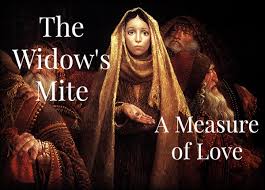
He criticises their habit of wearing distinctive dress, which marks them as different from others. He criticises their habit of taking the places of honour at religious and civil functions. He criticises their habit of long-winded prayers, made not to God but to their immediate audience. Finally, he denounces their practice of exploiting helpless widows by living off their savings.  The story in the gospel goes on to tell us about the poor widow who went along to the treasury  and puts in two of the smallest coins in circulation. In the arithmetic of the kingdom the widow’s offering is worth more than all the other contributions. Whereas the others give from their surplus, she gives everything she has. That is the key point in this gospel reading she gave everything she had the widow’s action follows immediately on his critique of the scribes who profit from their status . It is a warning to those leaders in ministry who bask in their own significance and live comfortably off the backs of those they serve. The Gospel story about the widows contribution to the treasury is a good lesson in having a proper perspective of oneself.

Her kind of humility is praised, as an honest thanks giving to God for all she has. This encourages us to try and stretch our resources rather than seeing the giving as an obligation or after thought, certainly giving from the heart rather than for show. And that is really what we should be about giving from the heart recognising that we need to be like the widow of the gospel who gave everything she had.

31ST SUNDAY OF ORDINARY TIME


greatest-commandment.jpg


This weekend we celebrate the 31st Sunday of ordinary time and last Thursday we celebrated the feast of All Saints. Each of us are called to be saints and the feast of All saints  honours all those unsung heroes of the faith who are saints even though the Church has not Canonised them. They are the men and women who “hung in there” despite all sorts of obstacles, to faithfully believing in God and His Son, Jesus.   All of us have this “universal call to holiness.” What must we to do in order to join the company of the saints in heaven? We “must follow in Jesus footsteps and try to conform ourselves to his image as we seek  to do  the will of the Father in all things In this way, the holiness of the People of God will grow into an abundant harvest of good, as is admirably shown by the life of so many saints in Church history”.

Our Gospel reading this weekend is all about the first and greatest commandments of the law. In his reply to the scribe Jesus makes it clear that you cannot compose summaries of the Law while forgetting love of neighbour.

The scribe is pleased with Jesus’ reply and adds his own point, that the love of God and neighbour is far more important than any ritual worship. In supporting the scribe’s addition, Jesus places the demands of liturgy far below the demands of active love.The transformation caused by God’s love is so profound that it flows from us towards God and is expressed in love of neighbour. Like Moses, Jesus calls us to love God with our entire being because his life and death are a manifestation of God’s love for each of us. The scribe in this Gospel states that the law of love of God and neighbour is greater than any of the religious observances and laws concerning sacrifices. Revered Temple worship and sacrifice must take second place to the observance and sacrifice that comes with loving God and neighbour. Jesus says that the scribe has answered wisely about the superiority of love over any sacrifice and then says to him, “You are not far from the kingdom of God. Our God is the God of history. Our God is the creator of all that is. We are God’s dream. Our living with God is not only in our places of worship and community. God is with us in the market place, on the factory floor, in the politics of life. Our God is with us on the streets, in homeless shelters, in the hospitals and mental institutions that seek to heal us.

As a matter of fact God is with us wherever we are and in whatever we are doing in his name. Our lives are not divisible into secular and religious though some might want it that way. We are called like the pharisee in this Gospel story to love the Lord our God and  our neighbour as well and to bring that love out into the world where we are.


Post Navigation