The Feast of John the Baptist
This weekend we celebrate the feast of Ascension, in many place this feast was celebrated on Thursday of this week but here in Ireland it is celebrated on the 7th Sunday of Easter. Over our lives we have seen the departure of so many people, Perhaps it is a son or daughter leaving for university or maybe it was someone leaving to go to another country or the hardest departure of all someone close to us dying. Our lives are made up of so many different times and places of departure or leave-taking and really that is what Ascension is really about. Jesus going back to heaven to be at the Fathers right hand. The words of the Gospel for Ascension day strike me in a particular way Jesus tells us ‘go therefore make disciples of all the nations and know that I am with you yes to the end of time.
Jesus is definite about what he has to say when he speaks and calls his disciples to be the first missionaries. This is in sharp contrast to the fact that, their feelings were varied. Some of them worshipped him, while some of them still doubted. Jesus didn’t seem to have any great problem with that, because he knew that, when the Spirit came, all of those doubts would be ended. It would seem, indeed, that he was in a hurry to take his leave of them, so that the next part of his salvation plan could get underway. The mission of the apostles was simple to understand; difficult to carry out. It was to teach others all that Jesus had taught them. Just as he asked his disciples to follow him, they were to ask that others should follow him and was so hard for them then and it is hard for us to do in the world of today. The programme of salvation was to begin at Pentecost and continue from generation to generation, until the end of time.
So many things have changed in the Church and society. However the two things that have not changed are Jesus himself and every word of his message as they are ever old and always new for each generation. The message of Jesus is ignored by many people inside and outside the Church for their own reasons. The essential message of God and his messenger Jesus his Son have never changed up and I don’t think that they will ever change. Again and again we need to ask ourselves what we are doing to make disciples of all the nations realizing that Jesus and his message are always new for each generation. May we be heralds of God as we place the message of Jesus before others by the way we live out the call of Jesus to follow him.
This Sunday is the 6th Sunday of Easter. it is also the beginning of the month of May. May is the month in which we venerate the Mother of Jesus in a special way. In the Gospel for this Sunday Jesus tells us ‘As the Father has loved me, so I have loved you. Remain in my love. This is my commandment: love one another, as I have loved you.
The teaching about love is not a recent innovation, or a new-age trend as many people seem to think. Jesus does lay down a commandment for us today, but he does so, not as the master talking to servants, but as a friend speaking intimately to other friends. Servants follow rules, their lives are dictated by the one who holds authority over them. Jesus’ religion isn’t based on such a model though many in the church today seem to think otherwise. Instead, love is the foundation of our faith. Jesus is asking us to live out of the realization of that love. We are his friends, he tells us, so now we are asked to go out and live like friends with one another. “Friends,” in this context, means “beloved ones.” We need to live out of that description for we are the beloved disciples.
The instruction that Jesus gives are valuable lessons by which we will master the love of God our Father in what we think, what we say and what we do. Jesus chose his followers to carry out God’s plan of salvation in every age he chooses us today in our turn to do the same. Love is the best way to become his “co-worker,” since it reveals the reason he made the world and affirms our friendship with the creator. Love changes everything it touches. It tells us to stop bragging about this or that. It enhances our reputation. It denies the power of position and wealth which we sometimes feel is ours by right, it raises us up as true leaders. It connects us to God and to one another. Divine love transcends mere emotion. It becomes our lifeline to God. And it forms the basis of real community where everyone is valued and none are left out. It is inexplicable in theory, yet easily seen in action. Wherever God loves, he acts. Wherever he acts, he is there with us. HE IS WITH US simply because he loves us and the love of God knows no bounds; we remember the love that God has for each and every one of us each time we look at the Cross. There was no greater love than the Cross of Good Friday. We are called to bring the love of God into our own lives as well as the lives of those around us remembering that the Love of God lasts forever.
During the month of May we honour Mary the Mother of Jesus in a special way with our May Altar in our homes. May she lead us to her Son Jesus who calls us to remain in his love and to pass it on to others.
This week we have heard the story of Alfie Evans and the lengths his parents went to preserve his life reported throughout the media. Sadly little Alfie has died but his parents did all they could to preserve his life and they deserve the greatest credit. All of us in Ireland at this time could learn a lot from their example as we head toward the referendum on the 8th amendment with all the implications that it has in the way we treat the unborn.
In our Gospel story for this Sunday we hear the story of the vine and the vinedresser of course Jesus is the vine and the Father is the vine dresser and we are the branches of the vine. If we remain in him with him in us we will produce much fruit. The sound of the pruning shears does not sound very pleasant, in fact, it sounds quite stark, threatening and painful. Keep that vine dresser from my door in case he cuts me down comes to mind! From the time of Moses, the Hebrew people thought of their nation as a vine which God had taken from Egypt and transplanted into Palestine. There in the fertile valleys and plateaus the nation thrived and grew, as does a vine that is well tended.
The snag for us today is the worry that if we are found wanting and are unable to yield fruit then we will be quickly pruned and cast into the fire along with all the rest of the dead wood. Every vine dresser knows the importance of pruning away branches that will not bear fruit. Those branches rob the vine of its vitality and diminish the amount of grapes produced. Life in Christ is a gift freely given, and a gift freely accepted, because there is freedom, the life and love of Christ can be rejected. Of course, we are using the language of analogy here; we are not talking about a harvest of actual grapes. When Jesus says ?I am the vine’ he is clearly meaning a vine of a heavenly order. The fruit, is therefore surely also of a heavenly order. We realise that the harvest is one of souls for heaven. Our task is in fact to continue the work of Christ in the world. In order to know what to do we must look at his life and imitate him as best we can. He taught the truth, he spoke words of comfort, he healed the sick, he brought sight to the blind, he rebuked the devil, he spent much time in prayer and in communion with the Father. And ultimately he laid down his life for our salvation. These then are the things we must do. We must think hard and find ways to translate his actions and his words into our actions and our words
We are meant to live in the peace and joy of the Easter gospel not in fear and uncertainty. “Without me you can do nothing,” Jesus tells us. But with him we can do anything. If we remain in his life and love, we can ask anything of the Father and it will be given Christ has promised to remain with us during our lives if we stay close to him. While we remain healthy branches of the vine, we will be on the road to heaven. Our daily tasks, our work as well as our prayer, our recreation as well as our rest, our joys as well as our sorrows, will give glory to God and prove that we are worthy to be called disciples of Christ as we find ways to translate his actions and his words into our actions and our words.
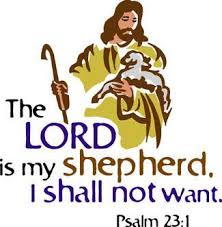
This weekend we celebrate the 4th Sunday of Easter which is also known as Good Shepherd Sunday. The idea of Jesus as the Good Shepherd is good thing because it is well-known fact that the shepherd never leaves his sheep outside the sheepfold. If any are outside the sheepfold the shepherd will seek the lost sheep at all costs until they are found. In the same way Jesus will seek us out and help us to find our way back into the sheepfold of faith. In the Old Testament, the shepherd was a metaphor for the leaders of the people of God. Most often those leaders failed in their responsibilities and many were corrupt. God excoriates the incompetent and sinful leaders who were appointed to shepherd the people which they did not do. With the failures of the leaders of the people, God decided to take on the shepherding role. “For thus says the Lord: I myself will look after and tend my sheep. (Ezekiel 34:11).
In this gospel Jesus likens Israel’s corrupt shepherds to the “hired man” who deserts the sheep when danger approaches, leaving them in peril. The hired shepherd may leave the sheep behind but Jesus the Good shepherd the Son of the Father does not leave his sheep. One of the most comforting of the Psalms which is also a hymn begins with the line: “The Lord is my shepherd.” It ends with this line: “Goodness and mercy shall follow me all the days of my life.” Goodness and mercy, in the person of Jesus the good Shepherd are with us even now. The Gospel of the Good Shepherd teaches us how to embrace the gift of redemption by hearing and recognizing the voice of the Good Shepherd. There are numerous voices calling us to believe and to practice things that might seem nice, but those voices are not of or from the Lord. We need to tune our ears and hearts into recognizing the voice of truth that comes from Jesus, the Good Shepherd. We are his people the sheep of his flock and that means that we are people who are able to recognize the voice of the Lord and to faithfully follow him.
This Sunday we also pray for vocations to the priesthood and religious life. We pray for all those young and not so young who have a vocation to the priesthood, Permanent diaconate or the religious life. We pray that in their lives they may be like Christ the Good shepherd who came to give up his life as a ransom for many bringing his people into the sheepfold of God and faith in him.
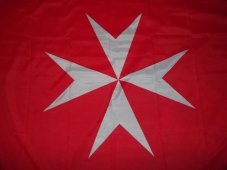
In a few weeks’ time at the start of May The Council Complete of State will convene for the election of the Grand Master or Lieutenant of the Grand Master. This election comes after a time of renewal and reform that Pope Francis called for after the events that took place at the end of 2016 into 2017. Renewal that will continue after the election and beyond. When we think of renewal what do we think of and where do we begin ? As an organisation set up to defend the faith and serve the poor we take our que from the dual ethos of our Order that is Faith and Service in action. For proper renewal to take place within the order we need to begin with the individual people that you and I are and then move on to the bigger organisation but the organisational renewal is a totally different concept from the spiritual renewal of oneself.
We have just finished the great season of Lent which is in itself a time of spiritual renewal with many people giving up and taking up the challenges of the Lenten season and now during the 50 days of the Easter Season leading up to Pentecost we consolidate the renewal undertaken during Lent so that we can move forward in faith. The American Association Year of Preparation primer makes the point that we serve the sick and the poor but we also commit ourselves to defend the Faith the two go together . Our adherence to the Catholic Faith should be manifested by our moral conduct, our ongoing learning and sharing of this Faith, and our service of others. We are not motivated by a pay check or a place of honour in church or generic humanitarian inclinations. We are followers of Jesus Christ who is the way the truth and the life! When we think about tuitio fidei, the Defence of faith, our mind goes readily to the Hospitallers of past, who defended Palestine against the Mamluks, to Grand Master Jean de La Valette who held out against the Turks in the siege of Malta in 1565.
These were the battles that took place for all to see, and today we try compare to those warriors of old with Catholic men and women who defend the Faith in the media, and in political and other debates, or who by their writing seek to commend the faith to non-believers. There is also defence of the Faith at the level of individuals But how does this fit into the notion of renewal of the person who is an ordinary member of the Order is a question that we have to constantly ask ourselves. I believe that the answer is that Faith is the assurance of things hoped from the conviction of things not seen”. (Hebrews: 11,1). We must be prepared to witness to things unseen as an important part of a spiritual life but of course it is difficult to be such a witness, precisely because they are things unseen, and yet St Paul is insistent on the need for proclaiming the truths of faith.” How are men to call on him (Jesus) if have not come to believe in him? And how can they believe in him if they have never heard of him? And how will they bear of him unless there is a preacher for them?And how will there be preachers if they haven’t been sent? So faith comes from hearing and what is heard comes by the preaching of Christ.(Romans: 10,14-15.17). Our duty as Christians in today’s world is to be like the preachers mentioned in the above text. But what does this mean in practice? In the 1930’s there was an association in England called the Catholic Evidence Guild. Its members were well trained in apologetics and public peaking, but the difficulty was to find them an audience. The local group of the Catholic Evidence Guild decided to take Scripture literally and to send a preacher to the nearby town of Bury St Edmunds. On market day, a kitchen table was placed in the square; a priest called Fr Gilbey stood on it and spoke eloquently, but no one stopped to listen to him. People just looked at him in an awkward way and went past to buy their meat and vegetables as usual. The preacher was speaking to nobody. Perhaps in certain cultures and at certain periods in time such a method would have been successful but it was not successful in the 1930’s and I do not think it is for us today.
A better starting point for us in proclaiming the faith is in the comment in St Peter’s first letter: ‘Always have your answer ready for people who ask you the reason for the hope that is in you, but give it with courtesy and respect. (Peter: 3, 15). “Have your answer ready” but in order to have our answer ready we have to constantly renew ourselves so that we have our answer at the tip of our tongue for someone who asks us about the faith we profess. If we think that this is asking too much, we should take to heart a remark made by Pope St. John Paul 2 on this very subject. He said in a Speech to the new Ambassador of the Order of Malta to the Holy See; 13 October 1997.
“Today the defense of the faith means above all the witness to the truth of Christianity by what one says and what one does To defend the faith often means, especially in our time, to defend basic values which human reason, without the light of revelation, is in danger of not being able to grasp radically or completely enough. Such are, for example, the dignity of man, the nature of the family, and the fundamental right to life.
We need to renew our spiritual selves on an ongoing basis with Mass, Eucharistic Adoration, perhaps saying the Divine office, the Rosary with other spiritual exercises such as retreats etc. The ongoing reform of the Order that is taking place at the moment will only be successful if we renew ourselves spiritually and recommit ourselves to the core values of defending the faith and serving the poor. Our lives should be a spiritual odyssey constantly looking at where we were in the past, where we are at the present time and where we hope to be in the future. The spiritual life of faith is not easy but anything that is good is never easy and is always worthwhile. Archbishop Martin of Dublin in his homily at the Mass for the beginning of the preparations for the world meeting of Families tells us that Faith is trust in God. Faith is trust and recognition that God cares even when we are not aware of it. Faith is not telling God what he should do for us. Faith is not a situation in which we feel we know what God should be doing. It is being sensitive to God’s plan for us and to his love for us. We as people of faith are called to bring that faith into our lives and the lives of those around us.
The love of God calls us to set out on a journey to show the love of the Father to others without pre conditions. This kind of merciful love is often a life-time’s work. It is a service, and day to day it needs to be strengthened and restored through prayer and confidence that God’s will is being done for it is God’s will that his the Love should of God be shown to all whoever they are wherever they might be. Perhaps everyone we meet has some special need for our Love that is our merciful, uncomprehending, love and our understanding response to their needs and cares. Children, old people, a tired friend, disabled people are just examples of people in need of our affection, understanding, counsel, or consolation there are so many people out there and we shouldn’t be afraid to show ourselves as people who love and care for those who need us. There are many things within the Order of Malta institutions that are good and there are also many things that have served the order well over the years that are no longer relevant and we should consider getting rid of them but this does not mean that we throw the bath water out with the baby. This means that after a period of thoughtful consideration we should do what is required in order to move forward in a proper way. We pray for the election that will take place during the early part of May we also pray for all those involved in it from all over the world. We also pray for all those who will take part in the Lourdes Pilgrimage that it will be a time of grace and healing for all the pilgrims. There is much need out theremay we see what we have to do and get on with the job that needs to be done.
As we end this reflection we consider the following words attributed to Archbishop Oscar Romero The sentiments within this could be applied to our personal lives as well as the life of the Order and maybe we should take these few lines to heart as we go forward:
It helps, now and then, to step back and take the long view.
The Kingdom is not only beyond our efforts, It is even beyond our vision.
We accomplish in our lifetime only a tiny fraction of the magnificent enterprise that is God’s work.
Nothing we do is complete, which is another way of saying that the Kingdom always lies beyond us.
No statement says all that should be said.
No prayer fully expresses our faith.
No confession brings perfection, no pastoral visit brings wholeness.
No programme accomplishes the church’s mission.
No set of goals and objectives includes everything.
This is what we are about.
We plant the seeds that one day will grow.
We water the seeds already planted, knowing that they hold promise.
We lay foundations that will need further development.
We provide yeast that produces effects far beyond our capabilities.
We cannot do everything, and there is a sense of liberation in realising that.
This enables us to do something, and to do it well.
It may be incomplete, but it is a beginning, a step along the way, an opportunity for the Lord’s grace to enter and do the rest.
We may never see the end results, but that is the difference between the master builder and the worker.
We are workers, not master builders, ministers, not messiahs.
We are prophets of a future that is not our own.
 Fullerton T