Fullerton T

RELIGION LITURGY AND LIFE

Sixth Sunday of Easter

conquerers_cross_wegast

Here we are at the 6th Sunday of Easter soon we will come to Ascension(Jesus returning to the Father) and then the end of the 50 days of the Easter season we get to  Pentecost (The coming of the Holy Spirit sometimes called the Holy Ghost). The Gospel reading for this Sunday tells us that if we love Jesus he will come to us and stay with us and he is with us in so many ways especially in the sacramental life of the church. But he is with us in a particular way in the sacrament of the Eucharist, the body and blood of Christ which is the Bread of life. Jesus also tells us in this Gospel that he gives us his peace which is not of this world. We have only to look at the various war zones in the world such as Iraq and the middle east where so many have lost so much, even the Holy Land where Jesus walked while on earth is at war with Israel and Palestine fighting over so many things.

I think that the Peace that Jesus speaks about is the peace of soul, spirit and mind that comes from knowing that we are all members of the family of God and that God the Father is with us in our daily lives and existence. The Gospel reading for this Sunday also tells us that Jesus will be soon leaving his apostles and yet here we are 2013 years later celebrating the rich inheritance of the faith that has been handed down to us through the generations from Jesus and the Apostles. The faith that has been passed down through the generations to us here and now will continue into the future. As Eastertide comes to an end we see the power and influence of the Spirit growing. This is the Spirit who raised Jesus from the dead, and the Spirit who brings the Church to birth at Pentecost which we celebrate in two weeks time. As we journey towards Pentecost – the climax of the Easter Season – we should be considering the presence of the Spirit in the Church today: the reconciler of disputes, the solver of problems, true inspiration for the family of God on our journey to the New Jerusalem!

For us Pentecost is about promise: the Lord at the Last Supper promises that He and the Father will be “at home” with all who keep his words (This includes you and me) – and it is the Advocate, the Holy Spirit who will remind us of these and all his words. Someone once said that the law of gravity and the law of love ultimately have the same source and are both driven by the same spirit, the Holy Spirit. We believe that all Scripture is “inspired” – the word of the Spirit – so as we listen this Sunday let us look for the fulfilment of the promise made by the Lord. 

FIFTH SUNDAY OF EASTER

love22-291x116

Today is the Fifth Sunday after Easter we are now closer to Ascension and Pentecost than Easter, but we are still in the Easter Season which goes on until Pentecost Sunday. the scripture readings of the seven Sundays after Easter describe   the reactions of the apostles to the news that Jesus was even more alive after Good Friday than He was before His death on the cross. The readings this Sunday begin to move us along too, as once more we hear the Lord at the Last Supper preparing his disciples for his departure: he does this by giving them a rule to live by, a new commandment. This commandment, “love one another”, is to be the guiding light of the community of believers after Pentecost and the coming of the holy Spirit it is the risen Lord’s parting gift to his Church. Paul tells us that “although his nature was divine, he did not cling to his equality with God, but stripped himself of all privilege to assume the condition of a slave. He became as we are, and appearing in human form humbled himself by being obedient even to the extent of dying, dying on a cross.” And elsewhere Paul writes: “Though he was rich, he became poor.” Do you not see what is new in Christ’s love for us? The law commanded people to love their brothers and sisters as they love themselves, but our Lord Jesus Christ loved us more than himself.

The apostles gradually began to understand how necessary it was for Jesus  to die in order to accomplish His mission from the Father, freeing mankind from the ancient curse. Each of the readings show  us how the apostles became more and more confident about the future as we should be confidentas well. In the Gospel, taken from Jesus’ farewell discourse just hours before His betrayal by Judas, their Master and Lord solemnly reveals to them a new commandment.  Love one another as I have loved you, that is the   self-sacrificing love for one another, is to be the sign by which all will know we are His followers. That love is to flow through OUR faith and works, into the structure and authority of His Church. Love is to form the basis for its   ministry as well. “This is how all will know that you are my disciples, if you have love for one another.”Our new Pope Francis, in the short time since his election, has made real efforts to bring the outward face of the Church more in line with the humble, loving, and caring face of Jesus as it carries out the everyday work of its worldwide mission. May the example of Pope Francis give new life to the spirit of love, truth, and service in every local Church so that  it can be said of us in our locality that we have loved on another as Jesus Loved us.

4th Sunday of Easter Good Shepherd Sunday


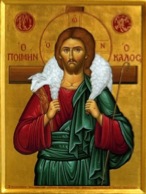
JESUS THE GOOD SHEPHERD

JESUS
THE GOOD SHEPHERD

Today we gather on the fourth Sunday of Easter which is also known as Good Shepherd Sunday it is   the day when we pray that the Lord will send inspire people young and not so young to take up the vocation of service as priests or religious. One of the gentle images that we find applied to God in the Old Testament is that the Lord is the shepherd of his people. We Christians apply this title to Christ the Lord. He is the good Shepherd who knows his sheep and lays down his life for them. That is to say that Jesus is our Good Shepherd and he knows us intimately and down his life for us. We may find this language of sheep , flocks and shepherds strange, but beneath the imagery the belief it points to is at the heart of our faith: a gentle God who is concerned about and caring for everyone.  

 In today’s Gospel we hear Jesus says “I am the good shepherd. The Good Shepherd seems to be calling to His sheep to follow Him into the unfamiliar pastures.  Most of us, upon listening to our own recorded voices, wonder if that is really us! What we sound like to others is not the exact way we sound like to ourselves. People who are visually impaired learn quickly who is who by their footsteps, pace, noisiness as well as their voices. Jesus is telling us that He will keep calling in the same voice and when we begin to follow, He will keep leading us on to fresh and green pastures. And what will Jesus be saying to us his followers to you and me he says I am the Good shepherd follow me. There will always be other voices, from within ourselves and from outside. How will we ever learn to recognize His voice as different from our self-cantered voices!

A lot of people just want what they want not thinking about the true implications for themselves and the rest of those around them and this is why the calling of the Good Shepherd is so very different. Jesus the Good Shepherd seems to be calling always to His sheep to follow Him into the unfamiliar, the pastures, yonder, over there. And that is what Jesus is calling us to on this day and every day to follow Him into the unfamiliar territory which will lead us along the roads of faith that will; bring to the fullness of faith and life.  Many in our world are now fascinated by another voice, that of Pope Francis, who urges us to bring the power of our love and concern to the poor, the persecuted, and the powerless of this world to bear on the world. When we hear his voice, we recognize the authentic voice of Jesus Himself. May we heed his voice especially in the months and years ahead he acts in persona Christi our good shepherd.

Finally on this day we remember all those who were affected by the horrendous events of the past week in Boston, we pray for them that Jesus the Good Shepherd will give them the strength to continue their lives in the love god. We also pray in a particular way that those who have died will rest in the peace of the kingdom of God.

“The Good Shepherd is risen!He who laid down his life for his sheep,Jesus The Good Shepherd who died for his flock, he is risen, alleluia.”

THIRD SUNDAY OF EASTER


Here we are at the 3rd Sunday of Easter and the schools are open again after the Easter holiday. It really seems no time since we got the ashes on our foreheads on Ash Wednesday and yet here we are at the 3rd Sunday of Easter 6 or seven weeks on.

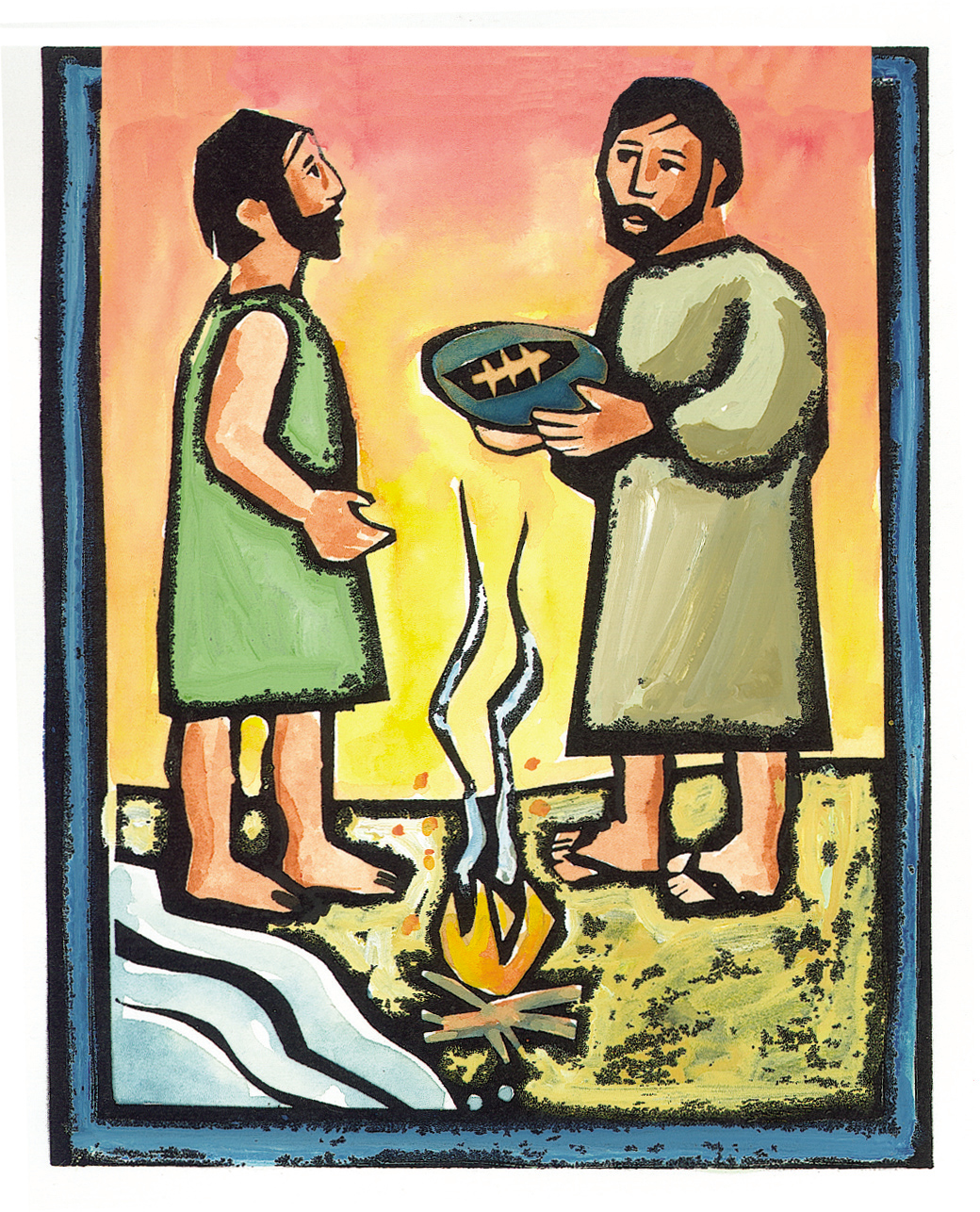
In the Gospel story for today we see Simon Peter and his companions catching nothing after fishing all night. At dawn as they approach shore, someone on the shore whom they do not recognize directs them to cast out their net. When the net is filled with a large catch, the beloved disciple recognizes Jesus, now risen from death, and says to Peter, “It is the Lord.” When they reach shore, they see a charcoal fire with fish on it and bread. Jesus invites them to eat with him. He takes bread and gives it to them and in like manner the fish. Jesus then asks Peter three times if he loves him, and says to him in turn, “Feed my lambs…Tend my sheep…Feed my sheep.” Jesus then speaks of the kind of death Simon Peter will undergo, and says to him, “Follow me.” His call is exactly the same for you and me when he says to us FOLLOW ME.

In today’s gospel passage, John also links friendship with Jesus with his real presence at our Eucharistic meal. The meal Jesus shares with his disciples together with the feeding of the large crowd (John 6) and the Last Supper Discourse reveal the meaning of the Eucharist for us. Jesus, the Risen Lord, truly is with us at our sacred meal— speaks to us, prays with us, leads us in self-giving to the Father, gives himself to us as the bread of life  and cup of salvation. He calls us his disciples and his friends: the life implications remain the same.  The way we will fulfil his request to follow him as disciples in service of others is unique and particular for each of us. We can count on the Spirit of Jesus to guide us in discerning what that service will be.Jesus is always here with us! This is our joy! This is our everyday Easter! That is our life in the joy of the Spirit! For Jesus said: “I am with you always, to the end of time.” (Mt. 28:20)Remembering this brings us happiness and joy: this memory, this memorial of the Lord who becomes sacramental in the Eucharist – is this not a true apparition of the Lord? For Jesus can appear to his disciples in a manner that is mysterious and real through his grace, through the gifts of his Spirit, just as he appeared  to his Apostles on the shore of the Sea of Tiberias.

Today’s Gospel, which many people consider the most beautiful of the resurrection stories, has many themes: the failed fishing trip, the inability of Peter to recognise the risen Jesus, the miracle of the fish and the simple, powerful reassuring words of Jesus to his confused disciples: “Come and have breakfast.” We can all find ourselves a place in this Gospel story, as we continue to wonder at the resurrection. Let us continue our journey  during this Easter Time as we go forward in faith.

SECOND SUNDAY OF EASTER DIVINE MERCY SUNDAY

DOUBTING THOMAS

DOUBTING THOMAS

Today is the Second Sunday of the Easter Season and it also known as Divine Mercy Sunday. In the Gospel reading for this day we see Thomas the apostle or as he is often called Doubting Thomas and I think  in many ways we are like doubting Thomas full of DOUBTS about what happens in matters of faith. In the Gospel Reading, the risen Jesus appears to ten of his apostles. Thomas is missing. The ten are convinced; but when Thomas rejoins them after Jesus has vanished, Thomas is highly sceptical as we would be if we were in his shoes. Thomas had trusted Jesus and believed he was the Messiah as we trust in Jesus and know he is the Messiah the Son of God.  The Romans killed Jesus and, with Jesus, the hope in Jesus that Thomas had. How much Thomas trusted before the crucifixion can be understood by the way Thomas hardened his heart against trust in the aftermath. “The bigger they are, the harder they fall,” we say. And the bigness of Thomas’s heart and the greatness of his trust in Jesus can be seen by how hard Thomas fell when he thought his trust was betrayed.

Thomas presents a contrast. He wants to physically probe Jesus’ body to confirm the miraculous. Yet when confronted with Jesus invitation to touch him (v. 27), Thomas backs off. He rapidly comes to his senses and confesses his faith: “My Lord and My God.” He accepts Jesus’ new invitation: “Do not persist in your disbelief, but become a believer.”Writing for a later generation of followers  who were gradually being deprived of apostolic witnesses by death, John composed the story of Thomas and the “beatitude” that concludes today’s episode: “Truly worthy of esteem are those who have not seen and yet have believed.”It is precisely because  we live by faith and in faith that we believe in the things unseen and we remember the words of Jesus in the Gospel when he said “Happy are those who have not seen and yet believe.”

Today we also celebrate the feast of Divine Mercy a feast in which we hear about the Merciful love that God has for each of us. The Messages of Divine Mercy were passed down to us through the Polish nun Saint Faustina.   Jesus Mercy is powerfully shown in today’s Gospel as the newly-risen Saviour appears to those who had betrayed Him, those who in weakness had run far away from the soldiers and from the mock trials—and from their Master in His three-hour agony and death. As Jesus showed His Divine Mercy to His apostles on this Sunday, the Church urges us to show our gratitude and belief in His never-failing forgiveness for our sins and betrayals of His love. He urges us to pray often for a world that has abandoned His commandments, ignored His words, shunned His healing, and rejected His love. 

HOLY SATURDAY AND EASTER SUNDAY


triduum

Having  completed our Lenten observance and after the liturgies of Holy Thursday and  Good Friday we  are now at the stage of celebrating the Easter Vigil and the day of resurrection that is Easter Sunday. Holy Saturday is about emptiness, ‘The cross is empty now Jesus lies in the tomb and everything around us is still.’ The heavens and the earth cry out with longing for the sinless one who is not to be found, if we stop to think for a moment we remember that Jesus died and rose again on the third day. We wait, as mourners beside a grave, unsettled, ill at ease, almost not knowing what to do with ourselves. The Church has only one thing to do today: to pray through the emptiness of Holy Saturday. Holy Saturday then is the day when we experience watching and waiting at the tomb as we await the celebration of the Resurrection which we celebrate in the Easter Vigil and the season of Easter. The Psalm for Easter Sunday says, “This is the day the Lord has made; let us rejoice and be glad in it.”Above all days, Easter is a day of joy .

But what is joy? The answer St. Francis gave to this question is famous. St. Francis said to his Brother Leo, “When we come to St. Mary of the Angels [our house], soaked by the rain and frozen by the cold, all soiled with mud and suffering from hunger, and we ring at the gate of the place and the brother porter comes and says angrily: ‘Who are you?’ And we say: ‘We are two of your brothers.’ And … he does not open for us, but makes us stand outside in the snow and rain, cold and hungry, until night falls—then if we endure all those insults and cruel rebuffs patiently, … oh, Brother Leo, … perfect joy is there!”

Whatever we may think of St. Francis’s explanation of perfect joy, Easter reminds us that Francis’s kind of joy is not the end of the story. At Easter, we celebrate the other kind of joy, the kind each of us longs for, when every tear is wiped away, and there is no sorrow any more no more suffering from weather or hunger or hurtful human beings. As we sing in the much-loved hymn by Fr. John Foley, S. J., at Easter, “the cross and passion past, dark night is done, bright morning come at last!” When we ourselves rise to meet our risen Lord, in that bright morning we will hear him say, “Come away, beloved. The winter is past; the rain is gone, and the flowers return to the earth” (Song of Songs 2:10-12). In the loving union of that encounter, all the heart brokenness of our lives will be redeemed. That will be perfect  joy.

So in that same vein of perfect joy we say “this is the ‘day which the Lord has made.’ Alleluia!  let us take fresh hope,  with Christ our Passover everything is possible! Christ goes forward with us in our future!” Let us go forward together as Easter people rejoicing in the Resurrection.

download 

Holy Thursday 2013

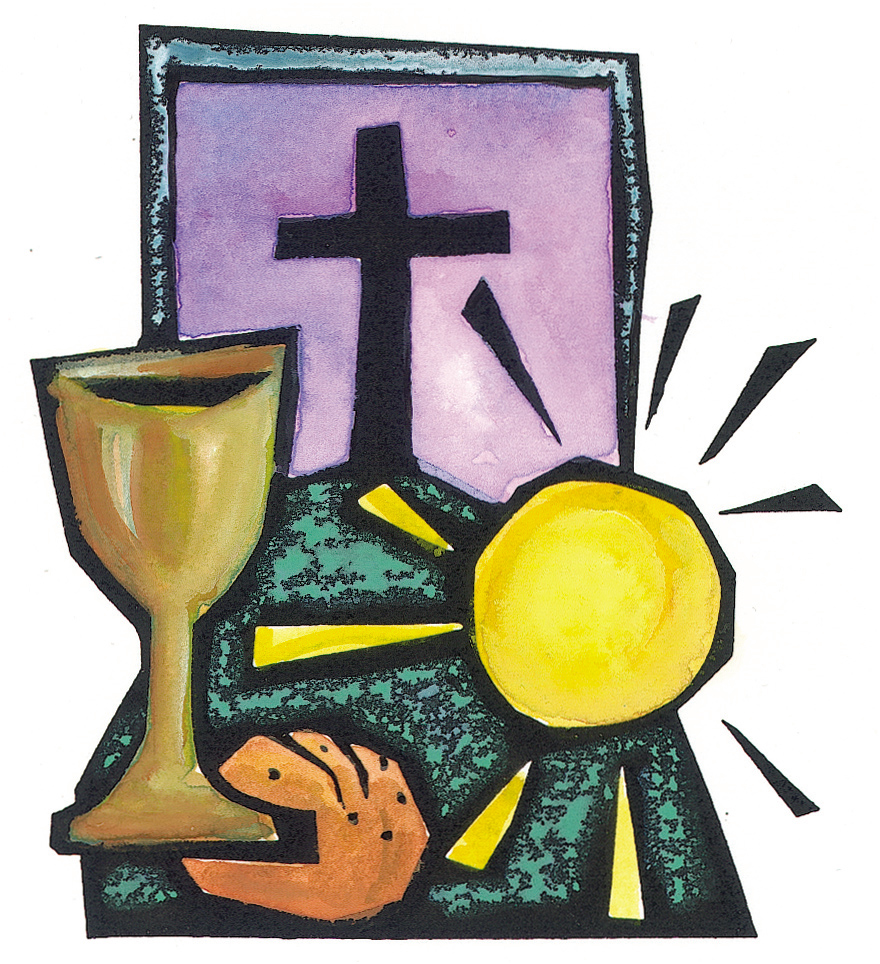
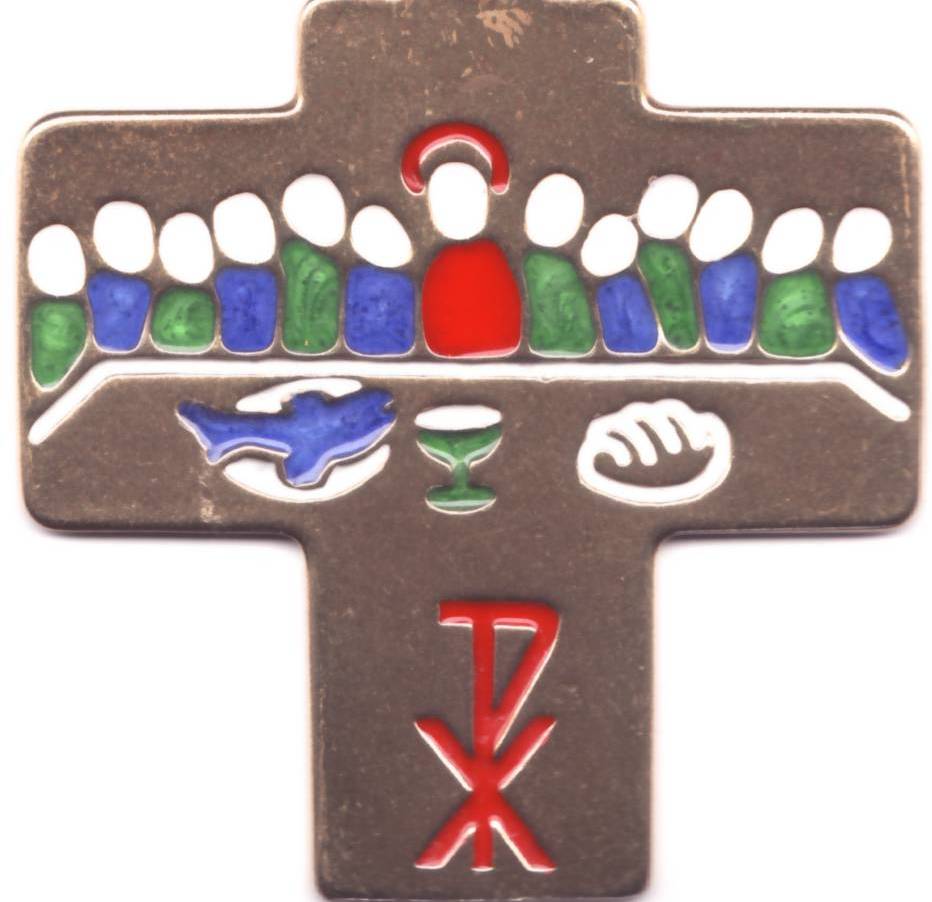
EUCHARISTIC CROSS

Today is Holy Thursday and the theme that runs through the entire day is one of service or more exactly humble service. This morning in the cathedral the priests con celebrated the Chrism Mass with our bishops. Holy Thursday is all about the  priesthood and the  institution of the Eucharist on the first Holy Thursday in the upper room. During this morning’s Chrism Mass our priests  renewed their commitment to serving the people of god in the parishes and the various chaplaincies that there are. We in our turn were asked to support our priests and our bishops by our prayers.

The evening Liturgy, marks the end of Lent and the beginning of the sacred “Triduum” (“three days”) of Holy Week, which culminates in the Easter Vigil, and concludes at Vespers on the evening of Easter day. The Evening Mass commemorating the Last Supper has, as its theme, service and sacrifice – which are aspects of the same mystery.  We see Jesus as one who serves, who gives himself. Just as he gives himself in washing the feet of his disciples, so he gives himself in the bread and wine he takes, blesses and hands to them. And in the same way he will give himself on the cross tomorrow.  All these acts of self-giving are the same act – that of the Son of Man who came ‘not to be served, but to serve, and to give his life as a ransom for many.’

The action of the Church that is our action on this night also witnesses to the Church’s respect for Christ’s Body present in the consecrated Host in the Adoration of the Blessed Sacrament, carried in solemn procession to the  Altar of Repose. No Mass will be celebrated again in the Church throughout the world until the Easter Vigil on Saturday evening proclaims the Resurrection that is the light of Christ. In the words of the liturgy let us go forth to meet the Lord in peace and thanksgiving as we celebrate the three days of the Easter Triduum

PALM SUNDAY 2013

palmsunday

Today we celebrate Palm Sunday when Jesus entered his own city From the ashes on Ash Wednesday we have almost gone full circle through the six weeks of Lent and here we are at Palm Sunday with three more days to come as we head towards the last round up that is the Easter Triduum. On Palm Sunday, we celebrate the first joy of the season, as we celebrate Our Lord’s triumphant entrance into Jerusalem where he was welcomed by crowds worshipping him and laying down palm leaves before him. It also marks the beginning of Holy Week, with the greatest tragedy and sorrow and then the greatest triumph of the year on Easter Sunday.

There are so many different aspects to this particular week it is so hard to flag up all of them on this day and i’m not going to do that.   They each have their own emphasis and there will be time to comment on them later on in the week.  Holy Week and the events within it give all of us an opportunity to look at our lives and to accept responsibility for all that is within our lives good bad or indifferent. It is important that we who say we are Christians accept the truth about ourselves and then in our acceptance of the truth we will be able to look at the Cross and recognise the love of God our Father for us and for everyone.

This week  and indeed the whole of our Lenten Journey that we will soon finish give  us the opportunity to look hard at ourselves and see exactly where we have come from and where we are going and perhaps were we should be going. We have always to remember that Jesus came to take away our sins and to point us in the right direction that is towards our father in heaven and all that is good.  During this week we remember that Christ came to give his life as a ransom for many and as a result of this he points us to God. Christ took our sinful ways on himself because of his love for us. May the passion story inspire all of us to try to imitate in some small way the all loving all forgiving Jesus who went through betrayal to death and finally to resurrection for us so that we will have life and have it to the full.  Over the next few days let us prepare with greater intensity for the Easter Triduum and then we will really be able to enjoy Easter feast which we have been preparing for since Ash Wednesday.

 imagesCAMGHETX

THE FIFTH SUNDAY OF LENT FEAST OF SAINT PATRICK.

THE WOMAN CAUGHT COMMITTING ADULTERY

THE WOMAN CAUGHT COMMITTING ADULTERY


Today is the 17th March and  for anyone who is Irish or claims to have Irish ancestry we celebrate the feast of our National Saint. That said  this year our readings are for the 5th Sunday of Lent and we reflect on them in a moment. It is good to have an opportunity to remember what today is really about – not parades, not entertainment, not drink, not sporting events, not all the other stuff that goes with St Patrick’s Day. This day is about remembering the arrival of the Christian faith upon the  shores of Ireland. The vibrancy and the power of that faith come to us  through in the writings of the time. Being a Christian wasn’t just about attending a church on a Sunday, it was about living every second and every minute and every hour under the protection of God. There was a belief inherited from the Celtic past that there was an energy, a force, a power, a strength behind all things, the God proclaimed by Patrick fulfilled this belief. Through all the experiences of life Patrick has a sense of Christ with him and within him. Patrick shows his familiarity with the writings of Saint Paul in the penultimate verse. Paul writes to the Galatians, ‘I no longer live, but Christ lives in me. The life I live in the body, I live by faith in the Son of God, who loved me and gave himself for me’.

At the end of St. Patrick’s Breastplate  Patrick has come full circle – back to the Trinity, back to God and in the closing two lines he expresses the message of the Gospel, “Praise to the Lord of my salvation, Salvation is of Christ the Lord’. May we follow Patrick’s example: may we bind God to ourselves and may we, like Patrick, know Christ as our Lord.

Today is also the Fifth Sunday of Lent – the final Sunday prior to Palm Sunday and Holy Week. We pray for our Holy Father Pope Francis that he will be accompanied by the prayers of the Church throughout the world as he begins his ministry as Pope. Lent is a time of endless opportunity for new growth, a time for insights into the meaning of God’s love for us. On this Fifth Sunday of Lent, we need to perk up the ears of our hearts when God says to a despondent people in exile, to look forward not backward, as though this moment in which they hear Isaiah’s prophecy is really the first day of their lives. He tells them to forget the past, for He has decided to do something new! This prophecy is really a veiled reference to the Father’s decision to send His Son Jesus as Messiah. By His sacrifice, He will bring them out of their vicious cycle of sinning. How sad that hundreds of years later, when their descendants actually saw their Messiah in the flesh, they failed to remember Isaiah’s words that God was doing something new!

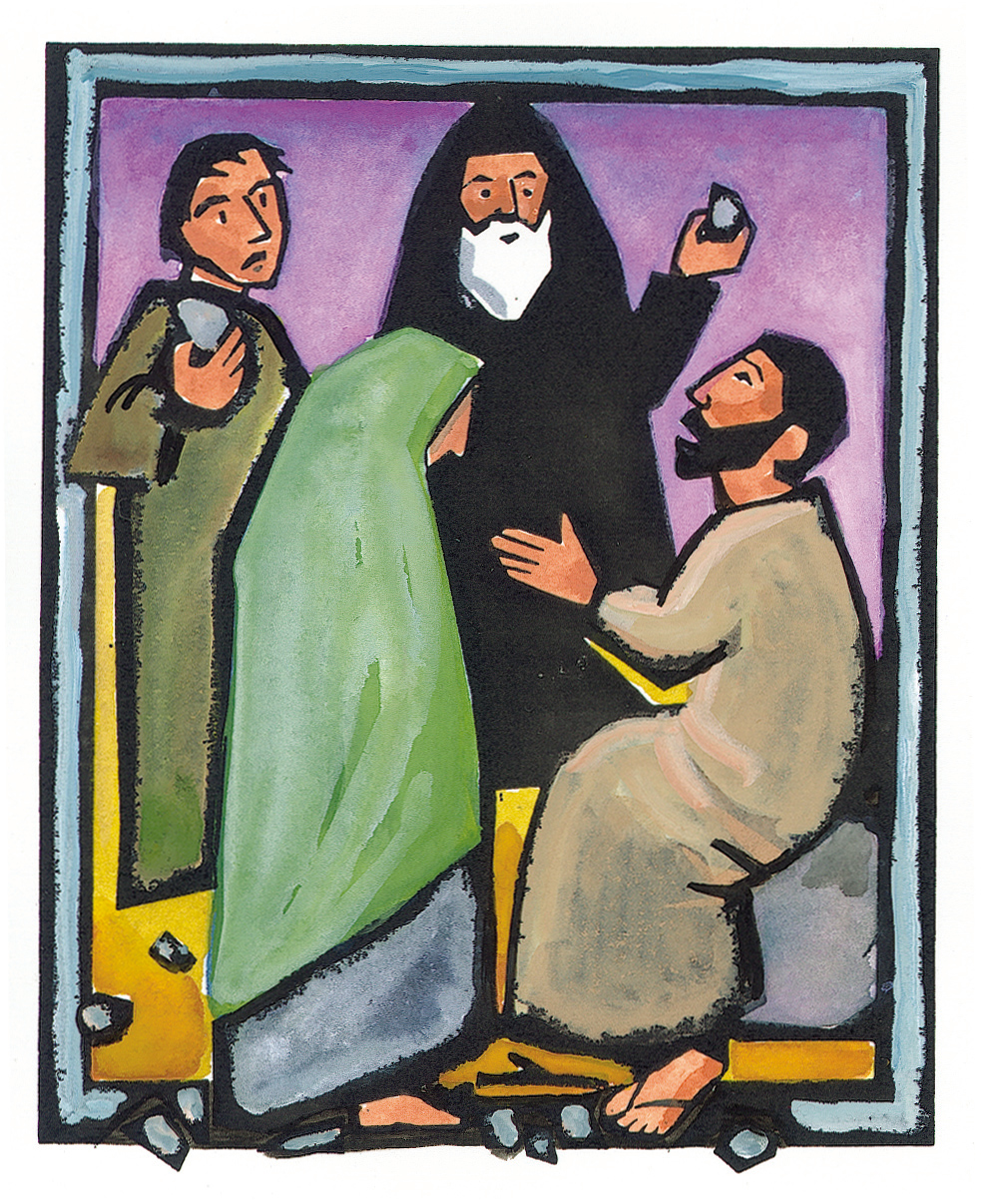
In today’s Gospel Jesus meets the woman who was caught in adultery. He frees her from captivity to the crowd, the Pharisees and the Law. The “courtroom” tension is resolved by Jesus’ inviting her fellow-sinners to keep the Law by stoning her, if they themselves are without sin.  Nobody is left to throw stones as they were all sinners as we all are. We can understand why Israel had a “zero tolerance” policy against adultery. But Jesus is not about policies or procedures; he is about people and all the concerns and needs that they have. He knows that we all have in some way turned against God. And Jesus wants to free each one including us in our present time and place. He faces the woman’s accusers and his look causes each to examine his conscience. Then he speaks to the woman. Instead of condemnation, he offers a new beginning, “Go and from now on do not sin any more ” This is really what Lent is about, it is about all of us recognising that we are sinners, confessing our sins and then going out to try and sin no more.


Fourth Sunday of Lent Year C Laetare Sunday

Copy (2) of Project32

Rose Sunday or Laetare Sunday will be very different this year in Rome. Since Benedict XVI is no longer Pope, there will be no one to send a Golden Rose to Catholic kings and presidents. There is not quite the same reason to rejoice as in recent years, for now we await the election of a new Holy Father to shepherd the Church. The Conclave to elect a new pope will begin on  Tuesday 12th March and we pray for the election as we will pray for the man elected. On this fourth Sunday of Lent the focus of our readings for the liturgy is on coming back home and this is also about the Lenten season. The gospel reading is the story of the prodigal son which is about coming back to the Father. The story tells us about son who asked and got his inheritance and  then where he squandered his money on a life of debauchery. Then after a period in the wilderness of having little or nothing and recognising the error of his ways the son decides to return to his Father. The father welcomes back the return of his younger son with great extravagance. The contrasting attitude of the elder son is the main message of the parable, which is told for those who contest Jesus’ welcoming attitude to sinners (15:1-3). Perhaps the elder son has a reasonable grievance. Did the father never show gratitude to him for his commitment, his ‘slaving’? The words of the father to this elder son are truly healing words: ‘My son, you are with me always and all I have is yours.’ The elder brother is of course a type for ourselves. He had absolutely no sympathy for his brother. Had he had the opportunity, he would have tarred and feathered his younger brother. He would then have run him off the property on a rail. But his sibling’s misadventures cost him nothing. As the elder brother, two thirds of his father’s estate was legally his. His money was safe and protected.His brother had wasted the third of the estate that was rightfully his own by law. Notice too the older brother had an ugly mindset. It was he who suggested that his brother had spent his inheritance on fast women and slow horses.

The Master then is telling us that God will forgive even the worst rogue among us unconditionally. All we have to do is start walking back to God. Like the prodigal son, our motives may not be the purest. Nor do we have to even finish the journey. God is quite willing to meet us before our trip is finished as the saying goes he will come to meet us half way along the road. He will bring us to honours which we humanly speaking do not deserve. Obviously God merits the label “this tremendous lover.No sacred book other than the Bible proclaims the love of God or a god for his people and then Jesus the only Son of the Father came. His whole life was a statement of Love, love for the Father, love for us. His death was a proclamation of this love. “Is this enough for you?” he asks the mystic Julian of Norwich. He was saying, “If you need more, I will do more.”  Of course, it is enough. We live under the mercy of God, under the compassion of God. We live in the Love of Jesus Christ. 

The parable of the Prodigal Son, Forgiving Father or Elder Brother, is calling us to reflect on the depth of our own commitment to the Lord, and our own determination to live His Love. Nothing is too much to offer. Such is God’s delight at the return of a sinner.

Post Navigation