Fullerton T

RELIGION LITURGY AND LIFE

Archive for the tag “christianity”

GOOD FRIDAY

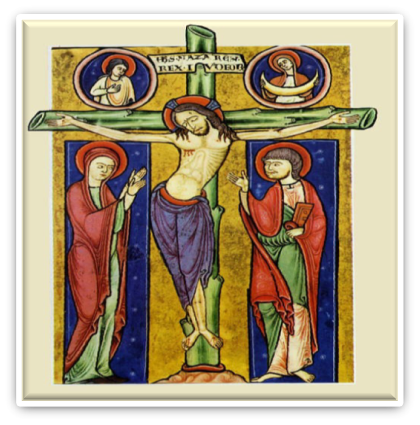
The origin of this day is traced back to Jerusalem and the veneration of the relic of the true cross.  This act of veneration stressed the cross as a symbol of victory.  In our good Friday Liturgy it is not the veneration of a crucifix, which would narrow it down to the historical moment of Jesus’ suffering and death.  Instead we venerate the Cross it is the sign of Jesus death on Good Friday.  On this day in the liturgy we read St. Johns account of the passion, we pray for the needs of the Church and the world, we venerate the Cross and we receive the blessed Eucharist.  When we think of the death of Jesus on the cross we realise that his death was a result of the courage of his convictions. He lived his life with a message of compassion and love, Jesus was often critical of those who lorded it over those who were less well off or who had little or even nothing at all.

The cross of Good Friday is a sign that all of us recognise, it is a sign of the completeness of the love that God has for each one of us faults and failings included.  It is not accidental that the Passion according to John is always read on this day.  This account shows that Jesus is always in charge, in total command of his situation.  John’s Passion is an extended commentary on an earlier statement of Jesus found in John 10:17-18:  “I lay down my life that I may take it up again.  No one takes it from me, but I lay it down of my own accord.”    The focus of the liturgy of Good Friday, is not primarily a meditation on Jesus’ pain, nor on our sinfulness, or our imitation of Jesus’ humility.  Instead  the focus on the cross as a reminder that we are beneficiaries of this event here and now in our own time. The final words of Jesus from the cross say it all for us, “It is accomplished!”  Jesus was not overcome. On the contrary!  He has overcome and the fact that we are celebrating Good Friday in 2025 bears witness to this.  When we go up to venerate the cross we should allow the cross to move us to be better people. Consoling, comforting and challenging the people we meet with the hope filled values of Jesus and the Cross.

Mass of the Lords Supper

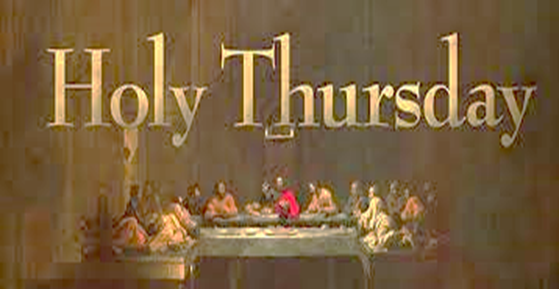
Lent has ended and now we begin the Holy Week Triduum for the Holy Year of Hope. There is a saying that hope springs eternal and in the Holy Week Triduum we celebrate  the hope of Holy Thursday we go to the despair of Good Friday and then on Easter Sunday we  go back to the greatest hope that all of us have that is the resurrection. The word Triduum is the Latin for the three days Holy Thursday, Good Friday and Holy Saturday. We should not think of the liturgies of Holy Thursday, Good Friday and the Easter Vigil as three separate events, all three form part of one single extended liturgy. In fact at the end of the Mass on Holy Thursday there is no dismissal and blessing instead we accompany Jesus to the Altar of repose and then leave in silence. In the same way there is no formal beginning and end to the Good Friday liturgy we enter in silence and again we leave in silence.

This three-day liturgy concludes with the solemn blessing at the end of the Easter Vigil or at the morning Mass on Easter Sunday.  On Holy Thursday In the first reading from exodus we hear about the blood sacrifice on the door posts a sign that the people inside would be spared, freed from slavery and death. The death of Jesus becomes the Christian Passover, the sign of gods liberating love. We hear Paul’s account of the institution of the Eucharist in the second reading when he tells us this is what I have learned from the Lord and I am passing it on to you.  These readings make us aware that the institution of the Eucharist is tied to the demand of mutual love  and respect for one another.  On this day  we act out Jesus’ command by participating in the foot washing.  When supper had ended, Jesus took water in a basin and a towel and began to wash his disciples’ feet. He then commanded his disciples to follow his example by giving such loving service to others. Following the celebration of the Eucharist, we move in procession  with the Blessed Sacrament to the  chapel Of reservation there we keep watch up to midnight.  

On Holy Thursday we all bring our different stories here to the table of the Lord.  And we know there will be times when we will be sore, hurt and wounded; when there will be no one to talk away the terrors of the night; when we will occupy the garden of grief alone.  But Jesus has already travelled that road and stands with us. The liturgy on Holy Thursday evening is a meditation on the essential connection between the Eucharist and Christian love expressed in serving one another. Christ is not only present in the Eucharist but also in the deeds of loving kindness offered to others through us. We are the ones who make ‘real’ the presence of Jesus in every smile, kind word and loving action. As I said at the beginning hope springs eternal and we are called to be people of hope filled faith who look out for one another, people who follow Jesus  example by giving such loving service to others. It’s not just about “me” It’s about “us” and our hopeful journey of faith during these days of Holy Week and Easter and beyond as we go on into the future.  

5th Sunday of Lent

8Th Sunday of ordinary time

Next week we begin the season of Lent with the Ashes on Ash Wednesday and we begin our annual  journey of repentance and conversion for 2025 as pilgrims of hope. All of us will have many opportunities to strengthen our spiritual lives over the 6 weeks of lent as we ponder what our faith really means to us as individuals and as a community. We also continue our prayers for the health and wellbeing of Pope Francis.

In the First Reading  this Sunday we are told that a persons  speech reveals their faults and true character. Do not praise someone before hearing them speak as this is the test of men. The Responsorial Psalm is  Psalm 91 and we hear that  It is good to thank and praise the Lord, whose kindness and faithfulness are constant. We are also told that the righteous flourish and bear fruit, proclaiming God’s justice and reliability to those around them. In our Second Reading  we are told that Through Jesus, we have victory over death. Again we are called to be steadfast and devoted to the Lord’s work, knowing all we do is not in vain even though sometimes it might look that way for in the Lord we do not labour in vain.

This Sunday in our Gospel Reading Jesus is coming to the end of what, in Luke, is called the “Sermon on the Plain”. He has instructed his disciples to love their enemies, turn the other cheek, treat others as they would want to be treated, not judge them, etc. Jesus is the wise person teaching the disciples a practical wisdom on how to live their lives as his disciples. Jesus says, in summary, a person’s words and actions will reveal their character. The Gospel tells us There is no sound tree that produces rotten fruit, nor again a rotten tree that produces sound fruit. For every tree can be told by its own fruit: people do not pick figs from thorns, nor gather grapes from brambles. A good man draws what is good from the store of goodness in his heart; a bad man draws what is bad from the store of badness. For a man’s words flow out of what fills his heart.’ God’s love is effective, it produces good fruit for the benefit of others. The good we do is the  way to spread the faith to others. Jesus sends us to be witnesses to the faith we profess to practice what we preach in all we do and say. Jesus words to us in this weekend’s gospel  show his concern for the integrity and quality of our lives. We cannot, he says, teach others if we ourselves are not witnesses to what we teach. There are many people out there who were witnesses to the truth of the gospel who have turned away and betrayed the truth and become rotten fruit.  Lent is the time to renew our  selves in terms of faith so that we are able to move forward in the certain knowledge and hope of being true witnesses to the faith. Lent is all about moving forward in a spirit of conversion and prayerful return the spirit of metanoia.

 During Lent we are provided with many opportunities for spiritual renewal but that will be for the weeks ahead. But for now let us stop and reflect on the good we do for others and how that becomes a way of  bringing the faith to the people where they are. As we continue our journey as pilgrims of hope we remember  that  God’s love is effective, and it produces good fruit for the benefit of others and we are called to show gods love through all we do and say for one another.

5th Sunday in Ordinary Time

This Sunday we celebrate the 5th Sunday in Ordinary time and we remember and pray for all those who are sick as we celebrate the world day for the Sick on 11th February. We ask God through the intercession of Our Lady of Lourdes to bless our sick and all those who look after them. The 5th Sunday in Ordinary Time readings highlight important themes. These themes help us understand our faith and God’s call in our lives. In the  First Reading from Isaiah  Isaiah saw the Lord on His throne, felt unworthy, but was cleansed by a seraphim. When God asked for a messenger, Isaiah offered to go. In the Responsorial Psalm I will thank and praise God for His kindness and truth. He answers me and gives me strength. All will praise Him for His great glory and enduring kindness.

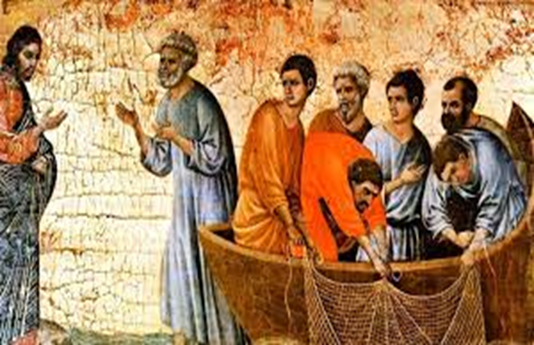
The Second Reading from Corinthians tells us that Christ died for our sins, was buried, and rose on the third day. Saint Paul says He appeared to many, including me. By God’s grace, I preach, and you believed. Our Gospel story for this Sunday recounts the story of the of Peter’s calling to be a fisher of men. After a fruitless night’s fishing, Peter obeys the word of Jesus and catches a huge number of fish. He feels unworthy before Jesus; but he is now called to be a fisher of men. Peter recognises the hand of God in what has happened and at the same time realises his own sinfulness but Jesus comes to show us the mercy of his Father. Jesus did not come to be a hermit with an unreachable address in the desert; rather, his whole mission moves in the opposite direction, for he has come “to seek out and save the lost” (Luke 19:10). So Jesus travels into our lives not away from them.  He entertains sinners he enters their homes, meets their families, eats at their table, listens to their stories, and calls all of us to a new way of life when he says follow me. Throughout his life Jesus is never far from sinners he is not far from all of us as well for are sinners too. Jesus doesn’t write us off because we are sinners; Jesus has other plans because he knows that we sinners have a future, not just a past. Simon Peter received his call while he was doing his work. He said, “Yes,” and responded by changing his life.

Every day, in the midst of our routines, at work, home, school there are opportunities to respond to Jesus’ call to follow him. In innumerable ways our Christian vocation must guide what we say and what we do. In all  our decisions big and small, we are asked to live what we profess as Jesus’ followers; to be attentive to what God may be asking of us at that moment of our lives. This may entail being faithful to the commitments we already have; responding to a need we see, or taking the opportunity to witness to what we believe. Our responses may seem small and insignificant. They may be small, but they are never insignificant! In addition, who knows where the next “Yes” we say to Christ may lead us?  Our call as disciples is not only to personal holiness but also to partnership with Christ in transforming the world with words and actions of  justice, peace, integrity, forgiveness, mercy, tolerance, hope and love. We must allow ourselves to be caught and taught by Jesus. The response that is asked for, is to be prepared to give up everything in our quest to know Jesus. In spite of our sense of sinfulness, unworthiness and lack of faith in ourselves, we are called to trust in God’s choice of us and in God’s faith in us who are his beloved daughters and sons.

Second Sunday after Christmas

Here we are at the second Sunday after Christmas as we look forward to the arrival of the three wise men on the feast of the Epiphany which takes place on Monday 6th January.  By long standing  tradition Christians celebrate Christmas as a season, with the twelve days between Christmas and the Epiphany as one long “Christmas feast.” The season ends with the Baptism of the Lord which is also the first Sunday of ordinary time and that takes place next Sunday.  In the first reading this weekend we hear that  wisdom speaks her own praises in the great assembly, this reading tells us  how Wisdom personified as a woman speaks about her role as she glories in herself in the presence of the mighty one. The reading goes on to tell us  from eternity in the beginning he created wisdom and for all eternity wisdom will remain.

In the Second Reading Paul begins his letter to the Ephesians with a hymn which praises God for choosing us in Christ. He prays that all will be blessed with the spirit of the heavenly blessings `so that through wisdom we will get to know God, so that we can see the hope that his call holds for us. In the Gospel we hear the magnificent Prologue to John’s Gospel: how in the beginning there was the Word and through the word all things came to be and then in the fulness of time god sent his Son. When John comes to speak about Jesus notice how he goes back beyond the time of Jesus’ birth and conception to the very beginning of time itself. He sees Jesus as the Word that was with God, the Word that was God. John rejoices in his Gospel that this Word which made the beginning now comes into the world.   The Word is not only had a great power that makes all things; the Word became flesh and dwelt among us. The Incarnate Word comes among his own people in the person of Jesus the Son of God the only Son of the Father.  At Christmas we celebrate the humility of Emanuel  God with us who came to be one with us in the good and bad times that are part of our lives.

As Christians, we will very often find ourselves living in contradiction of so many things that are part and parcel of this present age.  Regrettably we have to get used to the fact that we will face conflict among friends, and even at times within families, as we seek to live out and the Christian life more generously and we know that if our words fail, the Word of God never fails. May we not be afraid in the Holy Year of Hope that has just begun to seek  and find the wisdom that God wants to give us, so that we can see the hope that his call holds for us so that we will have the wisdom to follow Jesus the light for the world the hope of all who believe.

Feast of Christ the King

This weekend we celebrate the feast of Christ the King on the last Sunday of the Churches year. The Feast of Christ the King was established by Pope Pius XI in 1925 as an antidote to secularism, that is a way of life which leaves God out of a person’s thinking and has us living life as if God did not exist as we all know God does exist and we see this throughout history. In this feast  we profess our common belief: Christ is King to the glory of god the Father.. Our Gospel reading for this Sunday has Jesus before Pilate. Jesus turns his interrogation into a meeting of souls. It is an encounter that impresses Pilate deeply; encounters with Christ are bound to change us in some way.  Jesus refuses to answer Pilate’s charge of kingship directly. He states that his kingdom is “not from here” (John 18:36), which Pilate interprets to be an affirmation that Jesus is a king.

Jesus also puts the question aside as something Pilate claims, and instead offers the idea that he is a witness to the truth (18:37).In the reading from John’s Gospel  which is also part of the Good Friday Passion Narrative we see  this conflict is described in terms of the “truth” that Jesus  has brought from his Father: “It is because I speak the truth that you cannot believe me”.  Jesus urged the people of his time as he encourages all of us in our time to find the truth of our calling to be “a light to the nations,” showing the world the life and joy of people who are living according to all they have learned from Jesus.  The kingdom of Christ, is  a kingdom of charity and peace. We remember that the Kingdom of God exists in every home where parents and children love each other. It exists in every region and country that cares for its weak and vulnerable people. It exists in every parish that reaches out to the people of the parish without looking at who they are or what they can contribute .  The King we celebrate this weekend is the Son of God who walks the dusty roads of our daily lives finding the weak, the ill, the oppressed, the ones whose hearts are wounded, the ones whose minds are confused by the things that they see going on around them.

Jesus finds all kinds of people as he journeys with us along the dusty roads of life, he finds ordinary folk as well as the elite, the powerful as well as the weak and he invites all of us to walk in his ways as we prepare to start again as we begin the churches new year next Sunday. We remember that the kind of kingship that Jesus talks about places a different emphasis on all earthly kingdoms and empires, from Imperial Rome right to today. It topples the world’s values and overturns the concepts of power and majesty and replaces them with a kingship of service of god and one another. Sometimes we fall short, but Jesus always calls us back with forgiveness. He asks us to recommit ourselves to service wholeheartedly as we prepare spiritually  in  Advent for Christmas .

19th Sunday in Ordinary Time

The readings for the 19th Sunday in Ordinary Time demonstrate that God sustains us despite everything that is going on. In the First Reading Elijah, overwhelmed, sought death in the wilderness but was sustained by an angel with food and water, enabling his journey to Horeb the mountain of God.  The Second Reading  tells us to a avoid behaviour that grieves the Holy Spirit. Instead, we should be kind, compassionate, and forgiving, just as God forgave us. We  are called to lead lives of love as we follow Christ’s example. The Gospel reading deals with a doubting audience, and at times we  are also members of that doubting audience.

The people who heard Jesus were shocked and critical of his claim to have come down from heaven as the Bread of Life. Despite the miracles they had witnessed, and the words of wisdom they heard preached with such convincing authority, they could not go the extra step to accept his words and deeds. We, on the other hand  are able to take that extra step because our Christian faith has come to us from Jesus, passed down through the generations of those who went before us. We know where he came from, we know where we are going and we know how to reach that destination our heavenly homeland. The personal faith that we have means that “God out of the abundance of his love, speaks to us as a friend and lives among us as  the living bread which came down from heaven.  All of us have doubts when it comes to our faith and we search for answers to our questions.  When we search we find Jesus who is the answer to our doubts.

Through the teachings of the church and through our communion with him through the eucharist we understand who Jesus is and we also understand his message.  When we gather at the Eucharist we bring ourselves and our needs in prayer to God. We bring ourselves to God because God is with us and continues to be with us in good and bad times through the sacramental life of the Church. When we see the Eucharistic Bread, we believe that it is Jesus who is there before us:  such is the faith we have in the Eucharist.    So  today we give thanks for all our blessings, families, friends and all that we have and hold dear. We also give thanks to God for the presence of Jesus in our lives as we remember that Jesus is the bread of life. The food for our journey that comes from the God who sustains us and loves us and is there for us as a friend, a  helper and a guide.  

We pray for peace as there are many communities and countries at war with one another. From Ukraine to the Holy Land and even on our local streets where racism has reared its ugly head. And so we pray: God of peace, you are peace itself; a divided heart cannot find you, a violent mind cannot welcome you. Grant that we who are one in heart may hold fast to the gift of peace and that those who are divided may forget their strife and come to know your gift of peace. Through Christ our Lord

15th Sunday in Ordinary Time

On the 15th Sunday of Ordinary Time our  readings focus on God’s call and mission. We see how God chooses ordinary people to carry out His work. In the First ReadingAmaziah orders Amos to leave Bethel and prophesy elsewhere. Amos responds he was called by God from his life as a shepherd to prophesy to Israel and that was were he stayed. In the Second Reading from  Ephesians we are told that we are blessed in Christ with spiritual riches, chosen to be holy, redeemed by his sacrifice, and sealed with the Holy Spirit, fulfilling God’s plan in the church for unity and glory.

The Gospel reading is all about Mission. Jesus summons the twelve apostles and sends them out on a missionary tour.  The chosen followers of Jesus have to carry the word of God as a challenge to others. In that mission the apostles have the authority and the power of Jesus. They have to travel on that.  They are not to rely on their own resources but on the authority that has been given to them and the hospitality that will be offered them. With no bread and no money, they have to depend on the kindness of others: that vulnerability makes their message their real resource. If they have bread to eat, it also means that people are not only hospitable they are also listening to the word they preach. If they are not accepted, they have no option but to move on. And when a town rejects their message, the apostles are to shake the dust from their feet – a symbolic act performed by Jews returning to Palestine after journeying abroad. The Twelve went out and preached that God would adopt humanity, making its members which include you and me “sons” and “daughters” of the Father. This was Good News then just as it is now!  I think we need to be like the twelve who were sent out with the message of Jesus but with one difference we need to seek out those who do not want to hear the message instead of shaking the dust off our feet we really need to let our feet get dirty.  We have to have carry the word of God and see it as a challenge to ourselves and to others. In telling us about the beginning of the church in so dramatic a fashion, Mark, wants to be certain that disciples in his church and in the church  of our time will be mindful of some important implications. We, like the first disciples, are inadequate for the task; yet Christ’s mission for God’s kingdom is given to us.  If we labor under the illusion that we can bring about God’s reign on our own, we will be advancing something other than God’s kingdom on earth. Paul refers to his experience of preaching the gospel as foolishness. He relishes saying “we are fools for Christ’s sake?   Because he understands that it is because of his weakness that the power of Christ can dwell in him .       

The message of hope from today’s Gospel is that we don’t have to spend years of study before we can explain what Christ means; we can do it quite easily using actions and words we all understand. The crucial point in the Gospel is that by doing things Jesus’ way the Apostles get close to the people, they understand their concerns and they share their life. We are called to do the same today as we try to do things Jesus way by helping the people to get close to Jesus and what he teaches all of us.

14th Sunday in Ordinary Time

The readings for the 14th Sunday in Ordinary Time are a call to listen to God and follow Him even when those around us do not. These readings make us think of how we can persist as disciples in times of adversity and how to handle rejection. In the First Reading God empowers Ezekiel to speak to rebellious Israel, ensuring that whether or not they listen, they will recognize the presence of a prophet among them. In the Second Reading Paul embraces his weaknesses and hardships, seeing them as opportunities for Christ’s power to shine, affirming that divine strength is perfected through human weakness. This Sundays  Gospel sees Jesus going back home to Nazareth. This is not a social visit like everyone else in the other towns in Galilee, Nazareth and its people have to hear the Good News of the kingdom. When Jesus teaches in the local synagogue, many of the townspeople are astonished at the things he is saying. They wonder at the origin of Jesus’ teaching and the nature of his wisdom, as well as the miracles that are done through him.

From the unanswered questions about Jesus’ wisdom, the neighbours move to more familiar territory and focus on what they do know about Jesus. Whatever their wonder, they are not going to allow the wisdom of Jesus  to interfere with their memories of him as the son of Joesph the carpenter. Prior to this section in Mark’s gospel, Jesus has been doing some extraordinary things. His baptism by John in the river Jordan was accompanied by an affirming voice of the Father from the heavens, “You are my beloved Son. On you my favor rests.” After his desert testing Jesus called his first disciples, cured the man in the synagogue with the unclean spirit and the paralytic in Capernaum; expelled the legion of devils from the Gerasene man, you may remember last week Jesus raised the daughter of Jairus and then cured the woman with hemorrhage, Jesus is doing wonderful things in what he says and what he does as he proclaims the coming of the reign of God. Though he did all the wonderful things the people still had little faith which also seems to be the case these days for so many in our own time.

The people wanted the powerful signs of God’s final coming with a strong right arm to rescue them. But when Jesus spoke about the signs of the kingdom’s presence, he spoke of scattered seeds and, to emphasize the kingdoms small beginnings, he compared it to a mustard seed, “the smallest of all of the seeds of the earth” Where was God’s show of power and mighty arm in a tiny mustard seed? Mark sums up their reaction, “And they took offense at him. And so it is today as many take offense at the values of Christianity and the good it makes for all of us in our world. A world which in many respects is so faithless with many  people taking offense at Jesus and his teaching. Jesus revealed God’s presence to the people of Nazareth as a different kind of power: the power used only to help others, not ourselves; a gentle power that does not force or coerce people to do our will; the power of compassion and gentleness, when others are expecting force. All of us know from our own experience that when we admit our failures and limitations, that honesty can mark the beginning of a new understanding. If our Lord and God can take failure in his stride, we might even end up boasting about God’s fantastic message!

What is the fantastic message of the wisdom of Jesus? Jesus message is really about using whatever power that we might have in a positive way to help others and the greater our weakness the more powerful we will be that is powerful with the power of compassion and gentleness that we are called to show to everyone around us as we go forward at this time.

Post Navigation